


Mischievous manipulation of established historical facts

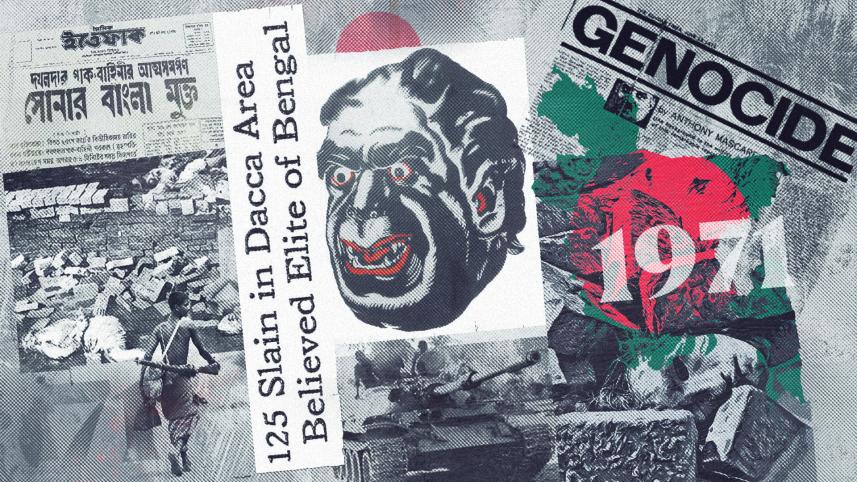
Our victory celebrations always come with a tinge of sadness as we mark the Martyred Intellectuals Day on December 14 to remember the brightest sons and daughters of this soil who were taken away from their homes, never to return. But even as we celebrate Victory Day, 54 years after Bangladesh's birth, there are blatant attempts to contrive and concoct historical narratives to absolve certain quarters of their treason.
With their new-found currency in the post-2024 dispensation, some Jamaat-e-Islami leaders are seeking to reverse a well-established narrative and turn it on its head. On December 14, Jamaat Secretary General Mia Golam Porwar claimed it was India who had conspired to kill the intellectuals. He claimed it was "part of a well-planned plot by the Indian army and Indian intelligence agencies."

Muhammad Nazrul Islam, Jamaat's Chattogram city chief, echoed Porwar, saying that "...someone else used the name of the Pakistan army to carry out the killings. India's name comes up first among the suspects. Those who did not go to India incurred India's wrath."
Such a narrative to exonerate the axis of forces, which unleashed nine months of untold brutality on our men, women and children, is preposterous. What is even more ludicrous is to blame the very army that came to our aid and helped us in the war against the Pakistanis. Such claims, outlandish as they are, will hardly absolve the Pakistani army or the razakars and Al Badr of genocide in Bangladesh.
There have been dozens of witnesses testifying how Al Badr, a vigilante militia group comprising Jamaat's then-student wing, Islami Chhatra Sangha members, had abducted professors and artists to execute them. Here are just a few to refresh our memories.
Shumon Zahid testified in 2013 that his uncle had identified Chowdhury Mueen Uddin, an Al-Badr operative, who picked up his mother, Selina Parvin, on December 13, 1971.
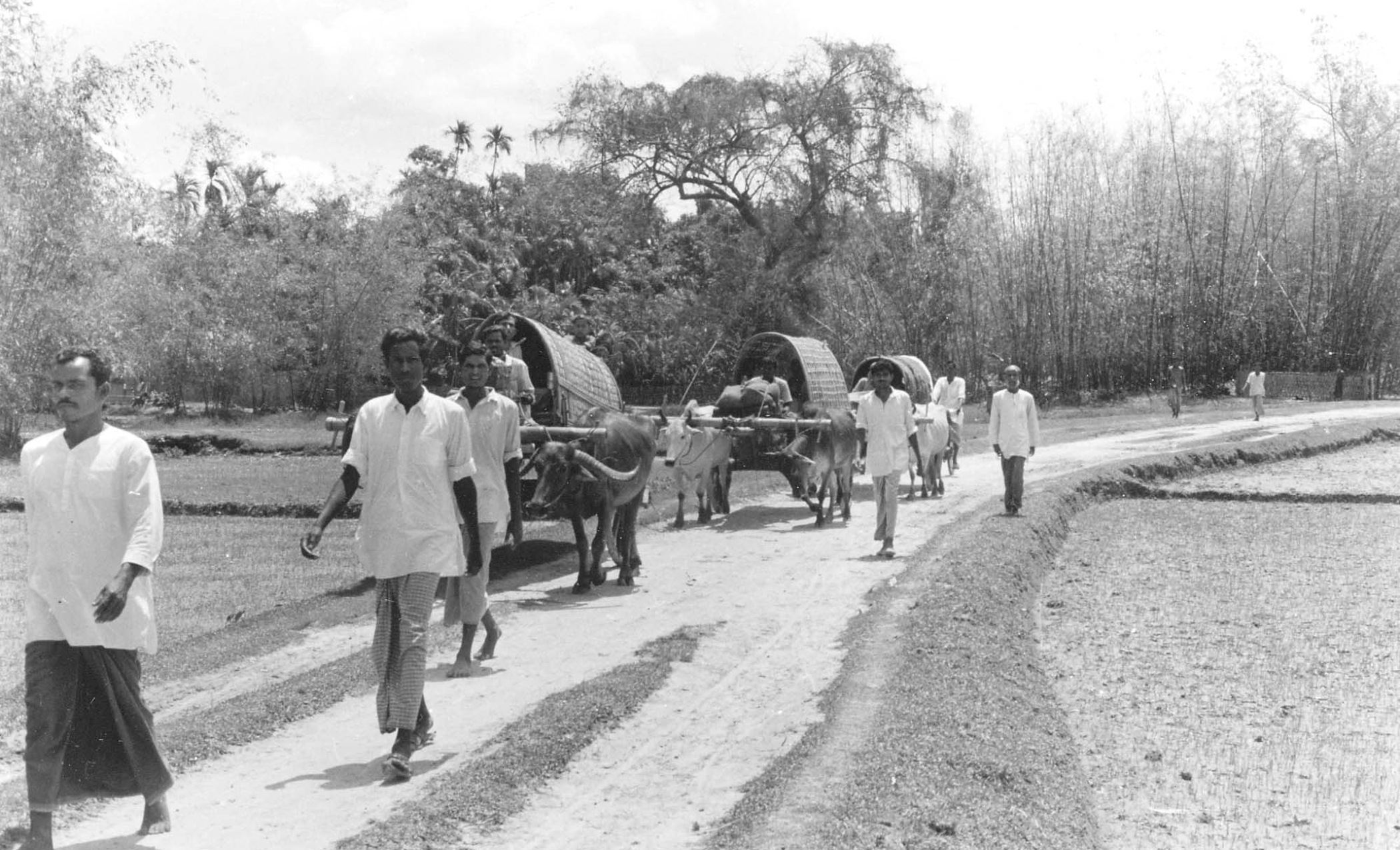
The Daily Star reported on July 22, 2013, what Shumon had said in his testimony. He and one of his maternal uncles were present when his mother was taken, he said. This uncle later identified Mueen Uddin as one of the abductors from newspaper photos. He said Selina had become the target of Al-Badr, as many pro-liberation writers used to write in her weekly Sheelalipi.
He and his uncle, Uzir, were on the roof of their house on New Circular Road at around 1:30pm on December 13. Suddenly, a number of vehicles appeared. There was a jeep, a microbus spattered with mud, and a military truck, said Shumon.
Strangers bearing guns knocked on Selina's door and asked her to go to the secretariat with them, but she refused as she did not have a curfew pass. They said it would not matter, said Shumon.
"Keeping her hand on my head, my mother said, 'Shumon, take your lunch with your uncle. I will come back in a few minutes.' This was my mother's last words to me," testified Shumon in court.
But one need not dig up court records to find these testimonies. They are so abundant that even The Daily Star's archives will yield dozens of such anecdotes with a cursory search. For instance, Nusrat Rabbee wrote in this newspaper on December 16, 2005, how her mother had agonised over her father, Dr Mohammed Fazle Rabbee's abduction. "Where are you taking him? Why are you taking him?" was all she could say to the soldiers before fainting on the balcony of their house around 4pm on December 15.
The abductors had given the false pretext of a critically ill patient in the cantonment. A renowned cardiologist with international acclaim, Dr Fazle Rabbee, went with them, only to never return.
Another piece, titled "The Spirit of Shaheed Munier Choudhury," published just two days ago on December 14, recounts how Munier Choudhury was picked up.
Dean of Dhaka University's arts faculty and a noted intellectual, Munier Choudhury, was picked up from his house on the morning of December 14. His youngest sister, Rahela, remembered it was around 11.30am when a group of masked young men came with a jeep and knocked on the door, and asked for Munier Choudhury. The Al-Badr men, pretending to be his students, said they needed to talk to him. He left with them and never returned.
These abductions, as recorded through numerous memoirs and anecdotes, revealed a similar pattern to indicate a diabolical plan behind them. It was not till two days after the Pakistani surrender that people found out where they were all taken.
The New York Times reported, "At least 125 persons, believed to be physicians, professors, writers and teachers, were found murdered today in a field outside Dacca."
Published with the dateline of December 18, the report states that all the victims' hands were tied behind their backs and "they had been bayoneted, garrotted, or shot."
"They were among an estimated 300 Bengali intellectuals who had been seized by West Pakistani soldiers and locally recruited supporters. Razakar (pro‐Pakistani) irregulars had apparently held the victims as 'hostages' for fair surrender terms. They appeared to have been killed just before Pakistani commanders in the East surrendered two days ago," reads the despatch from Dhaka.
According to the report, even two days after Pakistan's surrender, there were pockets of resistance around Rayerbazar. The razakars were reportedly still holding out in a factory and they took part in a fight with an Indian patrol, reads The New York Times report.
 For all latest news, follow The Daily Star's Google News channel.
 That report also states that these razakars even fired upon relatives who had come to Rayerbazar to locate their loved ones.
It is a matter of documented evidence based on reports by Sangram, Jamaat's own mouthpiece, that the party was an active participant in the Liberation War. It has been an established fact that Jamaat, along with its student wing, the Chhatra Sangha, set up vigilante militia groups like the razakar and Al-Badr. And these vigilante groups, in turn, abetted the Pakistani army in identifying the unarmed civilians who stood for our independence. They aided in murder and rape. They were complicit in arson and plunder. Jamaat was also key in setting up the so-called "Shanti Committee" (peace committee) chapters across Bangladesh as a civil façade to their collaboration with the Pakistani junta of the time.
As leader of the Islami Chhatra Sangha in 1971, Motiur Rahman Nizami (later the head of Jamaat) was also the head of the Al Badr militia group, which executed the blueprint for executing our intellectuals. Ghulam Azam, Jamaat guru, was responsible for Jamaat's role during the Liberation War.
The razakar, Al-Badr, Al Shams and similar groups, who collaborated with the Pakistani army, will always be remembered for their sinister role during 1971, and this ongoing attempt to recast villains as victims will hardly absolve them.
Every such attempt is not merely an exercise in manipulating history but an assault on our memory. If we remain silent to this indignity to our martyred intellectuals, we too will have become complicit with the traitors. It is all the more reason to revisit our history and strengthen our roots.
Tanim Ahmed is digital editor at The Daily Star.
Views expressed in this article are the author's own.
Follow The Daily Star Opinion on Facebook for the latest opinions, commentaries, and analyses by experts and professionals. To contribute your article or letter to The Daily Star Opinion, see our guidelines for submission.
Comments