Gen Z and the erasure of the July 2024 uprising in Bangladesh: From événement to palimpsest

To speak of Generation Z today is to confront a cohort caught in what might be called a historical compression chamber. Born in the afterlife of grand narratives yet compelled to endure their violent returns, Gen Z inhabits a present that is neither stable nor self-contained. In Bangladesh, as elsewhere, their digital nativity, global connectivity, political subjectivity, economic precarity, and cultural disorientation resist capture within any single explanatory frame. What is required instead is a layered analytic—one attentive to the multiple temporalities, structures, and discourses inscribed upon the same social surface.
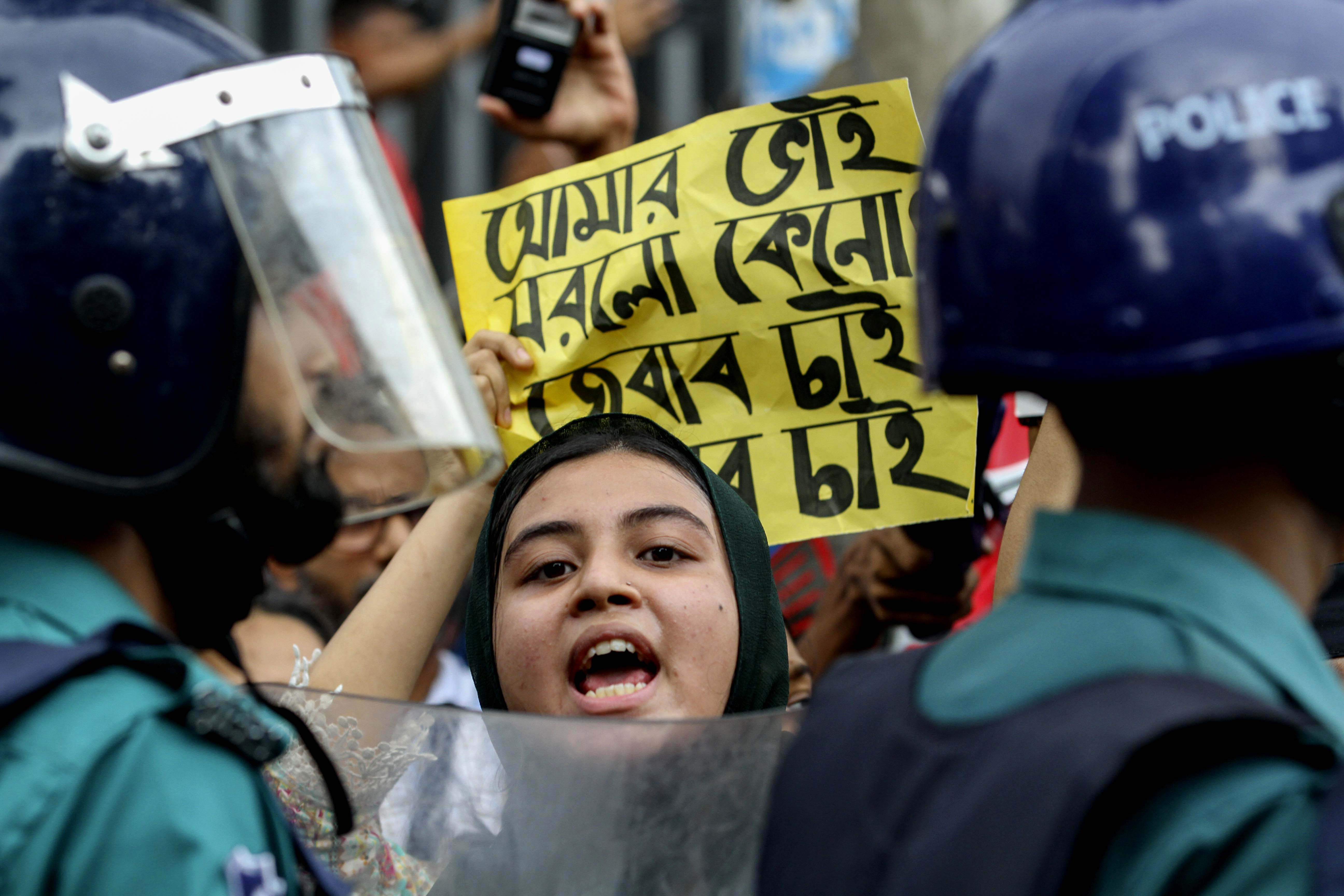
This generation played a decisive role in toppling the most autocratic government in the nation's history. Their moral energy—amplified through digital networks linking students, young workers, and first-time voters—ignited the July 16–August 5, 2024 uprising, converting a long winter of discontent into a sweltering summer of reckoning. Driven by an uncompromising demand for accountability that opposition parties could neither summon nor translate into a coherent political pivot, the uprising transformed everyday spaces into sites of dissent. University gates became zones of occupation; handwritten placards saturated social media; dusk-bound slogans unsettled neighbourhoods long disciplined into quietude.
Their courage was not merely political but ontological, staking a claim on what Alain Badiou calls truth: a rupture in the given order that exposes contingency and affirms the possibility of a radically reconfigured social reality.
The uprising as event
In Badiou's terms, the uprising constituted an événement—a break in the historical fabric that inaugurated a truth procedure oriented toward justice, equality, and democratic possibility. Yet almost immediately, under the cold calculus of realpolitik, this generation was sidelined—its insurgent force aestheticised, its political agency discretely anachronised. Aestheticisation renders revolt legible as spectacle—circulating images, slogans, and affect while neutralising their disruptive force. In contrast, anachronization displaces its agents in time, recoding them as figures already outpaced by the restored order, their claims treated as residues of an exceptional moment rather than demands upon the present.
Their courage was domesticated into slogans, their demands reduced to gestures, and within a year a generation that briefly reimagined democracy was retroactively written out of the national narrative—an erasure as deliberate as it was tragic. The restoration of "normal" practice did not simply negate the uprising; it translated rupture into narrative closure, curating both an archive and an obituary for a generation. The archive preserves the uprising as record—catalogued, retrievable, and safely contained within institutional memory—while the obituary performs a subtler closure, narrating the generation's political vitality as already concluded, its historical role completed rather than ongoing.
Palimpsestic governance: a composite framework
To grasp how Gen Z could be both decisive and disposable requires more than a single analytic lens. Read contrapuntally, Alain Badiou and Gérard Genette offer a composite framework. One theorises the emergence of truth through rupture; the other illuminates its containment through overwriting. Together, they clarify why youth movements can shatter political inevitability yet falter when it comes to consolidating power once the situation reasserts itself.
Gen Z in Bangladesh—and increasingly across the Global South—is thus best understood as evental at the moment of emergence and palimpsestic at the level of governance. These are not opposing categories but mutually constitutive conditions.
The uprising qualifies as an event not merely because of its intensity, but because it was unforeseeable within the logic of the existing order. Gen Z's digital fluency, combined with its willingness to risk imprisonment, violence, and social ostracism, constituted fidelity to the event: a sustained engagement with the truth it disclosed. Social media campaigns exposed corruption in real time, generating unprecedented pressure on the regime. University campuses became laboratories of political experimentation; young workers organised strikes and neighbourhood assemblies. Civic consciousness exceeded institutional boundaries, revealing that entrenched dominance—long assumed immutable—was in fact contingent.
The palimpsest and strategic erasure
Yet even at the height of this visibility, the conditions of overwriting were already present. Digital platforms that enabled rapid exposure also produced a volatile archive in which circulation outpaced sedimentation. Truth travelled fast but struggled to harden into institutional memory, its velocity enabling exposure while simultaneously undermining the slower processes through which political meaning acquires durability. Inscriptions accumulated only to be displaced by successive waves of content, leaving traces without durable anchorage. A trace marks the persistence of inscription—something that remains legible in fragmentary form—whereas anchorage denotes the capacity of that inscription to sediment into institutions, practices, and durable political memory. In the digital field, traces proliferate, but anchorage remains elusive.
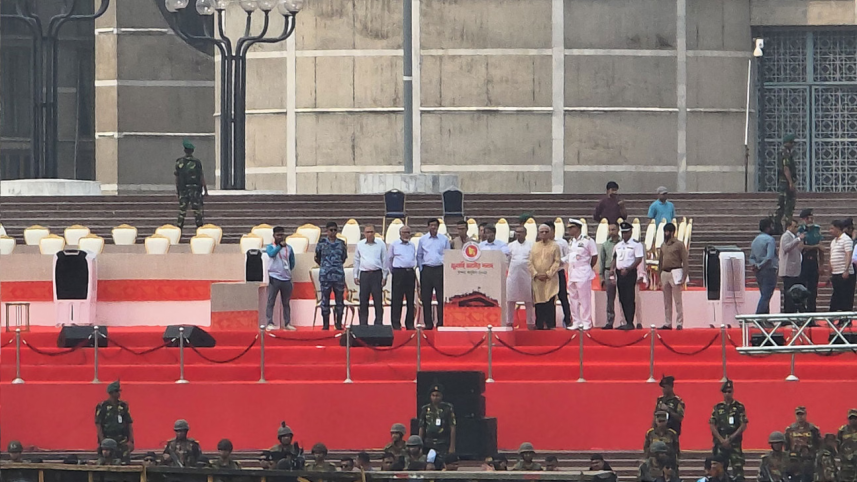
Events are inherently precarious. They demand fidelity to sustain their transformative force. Here lies the tragedy. While the uprising fractured the monolithic architecture of autocracy, the post-uprising landscape moved rapidly to neutralise—and ultimately calcify—the rupture. Bureaucratic inertia, institutional imperatives, and segments of the opposition absorbed the event into the run-of-the-mill routines of politics.
What had been revolutionary energy was domesticated into ritualised forms: hashtags became transient trends, token youth representation substituted for structural inclusion, and civic forums were recast as ceremonial spaces devoid of consequence.
Erasure, in this sense, does not mean disappearance but strategic overwriting. Bangladesh's post-uprising order operates precisely in this manner. Institutional normalisation and narrative revision were inscribed over the July 2024 rupture, not to deny it outright, but to render it safely historical. The event was acknowledged, commemorated, even celebrated—but in ways that thinned its operative force. Gen Z was remembered, but only as a moral witness rather than as a political subject capable of governing.
Post-election settlement and ambiguities
The sidelining of Gen Z unfolds in the shadow of two formally decisive outcomes: the 13th national election and the referendum on the July National Charter. Together, they appear to vindicate the uprising's demands—regime change through ballots, reform through popular mandate. The election delivered procedural clarity, consolidating power within a reconfigured yet familiar party architecture. The referendum ratified the Charter's reform agenda, conferring democratic legitimacy upon constitutional aspirations articulated in the wake of July 2024.
Yet their coexistence produces ambiguity. The formerly ruling Awami League remained excluded from electoral contestation, structurally incapable of reentering the field as an agent of the Charter's implementation. Its absence has not dissolved the ideological terrain it once dominated; rather, it has intensified the symbolic contest over 1971 and the grammar of liberation. The foundational binary of pro- and anti-liberation—long weaponised in political discourse—reasserts its gravitational pull.
The NCP: From moral witness to constitutional actor
The notable exception—though still embryonic—has been the emergence of the NCP as a vestigial formation of Gen Z's political energy. Electorally modest yet symbolically charged, it represents an attempt to convert moral rupture into organisational continuity, signalling that July's undertext has not entirely dissolved into the majoritarian script.
More consequential, however, is the NCP's decision—shaped within the strategic horizon of the departing Interim government—to become a formal signatory to the July National Charter, the very document it helped midwife into existence. What was framed as principled abstention—despite an active campaign for the referendum's "Yes" vote—has now resolved into strategic inscription. This shift marks not a simple reversal but a structural transition intrinsic to post-event politics: the movement from ethical exteriority to institutional inhabitation.
By affixing its signature, the NCP secures interpretive presence within the constitutional architecture it helped catalyse, refusing to leave the Charter's meaning to be monopolised by entrenched parties. It converts moral proximity into institutional leverage. Yet this conversion is inherently double-edged: the very act that secures interpretive presence also initiates the party's exposure to procedural containment.
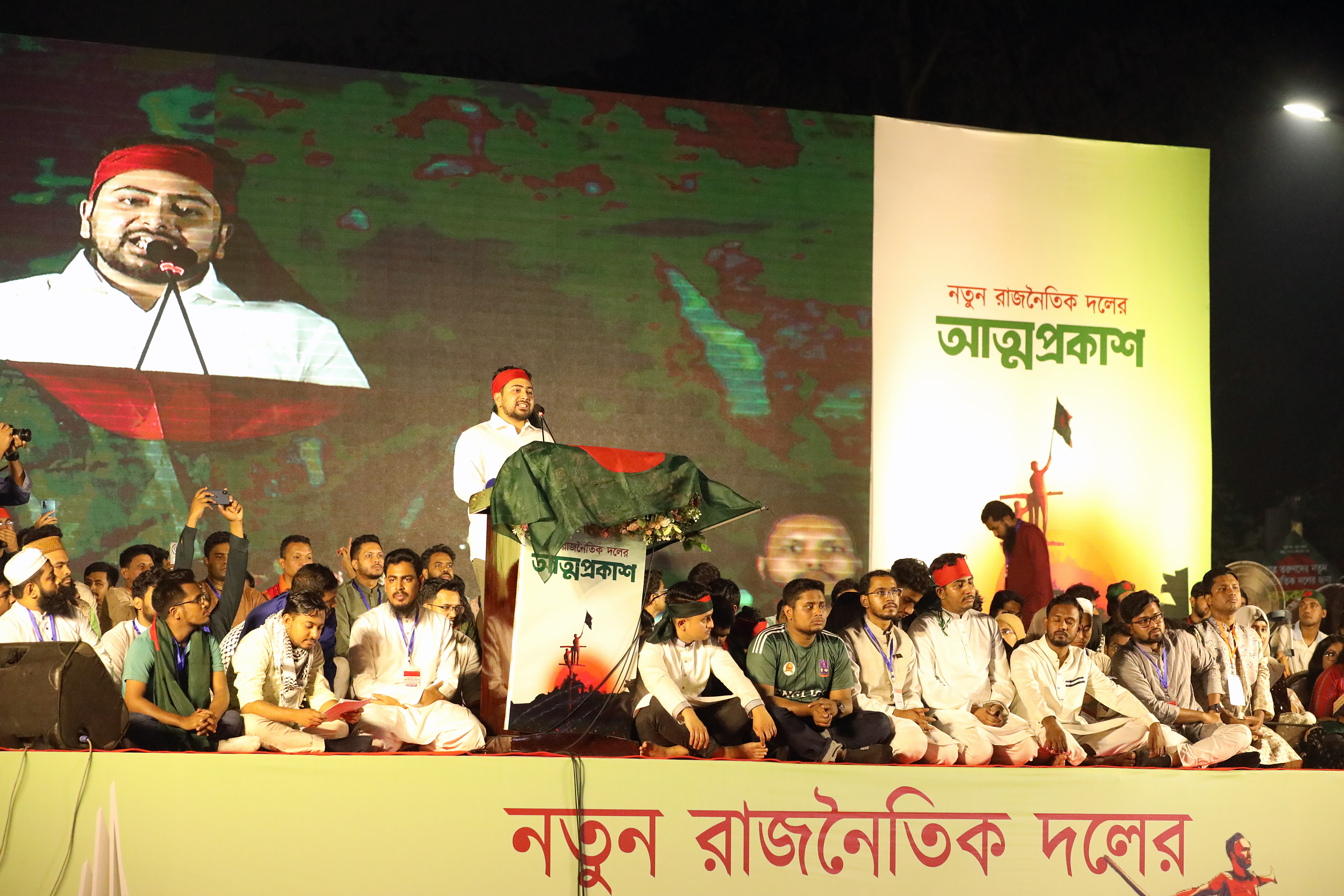
Yet inscription is not without cost. To sign is to enter the domain of compromise, procedure, and incrementalism—the very terrain against which the uprising first defined itself. The risk now is not irrelevance but co-optation: that the Charter's transformative vocabulary will be absorbed into the grammar of governance and administered as reform rather than rupture. Participation promises influence, but it also binds the party to outcomes that may fall short of July's insurgent horizon.
The paradox of post-event politics thus reappears in altered form. If earlier the danger lay in ethical distance without power, it now lies in power without full fidelity. The question is no longer whether the NCP will shape the Charter's meaning from within, but whether it can do so without normalising the event that summoned it into being into mere constitutional routine.
Post-uprising, post-election dynamics
The referendum affirms legitimacy; the election reaffirms institutional resilience. Reform has been authorised, yet its implementation now passes through channels historically adept at delay, dilution, and symbolic accommodation. The July Charter endures not merely as text but as ratified mandate, yet its truth-procedure—the deeper reorganisation of political culture and generational agency—remains contingent.
The political system did not reject the uprising; it arrested it. What erupted as a demand upon the present has been preserved as precedent. This is palimpsestic governance: recognition without force, preservation without transformation.
The erasure of Gen Z, then, is not disappearance but translation. Their agency is symbolically retained while materially displaced. Courage is celebrated rhetorically even as structural consequence is deferred. When truth is acknowledged yet neutralised, political change risks degenerating into performativity.
And yet a palimpsest never fully effaces its undertext. Beneath institutional normalisation, the ethical intensity of youth mobilisation persists—surfacing in civic scepticism, electoral fragmentation, and the tentative experiments of formations such as the NCP. The uprising fractured the aura of inevitability surrounding entrenched power. That fracture has not healed; it has been managed.
From vigilance to responsibility
What remains is not nostalgia but vigilance: the refusal to allow recognition to substitute for transformation. The uprising disclosed a truth-procedure—justice, accountability, and generational agency—that remains unresolved. Formal legitimacy has been achieved, but structural translation is incomplete.
The BNP's electoral victory channels political momentum toward conventional governance, strategically accommodating rather than embodying the uprising's ethical horizon. The uprising's energy survives not in programmatic adoption but in the contingent openings the new configuration presents.
Genette's framework reveals how this energy has been palimpsestically overwritten. The Charter, once ruptured, is now inscribed within procedural norms and institutional compromises. Recognition exists, but its operative force is attenuated. Gen Z's contributions are symbolically celebrated yet materially displaced.
The NCP's inscription transforms it from a moral witness into a constitutional actor. Ethical distance gives way to responsibility; fidelity shifts from memory to practice. The post-uprising landscape is thus defined by institutionalisation without full realisation—recognition without guaranteed transformation. Gen Z remains a threshold, a latent vector of possibility whose force persists beneath normalisation.
BNP's strategic deferral
The BNP's landslide victory reflects a turn toward governability over fidelity. Initially sympathetic to aspects of the uprising, the party recalibrated toward electoral consolidation. The carefully staged return of Tarique Zia from his seventeen-year exile symbolised restoration within opposition politics rather than generational transfer of authority. In securing parliamentary dominance, the BNP demonstrated how an event can be absorbed into routine politics without being overtly repudiated. Ethical intensity yielded to electoral arithmetic.
Crucially, the post-election reality was framed by the BNP as a seamless transfer of power from the formerly ruling Awami League to itself—a narrative of continuity rather than rupture, symbolically reinforced by the retention of the same sitting president, whose institutional presence lent the transition an air of constitutional normalcy. This choreography of continuity effectively muted the insurgent origins of the new political order, recoding the upheaval as an episode within an already legible democratic sequence. In doing so, it not only attenuated the disruptive force of July 2024 but also displaced Gen Z from its position as a constitutive political subject, recasting it as a catalytic yet ultimately expendable force.
More significantly, this narrative of seamless succession diluted the binding force of the July National Charter. What had emerged as a demand for structural transformation—now partially inscribed within the reformist provisions of the evolving constitutional framework—was repositioned as a set of aspirational guidelines rather than obligations inhering in the new order. The reforms embedded in the constitutional moment risk being implemented as incremental adjustments rather than enacted as the institutional crystallisation of an eventual truth. In this translation from rupture to routine, the Charter's transformative vocabulary is retained, but its imperative force is deferred—absorbed into the grammar of governance even as the generation that compelled its articulation is rendered marginal to its implementation.
Patterns in generational politics
The aftermath reveals a recurring pattern: mass democratic assertion delegitimises entrenched authority yet falters at institutional reconstitution, where familiar elites reclaim initiative in the name of stability and governability. Youth-led mobilisations raise the stakes of politics but encounter systems structurally calibrated to absorb rupture without conceding power.
The result is normalisation—symbolic recognition coupled with procedural containment. Yet neither entrenched authority nor emancipatory uprisings can claim the last word. Power is displaced rather than resolved; resistance is recomposed rather than extinguished. Politics persists through provisional settlements and unstable alignments.
Viewed through the longue durée, the roads not taken since liberation continue to echo—less as admonition than as persistent resonance shaping an unsettled present and an open future.
Global south context
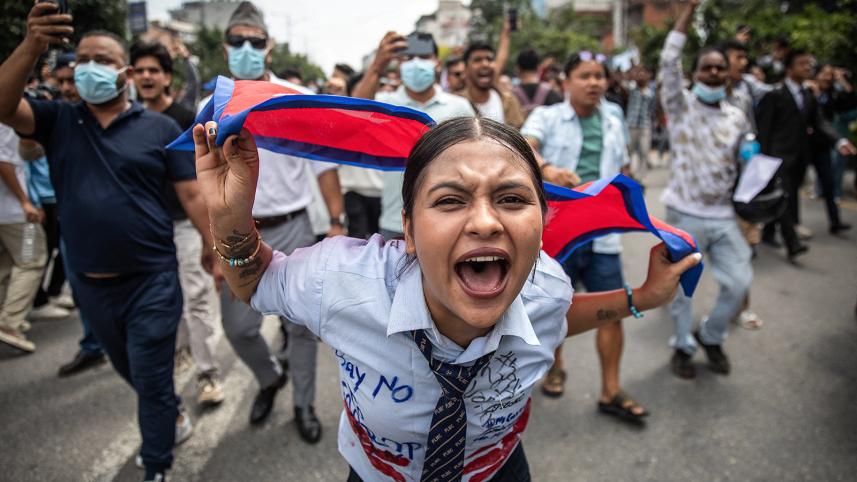
The July 2024 uprising must also be situated within a broader Global South sequence of Gen Z–led political rupture. From Sri Lanka's 2022 revolt to Bangladesh in 2024, and now decisively in Nepal—where the youth-driven upheavals of 2025 have culminated in the electoral triumph of a new political formation under Balendra Shah—followed by reverberations across Madagascar, Mongolia, Kenya, Indonesia, Peru, Morocco, the Philippines, and beyond, youth mobilisations have repeatedly shattered the presumption of political inevitability. Yet across these diverse contexts, a recurring pattern persists: moments of evental rupture followed by processes of palimpsestic normalisation. Governments fall, elections reconfigure the political field, and new faces assume office—often carrying the symbolic imprimatur of generational change—but the structural position of youth as governing subjects remains only partially realised. Even in Nepal, where a Gen Z–inflected insurgent energy has translated into a parliamentary majority and executive power, the transition from insurgency to governance now confronts the entrenched inertia of institutions, bureaucratic sedimentation, and geopolitical constraint. What unites these trajectories is not ideological convergence but a generational refusal of inherited stagnation coupled with a shared encounter with systems adept at overwriting disruption.
Dr Faridul Alam is a former academic, writes from New York City.
Send your articles for Slow Reads to slowreads@thedailystar.net. Check out our submission guidelines for details.

Can Bangladesh make its plastic waste policy work?

Dhaka accidentally built the city planners now want. Can we make it liveable?
Can Bangladesh produce its own knowledge?
How we are killing Dhaka

Can Bangladesh afford not to invest in Bhola’s gas?

Bangladesh’s renewable policy: Still too little but not too late
Prabhat Patnaik speaks / Why the Global South must rethink export-led growth

Bhotekoshi flood: Another warning from the Himalayas. Are we listening?

Renewing the Ganges Water Sharing Treaty: What should Bangladesh do?