The Gurukul Legacy: The lost dialogue between teacher and student
In an age dominated by speed, screens, and relentless competition, something profoundly human is quietly slipping through our fingers: the gentle, ethical, and transformative dialogue between a teacher and a student. Education today is efficient, measurable, and outcome-driven, yet increasingly restless and fragile. Long before classrooms were enclosed by concrete walls and learning was compressed into grades, rankings, and certificates, this land knew a different rhythm of education. It was slower, deeper, and far more humane. It was called Gurukul.
Gurukul was not merely a place where lessons were taught. It was a philosophy of living, a discipline of becoming, and a sacred bond between two human beings committed to the pursuit of wisdom. At its core lay an intimate, respectful, and loyal interaction between the guru (master) and the shishya (student) — an interaction that shaped not only intellect but also character, ethics, and responsibility towards society and nature.
Today, as Bangladesh and the wider world grapple with tensions in educational spaces—misunderstandings, mistrust, erosion of respect, and moral confusion—it may be time to pause and listen to the quiet wisdom of this ancient tradition. Not to romanticise the past, but to retrieve from it the values that can heal the present.
Gurukul as a Way of Life, Not an Institution
In ancient Bengal and across the subcontinent, learning did not begin with enrolment forms or end with certificates. It began with intention. A student approached a guru with humility, curiosity, and the willingness to undergo discipline. Acceptance into a Gurukul was not automatic; it was based on readiness to learn, to serve, and to grow.
The guru, in turn, was not merely a conveyor of information. He, or in many contexts she, was a guide, a moral compass, and a living example of the values being taught. The relationship was not transactional; it was transformational. Knowledge was shared gradually, through observation, dialogue, service, and lived experience. The student did not simply learn — the student became.
Gurukul education demanded sacrifice. Life was simple, often austere. Comfort was secondary to clarity of mind. Learning was hard labour, both intellectual and physical. This hardship was not punishment; it was preparation for resilience, empathy, and responsibility.
In this system, education was not separated from life. Cooking, cleaning, caring for nature, serving the community, and reflecting on ethical dilemmas were all part of learning. Knowledge was not abstract; it was embodied.
Learning Under the Sky: Nature as the First Classroom
The geography of Bengal played a vital role in shaping its educational traditions. Dense foliage, riverbanks, floodplains, and fertile land offered natural spaces for congregation. Under banyan trees and within forest clearings, early learning communities emerged. These were not accidental settings; nature itself was considered a teacher.
The rhythm of seasons, the discipline of agriculture, and the balance of ecosystems instilled lessons that no text alone could convey. Students learned restraint from rivers, patience from trees, and interdependence from village life. Education cultivated harmony with oneself, with society, and with the environment.
During the Buddhist period, viharas became major centres of learning, where monks and lay students engaged in deep intellectual exchange. Philosophy, logic, medicine, astronomy, linguistics, and metaphysics flourished alongside spiritual practice. Dialogue, questioning, debating, and reflecting were central. Respect did not silence inquiry; it enriched it.
Later, Hindu tolas and Muslim madrasas continued this legacy. Despite differences in theology and ritual, the ethical core remained strikingly similar: reverence for knowledge, humility before the teacher, and commitment to social good.
Beyond Religion, Race, and Regime
One of the most enduring strengths of the Gurukul tradition lay in its ability to rise above narrow identities and temporary divisions. Though deeply rooted in spiritual and philosophical thought, the Guru–Shishya relationship was never confined by the boundaries of religion, race, language, or political authority. In this worldview, wisdom occupied a higher ground than power, and learning stood beyond ideology.
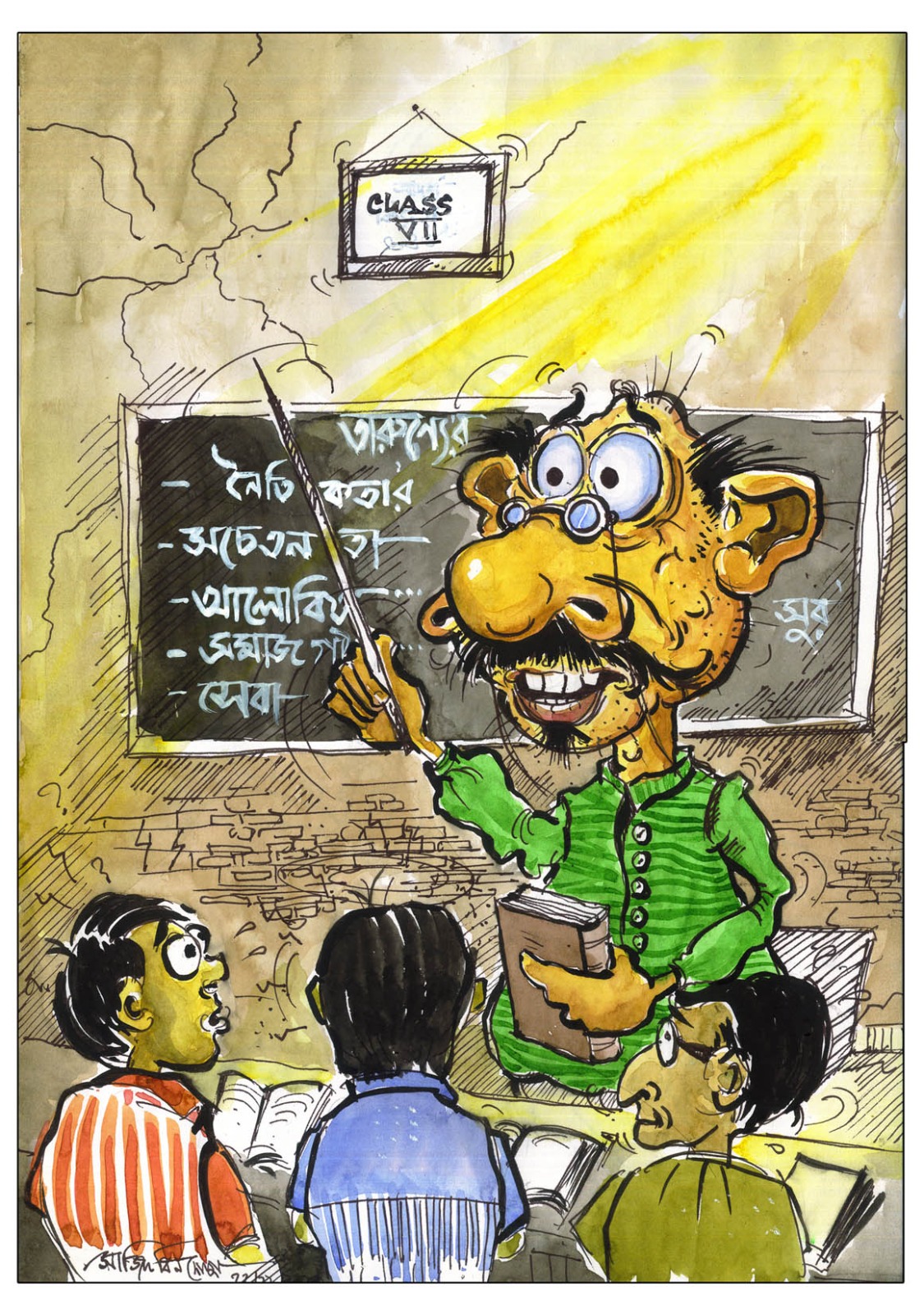
The guru was expected to transcend personal prejudice and sectarian loyalty. Knowledge, once attained, was not owned by any single faith or community; it belonged to humanity. Likewise, the student was trained to approach diversity not with fear or rivalry, but with neutrality, curiosity, and compassion. Differences were not erased but harmonised through ethical understanding. This moral discipline cultivated minds that could listen before judging and reflect before reacting.
Such ethical universality allowed knowledge to flow freely across communities. Philosophical ideas, scientific observations, artistic expressions, and ethical reflections travelled beyond social boundaries, forming a shared intellectual heritage. Education thus became a civilisational glue, quietly binding people together through common values of respect, inquiry, and responsibility.
In a land as plural and layered as Bengal, where Hindu, Buddhist, Muslim, and later Christian traditions have coexisted for centuries, this approach to learning played a decisive role in nurturing social cohesion. Gurukuls, viharas, tolas, and madrasas may have differed in ritual and theology, but they shared a common ethical grammar: reverence for knowledge, dignity of the learner, and responsibility of the teacher.
In this tradition, education was never a tool of exclusion or dominance. It was a bridge connecting communities, generations, and worldviews. At a time when identity politics and ideological rigidity increasingly fracture societies, the Gurukul ethos reminds us that true education does not divide; it humanises, harmonises, and unites.
Education for the Nation, Not Just the Self
In the Gurukul worldview, learning was never pursued as an end in itself. Education was understood as preparation for service. A student was expected to grow not only in knowledge but also in responsibility towards family, society, and ultimately the nation. Learning carried an ethical weight; it demanded accountability.
Completion of study did not signal distance from the guru. Instead, it marked the beginning of lifelong gratitude and remembrance. The bond between teacher and student extended far beyond the years of formal learning. What students carried with them was not only information or skill but a moral compass—quiet lessons that guided them during moments of doubt, crisis, and decision-making.
This approach to education shaped individuals who were not merely efficient or professionally trained but deeply grounded in values. It nurtured leaders who understood the meaning of sacrifice, administrators who valued fairness and justice, thinkers who respected life and diversity, and citizens who felt responsible for the collective well-being of society. In this sense, Gurukul education did not simply produce achievers; it cultivated conscientious human beings.
The Silent Ritual of Respect
Respect in the Gurukul tradition was not fear-based. It was cultivated through daily practice: listening attentively, serving willingly, questioning respectfully, and acknowledging effort. Humility was not weakness; it was strength refined.
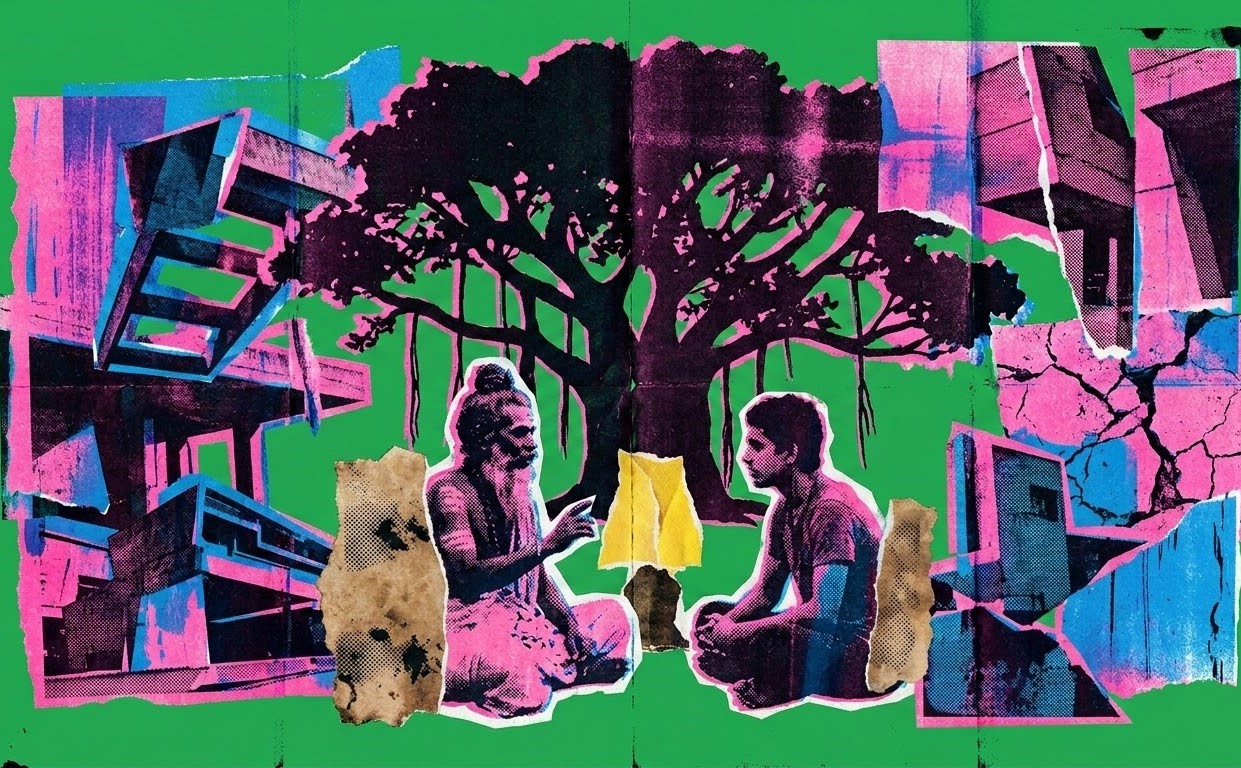
Students smiled not out of submission, but out of gratitude. Dedication became habitual. The guru was not idolised as infallible, but honoured as a human being who had walked further on the path of knowledge. This respectful environment allowed learning to flourish without anxiety. Mistakes were part of growth, not sources of humiliation.
Where Are We Today?
We must now confront an uncomfortable question: what has happened to this bond?
In contemporary Bangladesh, education operates under immense and often conflicting pressures. Parents understandably demand measurable success. Institutions pursue rankings, visibility, and global recognition. Students move through an environment shaped by intense competition, uncertainty, and fear of failure. Teachers, meanwhile, carry heavy academic and administrative workloads, frequently without adequate institutional support, social respect, or emotional recognition.
Within this strained landscape, relationships inevitably suffer. Teachers are increasingly seen as service providers rather than mentors. Students, while burdened with expectations, are often deprived of meaningful guidance and patient listening. The space for trust, once central to the learning process, shrinks, giving rise to misunderstanding, frustration, and, at times, open conflict within educational settings.
This situation cannot be reduced to the failure of any single group. It is not solely the fault of teachers, students, parents, or institutions. Rather, it reflects a systemic imbalance, where performance is prioritised over process, and outcomes overshadow relationships.
The crisis we face, therefore, is not merely academic; it is deeply relational. We are gradually losing the culture of attentive listening, thoughtful dialogue, and ethical guidance that once anchored education. Authority is questioned, which is not inherently unhealthy, yet wisdom is not always sought with equal seriousness. Freedom is increasingly demanded, but responsibility is not always embraced with the same urgency.
Still, placing the burden of blame on the new generation would be both unfair and unproductive. Young people are not detached from values by choice alone; they respond to the structures, pressures, and examples that surround them. Every generation reflects the educational culture it inherits. If relationships in education feel fractured today, it is a collective moment of reflection, an invitation to rethink not only how we teach, but how we relate to one another within the learning space.
Gurukul Was Never About Blind Obedience
It is important to address a common misunderstanding that often surrounds the idea of Gurukul. Contrary to popular assumption, Gurukul was not a system built on blind obedience or unquestioning submission. It did not aim to silence students or suppress independent thought. Rather, it cultivated critical inquiry, thoughtful debate, and intellectual courage, all within a framework of mutual respect.
Students were encouraged to ask questions, challenge ideas, and engage deeply with knowledge. Disagreement was not seen as disrespect when it was expressed with honesty and integrity. The purpose of discipline was not control, but clarity—to train the mind to think carefully, listen patiently, and respond responsibly. In this setting, the guru was not a dictator of belief, but a facilitator of understanding, guiding students towards insight rather than imposing conclusions.
This distinction holds particular relevance today. In contemporary education, authority is often viewed with suspicion, while freedom is sometimes misunderstood as the absence of structure. As a result, classrooms can swing between extremes: either rigid control that discourages dialogue, or unchecked freedom that lacks direction. Gurukul offered a middle path, where freedom of thought was strengthened, not weakened, by ethical discipline.
In an age of polarisation, Gurukul teaches neutrality of wisdom. In an age of impatience, it teaches depth. In an age of noise, it teaches attentive silence.
The balance between questioning and respect, independence and responsibility, remains one of the most difficult challenges of modern education. Gurukul reminds us that true intellectual freedom does not emerge from defiance alone, nor does respect require silence. It grows in spaces where students feel heard, guided, and trusted—where disagreement sharpens understanding, and discipline nurtures wisdom rather than fear.
Why Gurukul Still Matters Today
Reviving Gurukul does not mean abandoning modern classrooms, technology, or global knowledge systems. Its relevance lies in its values, not its physical form.
It reminds us that:
• A teacher is more than a syllabus or a slide presentation.
• A student is more than a GPA or a result sheet.
• Education is a moral journey, not just a professional ladder.
In an age of polarisation, Gurukul teaches neutrality of wisdom. In an age of impatience, it teaches depth. In an age of noise, it teaches attentive silence.
Respecting a teacher does not mean surrendering independent thought. It means recognising the human effort, experience, and sacrifice behind education. Humility does not weaken intelligence; it sharpens it.
A Call to the New Generation
To the young minds of today: be bold, be critical, be creative. Question ideas, challenge systems, seek justice. But do not discard respect in the process.
Your teachers are not perfect, but they are carriers of lived knowledge. Engage with them through dialogue, not disdain. Remember that wisdom often comes quietly, not loudly. Learning is not a race. It is a relationship.
A Call to Educators
To teachers and mentors: be guides before being managers. Inspire before you instruct. Authority rooted in empathy lasts longer than authority enforced by fear.
Every student carries uncertainty, hope, and potential. Handle it with care. You are not merely shaping careers; you are shaping citizens.
A Message to the Nation
Bangladesh is a land of deep civilisational memory. The spirit of Gurukul still flows beneath our soil, in our language, and in our cultural instincts of respect and hospitality.
Recalling Gurukul is not nostalgia. It is cultural self-awareness.
It is a reminder that education must humanise before it professionalises, and connect before it competes.
The Quiet Lesson
Gurukul teaches us a silent but powerful message:
Stay calm. Stay humble. Respect your teacher.
Because a guru is not merely an instructor.
They are a living manuscript.
A bridge between generations.
A guiding light in the long journey of becoming human.
If we listen carefully, this ancient wisdom may yet heal our classrooms and, perhaps, our collective conscience.
Sajid Bin Doza, PhD, is an art and architectural historian, heritage illustrator, and cultural cartoonist. He is an Associate Professor in the Department of Architecture, School of Architecture and Design (SoAD), BRAC University. He can be reached at sajid.bindoza@bracu.ac.bd.
Send your articles for Slow Reads to slowreads@thedailystar.net. Check out our submission guidelines for details.

Dhaka accidentally built the city planners now want. Can we make it liveable?

Can Bangladesh produce its own knowledge?

How we are killing Dhaka

Can Bangladesh afford not to invest in Bhola’s gas?

Bangladesh’s renewable policy: Still too little but not too late

Prabhat Patnaik speaks / Why the Global South must rethink export-led growth

Bhotekoshi flood: Another warning from the Himalayas. Are we listening?

Renewing the Ganges Water Sharing Treaty: What should Bangladesh do?

What it really costs to live in Dhaka