What it really costs to live in Dhaka

At a wedding last month, a relative I see maybe once a year turned to me with the first real question of the evening. Not my work, not my parents, not my health. He asked where I live now. I told him the area and watched him weigh it behind his eyes, the way a man at the bazaar weighs a fish before naming a price. "It must eat up your whole day, just getting to the office and back," he said.
Everyone in Dhaka does this, whether they admit it or not. Name your neighbourhood, and the listener has already placed you before you say anything else. A Gulshan or Banani address puts you near money, gated parks, embassies and private security. Dhanmondi carries an older kind of prestige, tied to its lake and its bookshops. Uttara means choosing more space at the cost of distance and still paying for it on the road. Mirpur and Mohammadpur are the city's broad middle: dense, mixed-income, unremarkable. Say you live across the Buriganga or the Turag, and the address reads as cheap and far.
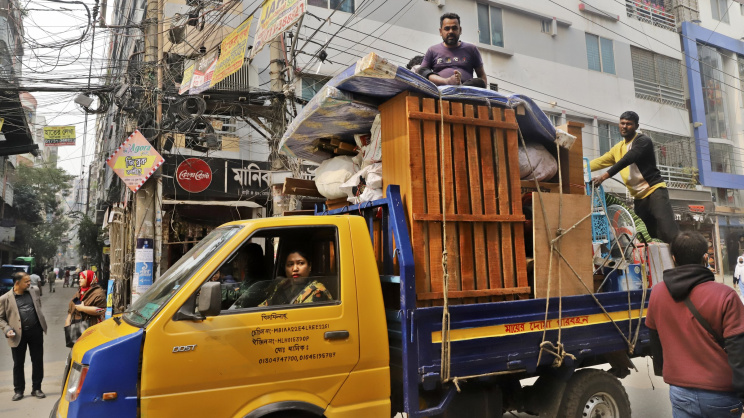
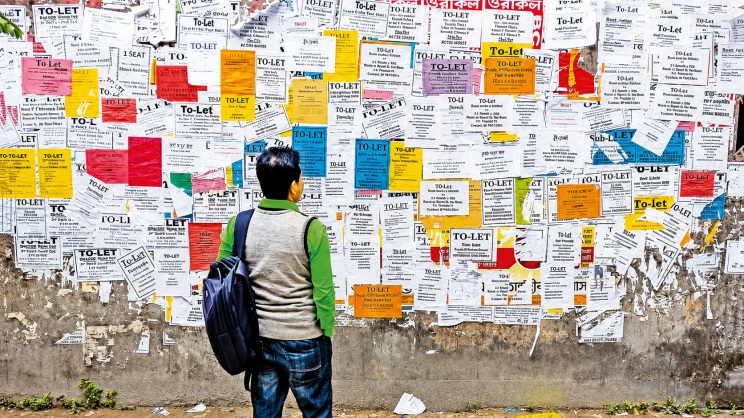
However, such perceptions do not necessarily reflect the cost of living in Dhaka. I have lived in a good many of these neighbourhoods, and one thing never changed: the cost was always high. Dhaka is expensive everywhere. In a city where nearly 80 per cent of people rent rather than own, almost everyone is doing the same maths. Changing neighbourhoods in Dhaka just changes how we pay. We pay with money, time or well-being. Most of us experience a mix of all three and decide which we can most afford to sacrifice.
The monetary cost is most visible. Before moving into a new home, a tenant usually needs to pay two to three months' rent in advance. Even though Section 23 of the House Rent Control Act 1991 makes it illegal to take an advance of more than one month's rent, landlords routinely ignore this law, and tenants cannot afford to argue. Additionally, landlords often raise rents at will, exploiting the gap between housing demand and supply in Dhaka. According to the House Rent Index, rents rose by 5.19 per cent in the July-September quarter of fiscal 2025-26, the third straight quarterly rise. Such an increase is another breach of the House Rent Control Act, which stipulates that once the standard rent is fixed, it generally cannot be increased again until two years have elapsed.
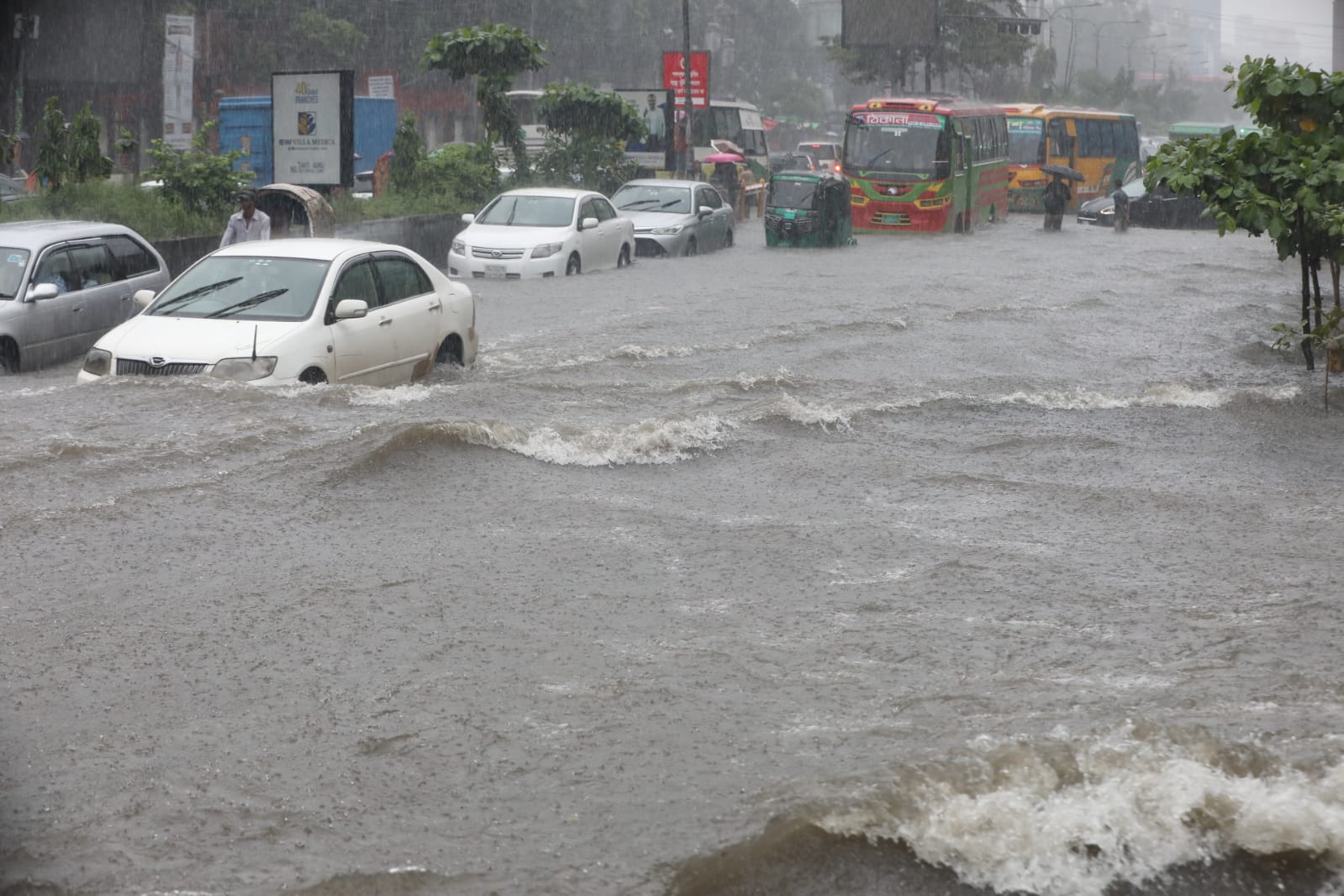
House rent is only the entry fee. The real cost comes from fixing what the city fails to supply. Water is the first gap. The managing director of Dhaka's Water Supply and Sewerage Authority (WASA) has himself advised citizens to boil WASA water before drinking it. According to Transparency International Bangladesh (TIB), Dhaka residents burn about Tk 332 crore worth of gas a year to purify WASA water. The trouble is, the gas runs short too. Homes on the Titas line get cooking gas for only a couple of hours a day, often only after midnight and only until seven in the morning, so a family buys a cylinder of LPG at Tk 2,400 to 2,500, close to double the official price of Tk 1,350, or cooks on electricity and hopes the power holds.
Sayeda Saleha has kept a running account of this in her head for years. She teaches at a Bangla-medium school and has moved her family four times in nine years: from Babur Road in Mohammadpur to Shekhertek, twice within Shekhertek, and now to Basila. Each move pushes them further west, towards the outskirts, in search of cheaper rent. “The new rent is lower than the old one, so we tell ourselves we have saved,” she said. “But the family has grown, and we need more rooms, so it is not really lower at all. Then the water is worse, so we buy jars of water. The gas does not come, so we buy the cylinder. The road is longer, so the rickshaw costs more. By the sixth month, the savings are gone, and we have only moved.”
Rent is not the only reason people choose a neighbourhood. Sadaf works at a newspaper office in Karwan Bazar. He rented a flat on the edge of Aftabnagar, where rents are lower than in Kalabagan or Farmgate, because he wanted more room and a residential setting rather than a commercial one. "I wanted a place with some peace in it," he said. He had a motorcycle, which made the distance manageable.
Then the fuel ran short. Import disruptions prompted the government to ration supplies at filling stations in early March, and motorists at Dhaka pumps had to wait in queues for hours. On 20 April, diesel, octane and petrol rose by Tk 15 to Tk 20 a litre, taking octane to Tk 140. For weeks, Sadaf could not fill the tank without queuing for hours, so on most days he left the bike at home and travelled by bus, which took considerably longer.
He has since moved closer to the office. The rent is roughly the same as what he paid in Aftabnagar, but the flat is smaller, with less light and ventilation. He had moved to Aftabnagar for more space, but the fuel shortage forced him to trade that space for a shorter commute.
Then there is the cost of time. A US study covering more than 1,200 cities ranked Dhaka as the slowest in the world, with traffic moving at just 4.8 kilometres an hour—slower than a steady walking pace. An eight-kilometre journey can take two hours in the morning and another two on the way home.
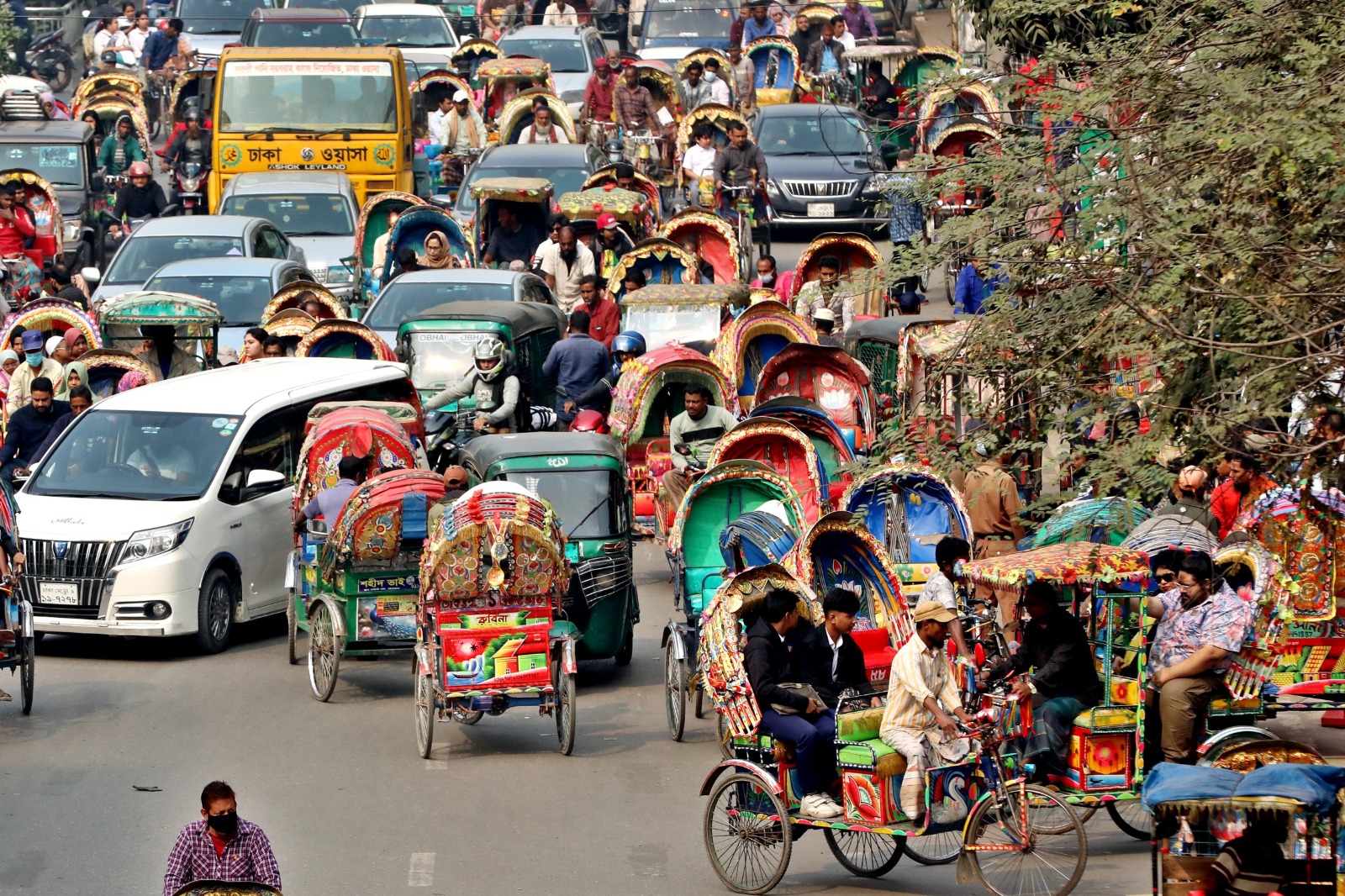
Khaled Ahmed, a lecturer at a private university in Banani, knows the cost of a cheaper address well. He rents a room in Dholaipar, in the far south of the city, and makes the long commute to Banani to teach. "My rent is a third of what my colleagues pay near the campus," he said. "They laugh at me for living so far out. But I leave at seven and reach by half past eight, and the evening run is worse. Three to four hours a day, five days a week. I am paying back that cheaper rent with time."
Further down the income scale, there is often no real trade-off to make. A garment worker who walks to work in Ashulia may do so because the daily fare would take a significant share of a Tk 12,500 minimum monthly wage. A domestic worker may cross half the city by leguna and on foot to reach three homes before ten. She is not choosing between cheaper rent and a shorter commute; she has little choice over either.
For women, there is another cost to consider: safety. Tahmina, who works at a private firm in Gulshan, pays more than she would like so that she can live near her office. She used to live with her family near Trimohoni, between Banasree and Demra. "I could live with my parents," she said, "but then I would be travelling in the dark, and the buses are not safe for women." There is no women's bus service she can rely on. And the journey home does not mark the end of her day: it is followed by a second shift of cooking and housework that no one counts. A friend in Uttara takes the metro most of the way, Tahmina said, but still has to walk the last stretch alone along unlit roads.
For two-earner households, choosing where to live becomes more complicated. A flat can be close to one person's workplace but rarely both, so one of them usually has to accept a longer commute. Once there are children, the deciding factor is often not either workplace but the school. Rumana, who works at a bank, and her husband rented a flat in Mirpur to be near the school they wanted for their daughter. Both now travel further to work than they once did. “We did not really choose where to live,” she said. “Once we chose our daughter’s school, everything else had to fit around it.”
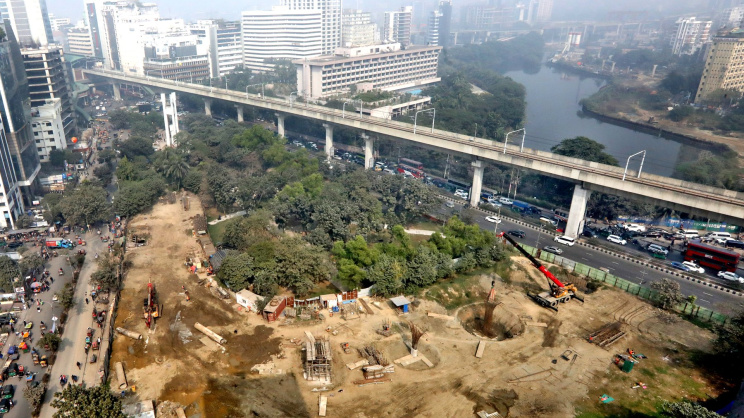
Then there is a cost that rarely appears in a household budget: health. In IQAir's 2025 ranking, Bangladesh had the second-worst air quality in the world, with fine-particle pollution reaching up to 13 times the level the World Health Organisation considers safe. Dhaka bears much of that burden. The heat that used to ease by evening now lingers in the concrete through the night. Construction rarely stops, horns are almost constant, and generators add to the noise and fumes. Dengue comes with the rain, and Dhaka records more illnesses and fatalities than anywhere else in the country.
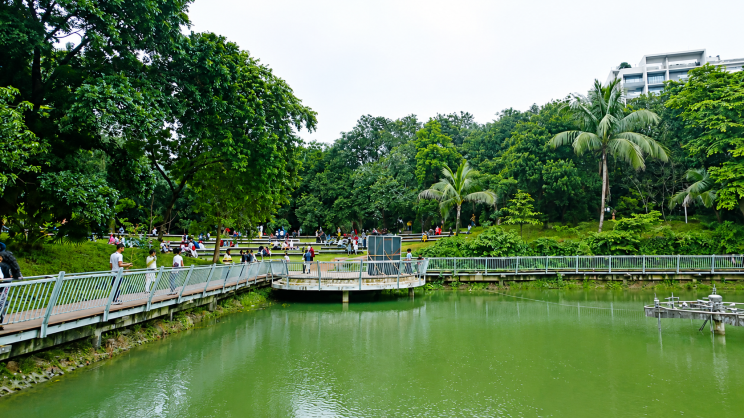
The cost does not always appear as illness. Often, it appears as exhaustion, made worse by how few places Dhaka has where people can simply rest. Green and open space in the city fell from about 52 square kilometres in 1995 to under 30 square kilometres by 2023, and 35 wards across the two city corporations have no park or playground at all. What remains amounts to roughly one acre of park or playground for every 37,900 residents, against the one acre per 12,500 that planners say the city needs. For much of Dhaka, there is simply no free place to sit outdoors.
Even on their day off, Dhaka residents cannot easily escape the costs of the city. Five or six days belong to work; the weekend is supposed to offer some relief. In practice, the choices are limited. Free options are often far away, while nearby places usually come at a price, whether it is a restaurant, a ticketed play area or even a coffee shop. Getting to any of these places on a Friday afternoon means returning to the same congested roads, spending much of the free time the journey was meant to make enjoyable. Most Fridays, I stay home.
Sumaiya, 31, moved from Chattogram four years ago to take a job at a private company in Kalabagan and now lives alone in a sublet room in Hazaribagh. "I got the job I came for," she said. "What I did not know was that the week would eat everything else. I leave at eight, and I am back at nine. On Friday, I sleep until noon, because it is the only day I can, and by the time I get up, the afternoon is gone and going anywhere means two hours on the road. So I stay in the room. Some weeks I realise I have not had a proper conversation with anyone since the Friday before."
Then there is the constant worry about money. My spreadsheet can tell me what I have now, but it cannot tell me what will happen if the landlord raises the rent at renewal or someone at home falls ill after I have already spent most of that month's income. Most working people I know in Dhaka have little or no savings to absorb an unexpected expense, and they live with that uncertainty.
It is easy to argue that this is simply the price of living in a city of Dhaka's size, and that higher rent buys a better life. To some extent, it does: better drainage, a working lift, greater security. But much of what residents pay for is not comfort. Residents often end up paying privately for what the city fails to provide reliably—water, gas, transport and other basic services. Those who can afford these alternatives pay for them. Those who cannot simply live with the shortages.
None of this happened by accident. Dhaka grew faster than its infrastructure could keep up. It had about 410,000 people in 1951, two million by 1974 and six and a half million by 1991. Today, it is home to well over twenty million people and continues to receive an estimated 300,000 to 400,000 newcomers each year, many from districts where opportunities for work have dwindled.
Growth on that scale would strain any city. What made Dhaka's situation worse was that its pipes, drains, roads and housing were not built ahead of the population growth. Infrastructure came later, unevenly, and in some places hardly at all. Plans were drawn up, from the master plan to the detailed area plan extending to 2035, but implementation has remained limited. Into the gaps left by the state stepped private developers, building what the market would buy: flats for those who could afford them, often on land that had once been wetland. Roughly a third of Dhaka's residents now live in informal settlements. In the urban core, about 80 percent of the surface is built over, with less than 10 per cent remaining as green space.
The relative at the wedding was not being unkind. In Dhaka, an address can become a verdict: money if you live in Gulshan, hours if you live in Dholaipar, and health and free time wherever you live. He thought he was asking what I could afford. He was really asking what I had agreed to give up. In Dhaka, every address has its price.
Khairul Hassan Jahin is a journalist at The Daily Star. He can be reached at khairul.jahin@thedailystar.net
Send your articles for Slow Reads to slowreads@thedailystar.net. Check out our submission guidelines for details.
Renewing the Ganges Water Sharing Treaty: What should Bangladesh do?
Why Nepal’s devastating floods should no longer surprise us

What kind of doctors does Bangladesh need?
Why aren’t we talking about the health risks of battery rickshaws?
What six South Asian economists taught the world about development
Can Dhaka’s Pink Bus break a four-decade pattern?
Kazi Khalid Ashraf & Adnan Zillur Morshed on Dhaka's Future / What kind of city do we really want?
Is Bangladesh’s garment industry ready for the next shock?
Can pink buses make travels safer for women?