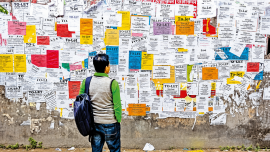
Who will answer for Bangladesh’s ecological wounds?

Dhirendranath Roy and Fazle Rahman are two agricultural labourers from the Dahagram–Angarpota enclave. With them, I reached the homes of Samiul Islam and Samina Begum in Mistripara—the last house of Bangladesh. Just beside it lies Charurbagan and Kangratali, villages in India’s Cooch Behar district.
The elderly farmers told us that, in earlier days, they cultivated deshwali rice. Dhepi, Kachudola, Nojang, Dudhkalam, Lalaguri, Kalaaguri, Shatiagur, Katishail, Dhali, Garia, Dungra, Chapal, Shani, Dumra, Kajalgaria, Indurshail, Boumail, Kaladema—these were the rice varieties once grown here.
In Dahagram, aus rice is called bhadoi or bitri. One aus-season variety was known as Shani. Its grains were black, with striped markings on the husk. It was mostly sown on danga, or higher land, and sohori, or medium-low land. In those days, no one cultivated the dola, the low-lying fields. People called those lands dhyapbari. They remained filled with water hyacinth.
Now, no land is spared. Hybrid rice, maize, tobacco, jute and vegetables follow one another in relentless succession. On the highlands, thatching grass once grew. Most homes were once huts of bamboo and thatch.
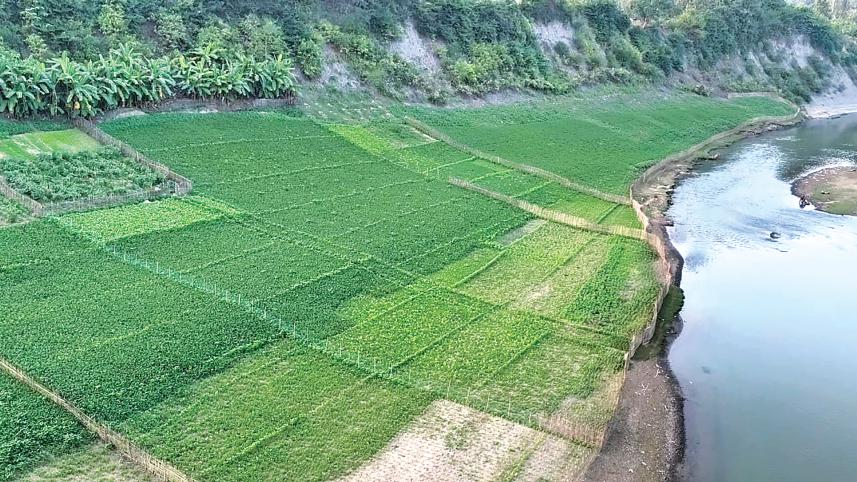
Dahagram–Angarpota is a part of Bangladesh, but it lies within India’s Cooch Behar district. To reach this union in Patgram, Lalmonirhat, one must pass through the Tin Bigha Corridor. Bangladesh became independent in 1971, but the people of the enclave did not gain access to the corridor until 1992.
Soon after the corridor opened, tin-roofed houses and brick buildings began to rise across the enclave. Plastic, glass and artificial board sheets gradually entered the landscape. Agriculture and food production changed dramatically. Synthetic fertilisers, agrochemicals, company-packaged seeds, hybrid seeds, irrigation machines and diesel all made their way in.
The farmers said that all the wetlands in the enclave have now been turned into IRRI schemes. The government does not excavate canals or wetlands. Water is in acute short supply. The elders recalled the names of rare fish—pokta, ghol, baghar, naria, bhondorgali, chili and boiral. That diversity of native fish has disappeared. Instead, the cultivation of tilapia, pangas and silver carp has expanded.
Poultry farms have also sprung up. Women said many people are distressed by the stench of waste from these farms. They also lamented that commercially farmed fish lack the flavour of fish that grow naturally in rivers and other natural water bodies. Now, almost all food has to be bought from the market; little can be gathered from nature anymore.
Once, in the paddy fields, people found daburi, dhekia and kolmu-mashak. Daburi greens cooked with hidol were part of the enclave’s traditional cuisine.
A journey across the enclave makes one thing clear: the diversity of living resources has declined. This raises a difficult question. The corridor for which people fought for so long—has it protected the life, nature and environment of the enclave?
The corridor was established to ensure unrestricted movement and communication between the enclave and the rest of Bangladesh. Yet, over time, it became an easy route for environmentally destructive development and commerce. From diversity-blind Green Revolution projects to the aggressive introduction of invasive species, it became a safe passageway.
Dahagram–Angarpota stands as a stark example of how environmentally destructive activities and attitudes enter our villages. From here, we can begin to understand how environmental destruction unfolds across the country—through what mechanisms, and in what form.
Through unplanned development, pollution, land grabbing, corporate control, multinational markets and relentless ecological degradation, even an independent country has, in many ways, become an “enclave”. Across Bangladesh, countless visible and invisible corridors continue to disrupt the natural rhythms and flows of the environment.
On 5 June, World Environment Day may be marked by official ceremonies and symbolic activities. But on environmental questions, the state’s political position remains unclear. This year’s Environment Day theme is Climate Action. Yet the state is not actively ensuring climate justice nationwide. The climate commitments it has made in the Constitution, in law, and most recently in its Nationally Determined Contribution 3.0 report are still not being implemented.
The natural flow of water is being denied
I was returning through Andhasura Bil in Naogaon when I met Anisar, an elderly fisherman. His home is in the Bherdurgapur village of Bharsho Union in Manda. After an entire day’s work, he had caught only half a kilogram of tiny shrimp. If he could sell it in the market, he would earn Tk100.
His family has seven members. They need 2.5 kilograms of rice a day.
He told me that his grandfather, Fulchand, once caught large tolla and kuje air fish from Andhasura, Manki Bil and the Shib River. Now there is no water in the bil. There is no fish either. The wetlands are leased out to the rich. The poor cannot step into the water.
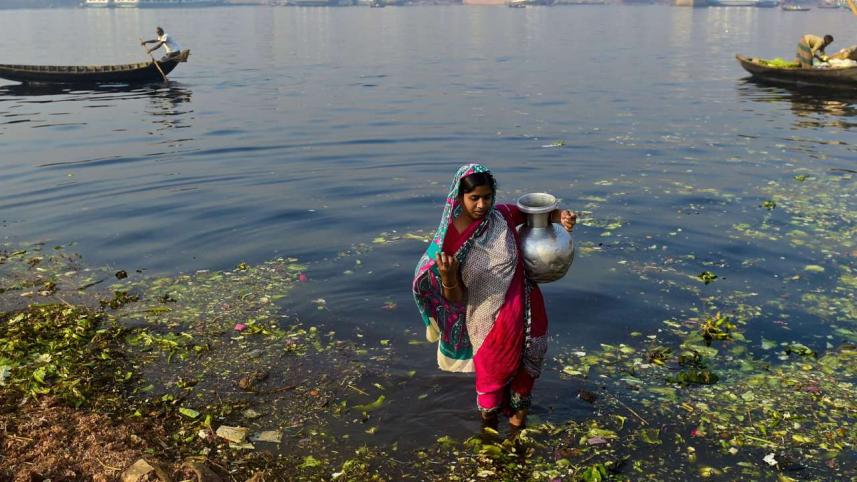
Upstream, barriers have been built across the bil and the river to hold back the water. Leaseholders cultivate fish in the wetlands. They dry out the bil and spray grass-killing poison. Snails, algae, insects—everything dies. Makhna, lotus and water chestnut plants die too. This bil, once a habitat for birds such as kadakhocha, shamukkhol, korikana, panikaur, bok and kaim, is now in grave danger.
By blocking the natural flow of water and leasing out water bodies, the gravest environmental and social crisis has been created in the haor region. State-led development projects refuse to recognise the natural character of water. That is why wetlands are drying up. The same condition can be seen in Chalan Bil, Chanda Bil and even Kaptai Lake.
From the coast to the Barind, from the hill tracts to urban slums, the water crisis has become increasingly severe. The interim government had identified 4,911 mouzas in the Barind region as “water-stressed areas” and banned groundwater extraction for all purposes except drinking.
One day, in Panchandar Mahali Para of Tanore, Rajshahi, I saw more than 300 pitchers lined up for water. Chichilia Hansda of the village said, “There is no water supply in Mundumala. The entire Badhair Union is without water. City dwellers waste so much water. Please do not lease out the canals and wetlands; give them to us. How are we to live without water?”
The rights of rivers are not respected
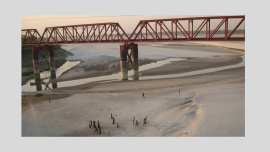
Bangladesh’s nature, ecosystems, temperament, way of life, economy and politics have all been shaped by its rivers.
The Brahmaputra, Padma, Surma, Teesta, Meghna, Karnaphuli, Naf, Shitalakhya, Mogra, Feni, Dakatia, Manu, Rakta, Kopotakkho, Longla, Dhaleshwari, Karatoya, Ichamati, Raimangal, Sangu, Halda, Kangsha, Titas, Piyain, Ubdakhali, Jadukata, Simsang, Baral, Baleshwar, Gorai and Turag—every river today is moribund, clinging to the map with its last, dying grip.
The neoliberal development process continues to violate the personhood and rights of rivers. It has choked the flow of river-centred economies. In the name of food production, agrochemicals are poured into fields. The residue of those poisons eventually settles in rivers.
The forests and hills where rivers are born have been destroyed by the state. In the south-west, embankments and commercial shrimp enclosures have disrupted the entire river system. Tea gardens, tobacco cultivation, commercial plantations of invasive acacia and eucalyptus, and hybrid maize cultivation continue to wound the rivers.
The country’s current sectors of economic development—agriculture, fisheries, garments, infrastructure and industry—are all responsible for the death of its rivers. Yet there is no accountability. No trial. No consequence.
A national database is urgent to prevent pollution
In Shyamnagar, Satkhira, I spoke with several cancer patients. Some had gone to India for treatment. On the hospital admission form, there was a question: What kind of house do you live in? Does your roof contain asbestos?
Across the villages of Shyamnagar, many homes still have asbestos roofs and fences. During the monsoon, villagers even collect rainwater from those roofs and use it. Asbestos is carcinogenic. It causes cancer. Yet there has been no initiative from public health authorities to examine whether asbestos sheets are increasing cancer risks in the coastal region. These sheets are now sold in the market by different companies as “cement sheets”.
Bangladesh continues to rank among the world's most polluted countries. In cities, noise pollution and urban heat build-up have intensified. In the evening, hundreds of sparrows can be seen clinging to electric wires in Shaheb Bazar in Rajshahi, seemingly distressed by the intense glare of artificial lights. The burden of light pollution falls heavily on urban wildlife.
A survey by the National Institute of Cancer Research, conducted between 2015 and 2017, found that among male cancer patients admitted to hospital, 64 per cent were involved in agriculture. Why are rural farmers becoming more vulnerable to cancer? The ministries of agriculture and health must answer this question.
Different forms of pollution are spreading across the country. Most remain absent from our conversations on environmental protection.
In Dinajpur and Naogaon, ash blown from rice mills is damaging people’s eyes and disrupting crop production. We discuss toxic smoke from vehicles and brick kilns, but in many large cities, hazardous factories release chemical pollution every day. Toxic toys are being made for children with lead-based paint and low-quality plastic. Soil, water and grass are being contaminated by the breaking of old batteries. Many cows have died painful deaths after eating poisoned grass.
Bangladesh continues to rank among the world's most polluted countries. In cities, noise pollution and urban heat build-up have intensified. In the evening, hundreds of sparrows can be seen clinging to electric wires in Shaheb Bazar in Rajshahi, seemingly distressed by the intense glare of artificial lights. The burden of light pollution falls heavily on urban wildlife.
The country still lacks a safe waste management system. Piles of waste are not only destroying agricultural land; they are also spreading disease. In the digital age, our homes are filling up with devices. This digital waste will create another misery for the future.
Pollution is not only domestic. We are also facing transboundary pollution. Industrial factories and mining projects in the Meghalaya hills of northeast India are wiping out fish diversity in Bangladesh’s haor region. Due to pollution from Meghalaya’s cement factories, the loach has disappeared from the haor. At the same time, mountain sand carried down by flash floods is burying agricultural land along the border.
The quarantine system for seeds, crops, food and other imported goods is not strong enough. Because of quarantine negligence, many new pests, giant mealybugs and invasive snails have spread into the natural environment. Many aquarium fish and invasive fish species have also entered natural water bodies.
Although invasive trees such as acacia and eucalyptus have been banned, they continue to pollute the ecosystem across the country.
Bangladesh does not yet have a specific national strategy to prevent pollution in its many forms and scales. It is urgent to build a national database on the risks posed by all forms of pollution to our environment, public health and economy.
It takes courage to question ecocide
In 1997, Magurchhara burned before our eyes. The country witnessed what many regard as the largest ecocide in its history. In the years that followed, gas exploration continued to threaten the Lawachhara forest. Yet the US companies involved—Occidental, Unocal and Chevron—were never brought to justice.
Bangladesh has enacted laws and policies to combat polythene and plastic pollution. Yet a study by the international anti-plastic organisation Break Free From Plastic identified Coca-Cola, Pepsi and Nestlé as some of the world's worst plastic polluters. Despite this, these multinational companies are rarely held accountable for the environmental costs of their plastic waste.
A research team from Bangladesh’s National Food Safety Laboratory, with technical and financial support from the UN Food and Agriculture Organisation and the Dutch government, tested 96 milk samples collected in 2019 from 27 upazilas across four districts, including Dhaka. They found that nine per cent of the samples had pesticide levels above normal, 13 per cent had tetracycline, and 15 per cent had lead levels above the tolerable limit. Yet no state initiative emerged from that research to protect the environment and public health.
Environmental protection, climate justice and ecological suffering are fundamentally political concerns. Yet environmental protection is repeatedly treated as if it were apolitical.
In Shyamnagar, Satkhira, agricultural land was destroyed to build a helipad for the Danish princess. Permission was given to build a Marriott hotel on the water-scarce Chimbuk hills of Bandarban. The Ministry of Local Government decided to cut through the Garjan mother-tree forest of Shilkhali in Cox’s Bazar to build a road.
The transport of oil, cement and coal through the Sundarbans has repeatedly resulted in accidents and pollution. Rohingya refugee camps have been established on elephant corridors, disrupting wildlife movement. The Madhupur sal forest ecosystem came under threat from an eco-park project. Meanwhile, natural forests have been cleared to make way for plantations of rubber, tobacco and invasive tree species sanctioned by the state.
Despite commitments to renewable energy and green development, Bangladesh’s energy sector remains heavily dependent on fossil fuels. At the same time, concerns continue to be raised about the safety and long-term risks of the Rooppur Nuclear Power Plant.
In the name of commercial tourism, plastic pollution is increasing in two of the country’s major Ramsar sites, Tanguar Haor and the Sundarbans, as well as in the Chittagong Hill Tracts. Ecosystems continue to be destroyed through hill-cutting and the extraction of stones from streams.
This country is home to the Irrawaddy dolphin, the black softshell turtle, deepwater rice and the spoon-billed sandpiper. Yet today, from the loose-skinned frog to sea turtles, all wildlife is endangered. Urban wildlife is also becoming increasingly shelterless and hungry.
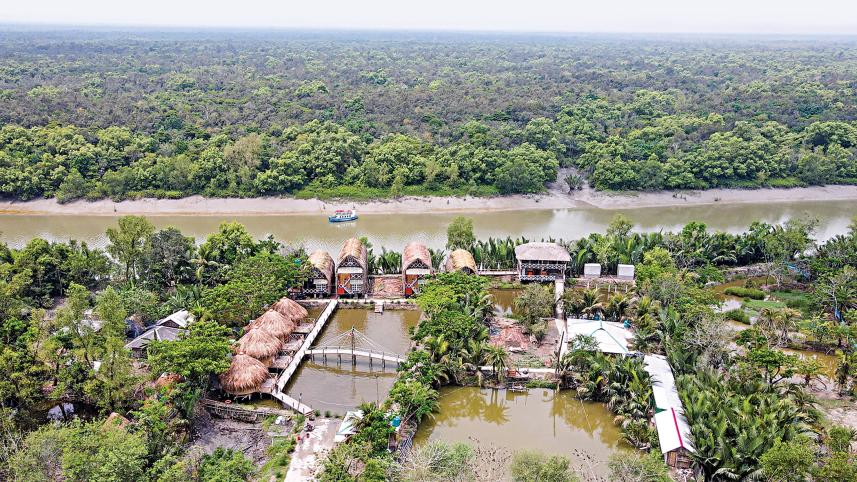
Public spaces—parks, playgrounds, gardens—are being steadily squeezed. Even Dhaka’s tiny Panthakunja Park couldn’t be saved from the unnecessary ramp of an elevated expressway.
We are part of the environment; therefore, the responsibility is ours
Lac cultivation once took place in many villages of the Barind region. Today, it survives only among a few families in Kanyanagar of Nachole, Chapainawabganj. On the branches of jujube trees, lac insects produce a special resinous substance from which shellac is made.
The lac cultivators of Kanyanagar said that because of declining rainfall and recurrent drought, the lac no longer settles properly on the branches. It turns powdery and crumbles away.
Across the country, environmental crises are becoming more complex and dangerous because of climate change. At the same time, environmental pollution is accelerating and intensifying the impacts of climate change. Climate action and environmental management cannot be treated as separate concerns.
Therefore, in the broader context of environmental protection, the first task is to identify the causes and sectors driving both environmental and climatic crises. Environmental protection and justice must serve as the foundation of Bangladesh’s climate action.
Environmental protection, climate justice and ecological suffering are fundamentally political concerns. Yet environmental protection is repeatedly treated as if it were apolitical. The dynamics of authority, profit and power behind environmental destruction are pushed aside.
As if environmental protection simply means planting a few saplings. Or building a “safari park” inside a natural forest. Or occupying a wetland and hanging up a signboard that says “sanctuary”. Or approving GMO Bt brinjal in the name of reducing chemical use in agriculture.
Instead of approaching environmental protection as a whole, one injustice is addressed while another danger is ignored.
Environmental protection must be understood within the historical realities of local ecosystems and cultures. We are part of the environment; the environment does not belong to us. The responsibility for protecting it, therefore, rests with us, and that responsibility must be acknowledged politically. No individual, political party, institution, class, organisation, community or state can evade this responsibility.
Pavel Partha, an ecology and biodiversity conservation researcher, is the director at Bangladesh Resource Centre for Indigenous Knowledge (BARCIK). He can be reached at animistbangla@gmail.com
Send your articles for Slow Reads to slowreads@thedailystar.net. Check out our submission guidelines for details.
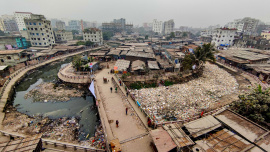
Can Bangladesh make its plastic waste policy work?
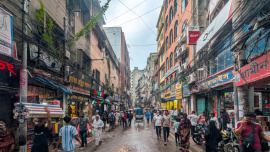
Dhaka accidentally built the city planners now want. Can we make it liveable?
Can Bangladesh produce its own knowledge?
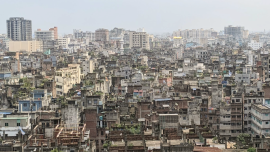
How we are killing Dhaka
Can Bangladesh afford not to invest in Bhola’s gas?
Bangladesh’s renewable policy: Still too little but not too late
Prabhat Patnaik speaks / Why the Global South must rethink export-led growth
Bhotekoshi flood: Another warning from the Himalayas. Are we listening?
Renewing the Ganges Water Sharing Treaty: What should Bangladesh do?