


Michigan primary: How standing up to Israeli genocide could win Democrats Congress in November
Representative Haley Stevens' defeat in Michigan's Democratic Senate primary is the last nail in AIPAC's coffin. The once-feared Israel lobby is sinking, along with Israel, like a stone in American public opinion. Despite sixty-to-one spending against Abdul El-Sayed, Stevens couldn't keep her head above water. AIPAC and its Israel-first Jewish billionaire backers turned Michigan into the most expensive Democratic Senate primary in American history and lost anyway.
Just think about it for a second: a PAC that backs a conservative candidate who champions tax cuts for billionaires in one congressional district while simultaneously bankrolling a liberal, like Stevens, who wants to tax the wealthy in another is not advancing a coherent American political interest. If the only principle uniting those otherwise incongruent endorsements is unwavering support for Israel, then the PAC is driven not by a domestic ideology or constituency, but by a foreign policy agenda.

Now, after spending millions to elect a Democrat, Stevens, AIPAC is all but certain to pour millions into backing Mike Rogers, a Republican, in November—not for the sake of Michiganders or Americans, but for Israel. That is the essence of AIPAC: partisan differences are irrelevant so long as the candidate serves Tel Aviv's interests.
The Democratic establishment squandered its remaining credibility by kowtowing to AIPAC, the most powerful foreign lobby, widening the chasm between the Democratic base and its leadership. AIPAC funding and endorsements from Democratic leaders such as Chuck Schumer and Gretchen Whitmer carried little weight in Democratic primaries.
Ask Adriano Espaillat. Ask Dan Goldman. Ask Diana DeGette, a 15-term Colorado congresswoman who had represented Denver since Bill Clinton's first term. All three lost their seats within the same six weeks, and all three, despite AIPAC backing, lost for the same reason: they stood with Israel, or wouldn't say the word "genocide", while their own voters had moved on without them. In Michigan, the Democratic establishment's endorsements, and its push to have State Senator Mallory McMorrow drop out of the race to consolidate the anti-El-Sayed "Democratic" vote, failed on its face. This is further evidence that the party's base and its leadership are living in two different universes on Israel.
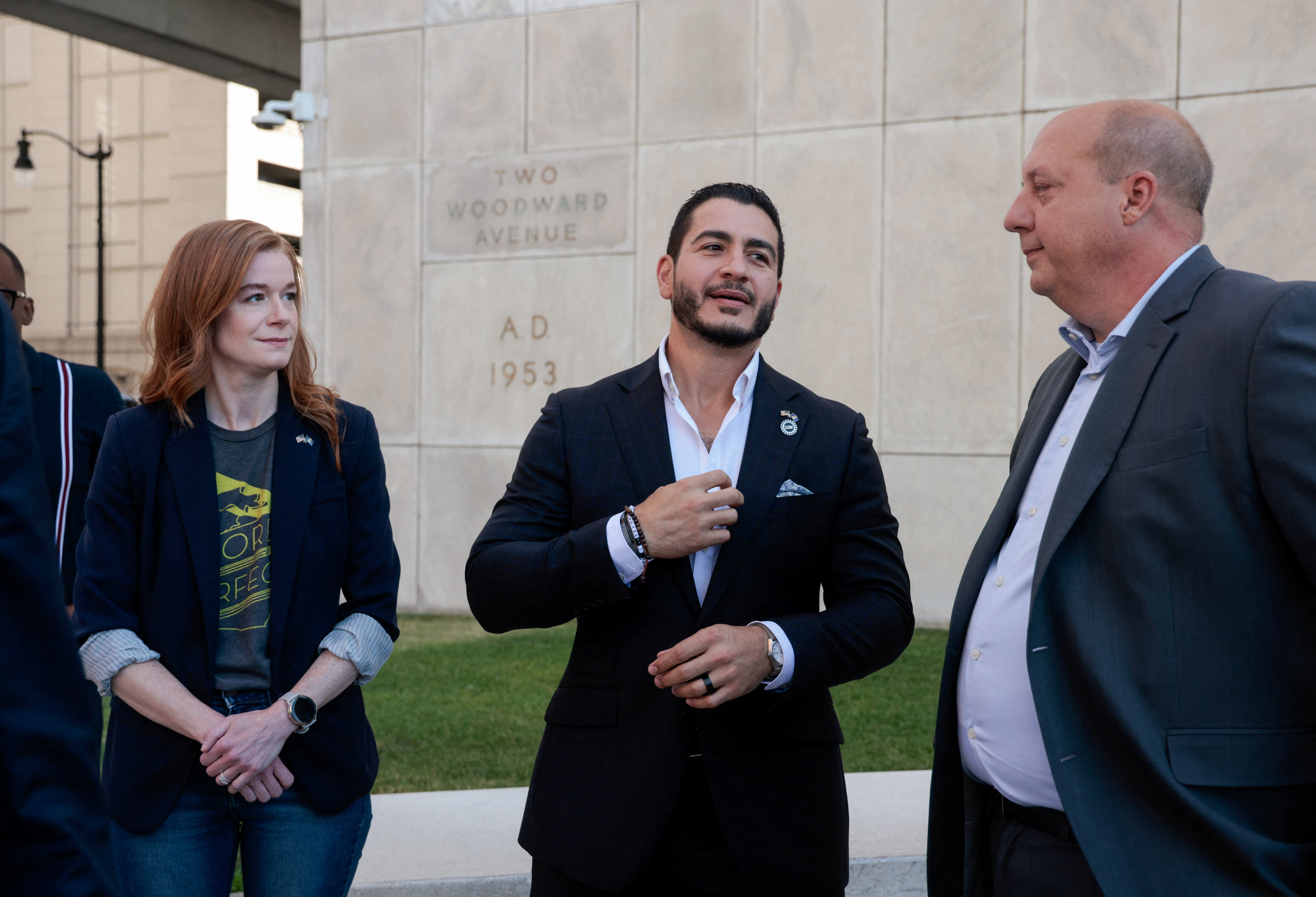
For seven decades, unconditional support for Israel was table stakes in Democratic politics: the safe position that kept Israel-first Jewish billionaire donors and AIPAC's money flowing and primary challengers away. That maths has broken. Staying quiet while Gaza starves and burns is now one of the fastest ways for a Democrat to lose an election.
Espaillat had AIPAC's backing when Darializa Avila Chevalier, a former organiser of Columbia University's Gaza encampment, beat him in New York's 13th District. Goldman, who refused throughout his campaign to call Israel's conduct in Gaza a genocide, lost to fellow New Yorker and Jewish candidate Brad Lander, who ran explicitly against Goldman's Israel record. Then came DeGette, a Congressional Progressive Caucus stalwart, who was unseated by 29-year-old democratic socialist Melat Kiros despite a late injection of AIPAC-linked outside spending intended to save her. Kiros's closing message to voters was blunt: reject “corporate PACs like AIPAC” and stop waiting to end what she called the genocide in Palestine. Voters agreed by nearly ten points.
Haley Stevens, who once bragged that Israel comes to her in her dreams — which turned into a nightmare in the primary — attempted to sharpen her language criticising Benjamin Netanyahu, trying to close the gap with El-Sayed. Even Rahm Emanuel, who served in the Israeli army, a man who built his career as one of Israel's most reliable Democratic defenders and is openly eyeing the 2028 presidential election, stood in Tel Aviv last month and said Netanyahu's government had driven the country into a dead end, questioning America’s unconditional support for Israel.
The State of Maine offers perhaps the starkest proof. After anti-Israel Senate candidate Graham Platner's campaign imploded, half a dozen Democrats jumped in to replace him — and every one of them has had to scramble to prove they'll carry his opposition to the Gaza war forward, not walk it back. Troy Jackson, the current nominee, attempted to placate the establishment by avoiding Israel and Gaza in his launch speech entirely; by the next day, under visible pressure, he was calling the war "unconscionable" and pledging he'd never vote for taxpayer-funded military aid to Israel. The hopeful Nirav Shah has had to publicly deny taking AIPAC money and commit to opposing all aid to Israel, offensive or defensive, just to hold on to the coalition Platner built. Even Shenna Bellows was pressed by reporters and rivals alike to say where she stands on Gaza. None of them can afford to look like the old consensus anymore.
What we are observing today is not just a minor shift in national American politics. It is a tectonic realignment in party politics. It used to be that not grovelling to Israel — not taking the obligatory photo op wearing a yarmulke and tucking a note into the crevices of a wall built under the Ottoman Sultan Suleiman the Magnificent — was the political risk. Now, it's staying silent, hedging, or clinging to the old line that gets you ousted, and it's grassroots movements doing the ousting, defeating outside PACs or pressure groups.
The behind-the-curve Republicans are watching and licking their chops, framing these wins as too far left to win in November. The party is even further behind the Democratic establishment in understanding the shift among American voters. Republicans have always been late to catch up with the reality of change in America — from voting rights to women's rights to LGBTQ+ rights, the GOP has always been a Johnny-come-lately. And the next midterm elections are poised to prove that.
What we are observing today is not just a minor shift in national American politics. It is a tectonic realignment in party politics. It used to be that not grovelling to Israel — not taking the obligatory photo op wearing a yarmulke and tucking a note into the crevices of a wall built under the Ottoman Sultan Suleiman the Magnificent — was the political risk. Now, it's staying silent, hedging, or clinging to the old line that gets you ousted, and it's grassroots movements doing the ousting, defeating outside PACs or pressure groups.
This happened because two years of televised famine, bombed hospitals, murdered children, and a UN commission calling Israel's conduct genocide changed how American voters see Israel and what they now expect from the leaders who represent them. The politicians who read that shift early — Mamdani, Lander, Avila Chevalier, Kiros — won. The ones who didn't are now former members of Congress.
The lesson for every Democrat still weighing how much daylight to put between themselves, AIPAC and Israeli apartheid is this: the voters have already decided. The only question left is whether the Democratic establishment will catch up with anti-genocide American voters in time to win a majority in both houses this November.
Jamal Kanj is a commentator on Arab affairs whose work appears regularly in national and international publications. He is the author of Children of Catastrophe: Journey from a Palestinian Refugee Camp to America and several other books.
Send your articles for Slow Reads to slowreads@thedailystar.net. Check out our submission guidelines for details.
Hormuz 2.0? The Six Degree Channel and Bangladesh's maritime security

South Asia’s new space race / How satellites are transforming conflict between India and Pakistan

Is there any hope for Gaza?

How Bangladesh's SEACO plan could strengthen trade across the Muslim world

What it means for Bangladesh to join the Saudi-led maritime alliance

From sea blindness to strategic agency: Bangladesh's maritime culture in a crowded bay
Beyond geopolitics: Rethinking regional cooperation in South Asia
The dragon, eagle, elephant and tiger in a changing South Asia

Why India and Bangladesh need a new approach to transboundary rivers
