The dragon, eagle, elephant and tiger in a changing South Asia

Three years ago, I used four animals—the dragon, eagle, elephant and tiger—to describe the competing ambitions shaping South Asia. The dragon represented China, the eagle the United States, the elephant India, and the still-emerging tiger Bangladesh.
The metaphor remains useful, but the geopolitical landscape surrounding these animals has changed considerably. The contest is no longer simply between an established US-led international order and a rising China. It now encompasses trade wars, technological rivalry, maritime security, supply-chain competition, domestic political transitions, and the increasingly assertive diplomacy of smaller states.
South Asia is not merely witnessing this contest from the sidelines. It has become one of its most consequential arenas.
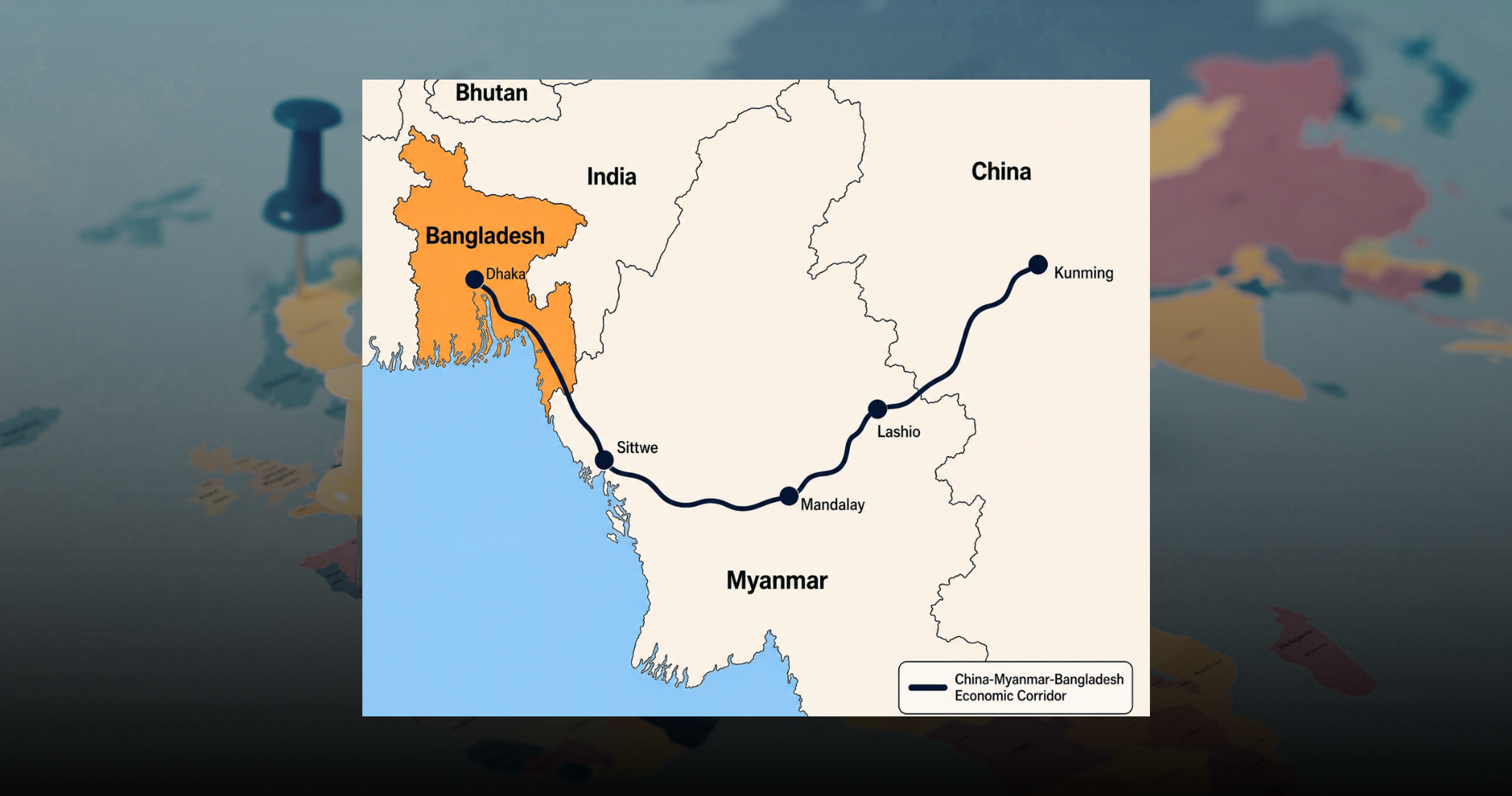
The dragon changes its modus operandi
China's ambitions remain clear. China seeks an international order in which it is free from the constraints of institutions and rules established largely by the West. However, its method of pursuing this ambition has changed.
In the early days of the Belt and Road Initiative, the dragon was obsessed with constructing large-scale projects such as ports, highways, power stations, railways and industrial zones. When concerns were raised about the sustainability of these projects and the dependence they created among recipient countries, the dragon became less obsessed and began talking about high-quality BRI cooperation involving digital infrastructure, renewable energy, artificial intelligence, industrial investment, and smaller projects with greater commercial viability.
This does not mean the old obsession with constructing infrastructure has disappeared. Rather, the dragon has learned that it can build its long-term influence through technology, finance, education, trade, defence cooperation, and politics. South Asia continues to be of crucial importance to China in its ambition to shape an international order.
Bangladesh should avoid interpreting strategic autonomy as equidistance between Washington, Beijing and New Delhi. These relationships are not interchangeable. China is a major source of infrastructure, defence equipment and industrial investment. The US and Europe are essential export markets and sources of technology, investment and institutional support. India is Bangladesh’s inevitable neighbour, with shared interests in water, energy, security and connectivity.
Pakistan continues to be important to China for its westward connectivity. Sri Lanka lies beside some of the busiest shipping routes in the Indian Ocean. Nepal and the Maldives are of geopolitical significance to India. Bangladesh's location between South and Southeast Asia and on the Bay of Bengal makes it economically and strategically important to China.
Consequently, relations between Dhaka and Beijing have not been confined to infrastructure. During the high-level engagements of 2025 and 2026, the two countries highlighted maritime cooperation, the blue economy, industrial development, education, and people-to-people linkages. Even the Teesta River management project, which inevitably carries strategic significance because the river originates in India, has drawn Chinese interest and participation.
However, the dragon's challenge is one of trust. While many South Asians welcome Chinese investment, they remain concerned about political dependence, a lack of transparency, and the long-term consequences of strategic infrastructure projects. The dragon can finance many of the things that others cannot, but financial capability alone does not generate public confidence.
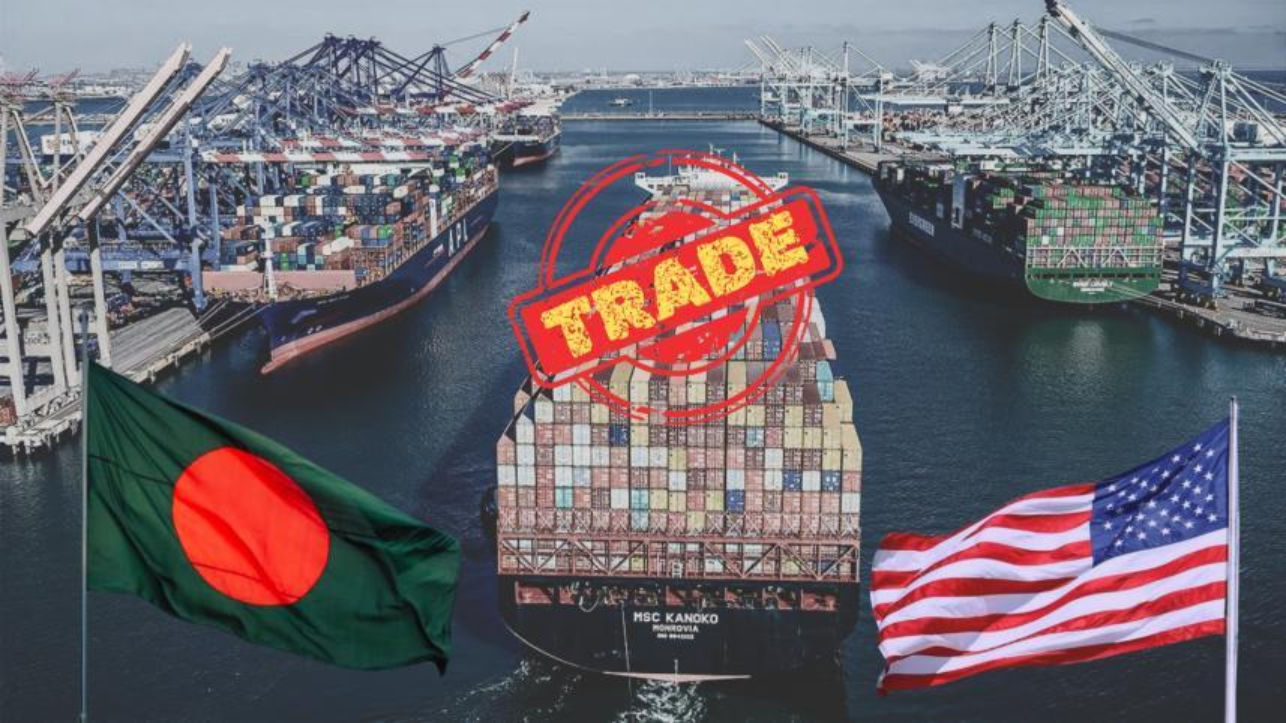
The eagle becomes more transactional
The United States remains the most powerful external player in the Indo-Pacific. Nevertheless, US Indo-Pacific policy is becoming increasingly transactional.
While the US continues to advocate for a free, open and peaceful Indo-Pacific, it has developed strong security partnerships with Japan, Australia and India, and views India as an indispensable partner in maintaining the regional balance. The two countries have enhanced cooperation in defence technology, intelligence, logistics, maritime security and supply chains. Their stated goal of increasing bilateral trade to US$500 billion by 2030 speaks volumes about the economic dimension of this strategic partnership.
However, US policy is now more transactional, with decisions increasingly driven by calculations concerning market access, tariffs, technology, defence procurement and economic reciprocity. Values such as democracy and human rights have not disappeared, but they increasingly compete with an "America First" approach that emphasises strategic and commercial gains.
Diplomatic credibility begins at home. Democratic legitimacy, good governance, an independent judiciary, media freedom and political stability are not only domestic virtues but also strategic strengths. A government that commands public confidence can engage with foreign powers from a position of greater authority and resist external pressure more effectively.
Thus, while South Asian countries have many opportunities in this evolving landscape, they also face many complications in an increasingly transactional world. The US remains an important partner for Bangladesh and other South Asian countries in development, security and trade. It is Bangladesh's largest export market, primarily for ready-made garments. Security cooperation encompasses maritime security, counterterrorism, peacekeeping, and defence institution-building.
However, unlike China, the US has been reluctant to finance many large-scale infrastructure projects without imposing extensive requirements relating to economic, environmental and governance standards.
Washington’s comparative advantage in the region lies not only in its military power but also in the appeal of its markets, universities, technology, financial systems and democratic institutions. The eagle remains extremely powerful, but it needs to demonstrate that its Indo-Pacific vision offers smaller countries more than simply a place within a strategy directed against China.
The elephant faces a neighbourhood problem
India, the elephant, is no longer merely an emerging country. It is now an indispensable global power—a major economy, a nuclear power, an influential voice among developing countries, and a strategic partner of the US, Japan, Europe and Australia.
Nevertheless, while India has become a global power, it continues to face serious problems in its neighbourhood.
Its relations with Nepal, the Maldives, Sri Lanka and Bangladesh have frequently been marred by tensions. Political changes occurring in neighbouring countries are often viewed in India primarily through the lens of its strategic competition with China. At the same time, political leaders in South Asian countries frequently raise concerns about Indian interference.
The fact of the matter is that India cannot change its geography. Nor can Bangladesh, Nepal, Bhutan, Pakistan or Sri Lanka escape the reality of India’s economic and security importance. But geography alone does not create leadership. Leadership depends on the confidence of neighbours that their sovereignty and interests will be respected.
The old unipolar order is fading away. A new multipolar order has yet to replace it. The dragon advances, the eagle repositions, and the elephant struggles to overcome its neighbourhood complexities amid its growing global ambitions. The future of the tiger depends on how Bangladesh engages with these animals diplomatically and strategically rather than merely reacting to their actions.
Bangladesh has a particularly complicated relationship with India because the two countries share much in terms of history, rivers, trade, energy, transit, culture and their land boundary. No government in Bangladesh can hope to pursue a sustainable foreign policy if it ignores India’s existence and continuing relevance.
Nonetheless, because of unresolved issues concerning Teesta water sharing, border killings, trade barriers and political interference, public confidence in this relationship has suffered. During Bangladesh’s political transition after 2024, the relationship deteriorated to the point of becoming a potential trigger for geopolitical realignment in South Asia.
It is hoped that India will learn a lesson from this experience. To remain a natural partner in the region, it must stop thinking and acting like a big brother.
Can the hidden tiger come out of the shadows?
Bangladesh has ceased to be the geopolitical cub it was once considered to be. Its population, manufacturing capacity, strategic location, role in UN peacekeeping, and control of a key section of the Bay of Bengal give it considerable geopolitical importance.
Nevertheless, these strengths do not make it a strategic power.
Bangladesh’s economy is facing slower growth, inflation, financial-sector vulnerabilities, low levels of investment, and increasing economic pressures. The World Bank has underscored the need for stronger institutions, financial-sector reforms and job creation to sustain the recovery of exports and remittances following recent disruptions.
All these domestic weaknesses limit Bangladesh’s capacity in foreign policymaking. A country with weak institutions, a poor regulatory regime and unstable politics has limited capacity to negotiate effectively with major powers. It becomes dependent on external finance instead of using external relations to advance its national interests.
The fact of the matter is that India cannot change its geography. Nor can Bangladesh, Nepal, Bhutan, Pakistan or Sri Lanka escape the reality of India’s economic and security importance. But geography alone does not create leadership. Leadership depends on the confidence of neighbours that their sovereignty and interests will be respected.
Bangladesh should avoid interpreting strategic autonomy as equidistance between Washington, Beijing and New Delhi. These relationships are not interchangeable. China is a major source of infrastructure, defence equipment and industrial investment. The US and Europe are essential export markets and sources of technology, investment and institutional support. India is Bangladesh’s inevitable neighbour, with shared interests in water, energy, security and connectivity. Japan, South Korea, the European Union, ASEAN members and the Gulf countries offer further opportunities for diversification.
Issue-based alignment—cooperation with different powers according to Bangladesh’s national interests, without falling strategically into the orbit of any one of them—should remain the guiding principle of its foreign policy.
This will require transparency in infrastructure projects, competitive procurement processes, the protection of national assets, and careful evaluation of debt and environmental consequences. Most importantly, it will require Bangladesh to pursue a foreign policy shaped by institutions rather than by the personal relationships of its leaders.
Diplomatic credibility begins at home. Democratic legitimacy, good governance, an independent judiciary, media freedom and political stability are not only domestic virtues but also strategic strengths. A government that commands public confidence can engage with foreign powers from a position of greater authority and resist external pressure more effectively.
The old unipolar order is fading away. A new multipolar order has yet to replace it. The dragon advances, the eagle repositions, and the elephant struggles to overcome its neighbourhood complexities amid its growing global ambitions.
The future of the tiger depends on how Bangladesh engages with these animals diplomatically and strategically rather than merely reacting to their actions.
Zillur Rahman is a political analyst and President of the Centre for Governance Studies (CGS). He hosts Tritiyo Matra on Channel i and writes on geopolitics, strategic affairs and governance. Follow him on X: @zillur.
Send your articles for Slow Reads to slowreads@thedailystar.net. Check out our submission guidelines for details.
Beyond geopolitics: Rethinking regional cooperation in South Asia

Why India and Bangladesh need a new approach to transboundary rivers

The future of the Bangladesh-China-Myanmar Economic Corridor

Superpower rivalry in space: The invisible battlefield of the Iran war

The new world of geoeconomics: From comparative advantage to coercive advantage
BIG-B and Bangladesh's road to Southeast Asia

China–Bangladesh Community: Bandwagoning, soft alignment, or rhetoric?

The global refugee crisis and Bangladesh's Rohingya challenge

Rohingya deaths in landslides call for a reckoning with systemic failures