


From NSC to ICC: BCB’s puzzling stand
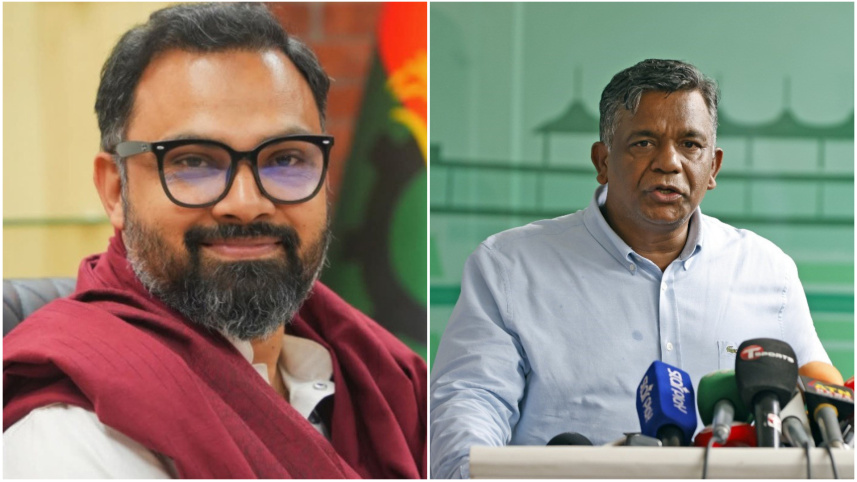
The Bangladesh Cricket Board’s (BCB) statement issued on Monday night, in response to the National Sports Council’s (NSC) March 11 gazette regarding an investigation into the October 2025 BCB elections, has left many within the cricketing fraternity confused.
There are, in fact, plenty of reasons behind this confusion.

According to the BCB statement, the current board held “informal” talks with the International Cricket Council (ICC) leadership regarding the matter, citing “external interference in the affairs of an elected cricket board” -- a remark that could be interpreted as a thinly veiled threat towards the NSC.
What adds to the surprise is that two highly placed BCB directors told this newspaper yesterday that they had no knowledge of how the statement came about. BCB CEO Nizamuddin Chowdhury also refused to comment on the matter. This has raised questions over whether BCB president Aminul Islam Bulbul made the decision to issue it single-handedly.
Ironically, the current BCB administration had not previously voiced concerns regarding government intervention.
“It is a kind of threat, saying they communicated with the ICC regarding interference, so that they will be saved. It is quite ironic for the current board to complain to the ICC [about government interference],” former BCB general secretary and ex-Asian Cricket Council (ACC) CEO Syed Ashraful Huq told The Daily Star yesterday.
Another aspect that appears inconsistent is that the last board elections, in fact, took place under the NSC, which is now investigating them. Both Bulbul and Faruque Ahmed entered the board by availing the NSC-held quotas for directorship.
Following the interim government’s takeover, instances of government interference were widely reported, particularly through the NSC quota, which conflicts with the principles of a self-governed organisation and reinforces the notion of state involvement.
BCB’s current stance now threatens to escalate into a legal battle between the board and the NSC. Under the ‘Jatiyo Krira Parishad Ain, 2018’, the NSC is authorised to form investigation committees, and sports federations are obliged to respond to government inquiries. If a board fails to function properly or acts against the interests of the federation, the NSC can dissolve the executive committee and, if necessary, appoint an ad-hoc committee.
“If BCB can’t run cricket well, NSC has the right to dissolve it -- it’s there in the laws. The cricket leagues weren’t run well, among other issues, and if there were violations of election laws, they can dissolve it. NSC can do that without question because BCB is a part of NSC. ICC also cannot raise objections since this is outlined in the BCB constitution, which the ICC follows. Yes, the ICC has guidelines regarding good governance through democratic elections, but those are guidelines, not mandatory requirements,” Ashraful said, adding that all assets -- including grounds -- belong to the NSC. He warned that in the event of a conflict, if the government restricts the board’s access to these assets, the board would be rendered ineffective.
Ashraful also recalled that the ICC did not intervene when the Pakistan Cricket Board (PCB) changed its president multiple times.
“We are under the ICC, but first we are under the NSC, which is the parent body. The ICC does not interfere in domestic governance as long as the BCB constitution is followed. It did not intervene when Pakistan changed its board president multiple times within a few months,” he added.
“ICC is not our master; they are facilitators and friends. They will follow the constitution,” he further stated.
Meanwhile, State Minister for Youth and Sports, Aminul Haque, said yesterday that the NSC would review the investigation report before speaking to the ICC and considering the next steps.
“I believe we should first review the investigation report. After that, I will speak with the ICC and then inform you of our next steps. We will take all our decisions after consulting with the ICC,” Aminul said.
Ultimately, cricket in the country has always operated within a spectrum of political influence, which makes the current stance of Bulbul’s BCB appear even more unusual.
 For all latest news, follow The Daily Star's Google News channel.
Comments