


'The system is the lack of a system'
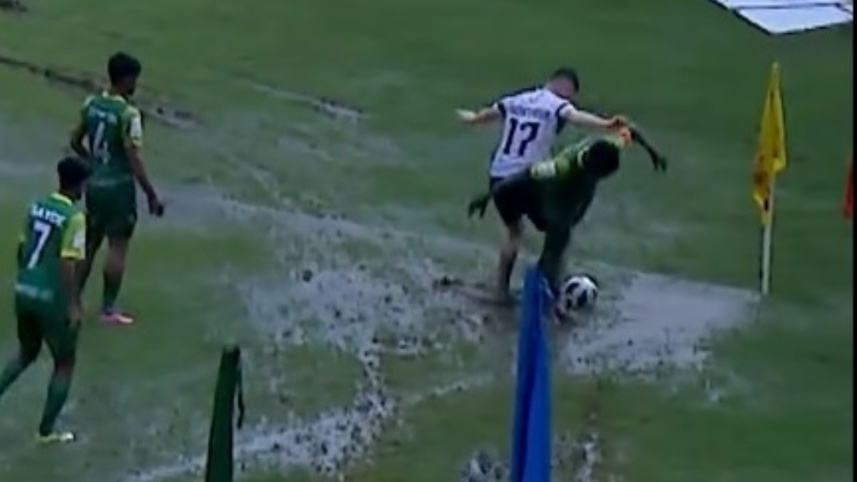
“The system is the lack of a system” -- that is how Rahmatganj coach Kamal Babu summed up the lack of venue preparedness in a conversation with The Daily Star a week ago.
On April 29, Rahmatganj travelled to Cumilla for their final group-stage fixture of the Federation Cup against Young Men's Fakirerpool Club at Shaheed Dhirendranath Datta Stadium. Following heavy rain, large portions of the pitch were submerged, prompting the coach to share an image on social media that quickly went viral, once again highlighting the sorry state of grounds allocated for top-tier domestic football.

After manual drainage, the match eventually began nearly an hour behind schedule. “This is a regular issue in our football but nevertheless very unfortunate. Top-tier football taking place under such conditions, jeopardising the health of the footballers,” Kamal Babu had said, while also refraining from blaming the clubs, who receive minimal financial support from the federation.
Neither Rahmatganj nor Fakirerpool could be held responsible for the conditions, as the Cumilla venue is not a home ground for either side. Instead, it is shared by Mohammedan Sporting Club and Abahani, who arguably bear part of the responsibility for maintaining minimum pitch standards. However, with venues allocated on a seasonal basis, there is little incentive for clubs to invest in long-term ground improvements. Only Bashundhara Kings own their home venue, while the remaining four top-tier grounds are managed by the Bangladesh Football Federation in coordination with the National Sports Council.
The federation, however, appears yet to prioritise a sustainable solution. More than a year and a half into its tenure, the committee led by Tabith Awal has still not formed a Grounds Committee to address recurring maintenance issues.
The problems resurfaced on May 5, when Rahmatganj returned to Cumilla to face Mohammedan in a Federation Cup eliminator. Once again, heavy rain left the pitch waterlogged. This time, however, the match proceeded without delay, with the venue deemed playable.
Broadcast footage painted a familiar picture. Mohammedan captain Muzaffarov was seen placing the ball for a corner kick in a patch of standing water. His delivery travelled only a few feet, slowed by the soaked surface, as an opponent rushed in. Bound by the laws of the game, Muzaffarov could not touch the ball again until a teammate or an opponent -- eventually Solomon King Kanform of Ragmatgnaj -- intervened.
Commentators attempted to inject humour into an otherwise dismal situation. “Where will you even take the corner from? You’ll practically have to take the corner standing in water,” one remarked, while his colleague pointed out the referee’s predicament.
Amid the farcical scenes, the underlying issue remained stark: inadequate infrastructure continues to undermine the standard and credibility of Bangladesh’s top-tier football, leaving players, officials, and fans to contend with conditions unfit for the professional game.
 For all latest news, follow The Daily Star's Google News channel.
Comments