


Aguirre's men end long-standing hoodoo
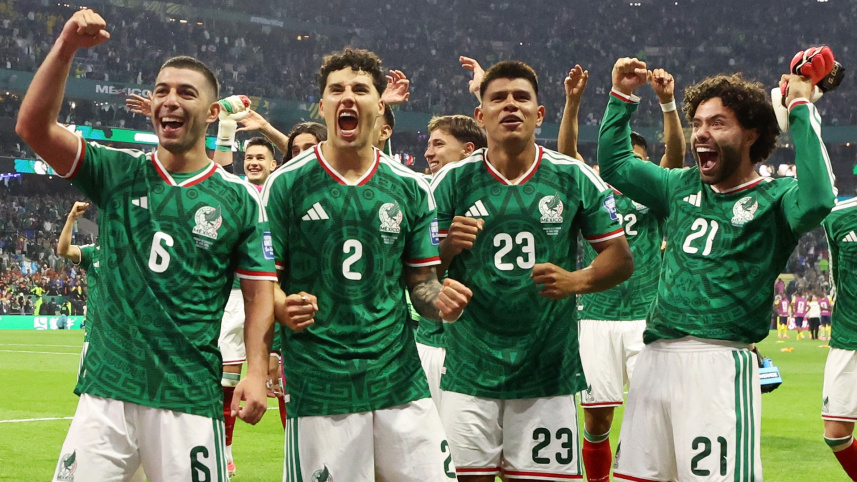
Four decades of frustration finally came to an end as Mexico beat Ecuador 2-0 at a raucous Estadio Azteca on Wednesday, booking their place in the World Cup last 16 and ending one of international football's longest-running hoodoos.
Roared on by a packed home crowd, Javier Aguirre's side produced a composed and commanding display. First-half goals from Julian Quinones and Raul Jimenez settled the contest before the interval, sending the hosts through with a performance that combined defensive discipline with clinical finishing.

The result carried a remarkable historical symmetry. The scoreline and venue mirrored Mexico's last World Cup knockout victory, a 2-0 win over Bulgaria at the Azteca on June 15, 1986 that sent El Tri into the quarterfinals for only the second time in their history.
That match is remembered as much for the result as for Manuel Negrete's spectacular scissor-kick, still regarded as one of the greatest goals in World Cup history. Mexico's run ended in the quarterfinals, where they lost to West Germany on penalties, and the country would spend the next four decades chasing another knockout triumph.
The years that followed became synonymous with unfulfilled promise. Mexico missed the 1990 World Cup through suspension, then from 1994 to 2018 were eliminated in the round of 16. Their fortunes hit a new low in Qatar in 2022, where they failed to progress beyond the group stage for the first time since 1978.
That prolonged stagnation was about more than performances on the pitch. Critics frequently pointed to structural problems within the Mexican Football Federation and Liga MX.
National team coaches often came under pressure to select established stars whose commercial appeal outweighed their declining form, limiting opportunities for younger players to gain international experience. At club level, Liga MX's financial strength also worked against player development, with high transfer valuations making it difficult for promising talents to move to Europe and test themselves at a higher level.
The picture has changed dramatically under Aguirre.
His squad has found an effective balance between experienced leaders and emerging talent, while its organisation without the ball has become the foundation of its success. The victory over Ecuador extended Mexico's unbeaten run to 12 matches in all competitions and completed a perfect group stage, making them the first CONCACAF nation to collect the maximum nine points under the current World Cup format.
The Azteca has once again become a fortress. Mexico are now unbeaten in 10 World Cup matches at the iconic stadium, reinforcing its status as one of the country's greatest sporting strongholds.
For a nation that suffered the humiliation of a group-stage exit just four years ago, this victory represents far more than a place in the quarterfinals. It signals the end of a psychological barrier that had haunted generations of Mexican footballers and supporters.
As the final whistle sounded, one thing was clear: Mexico are no longer relying on history or home advantage alone. They have rebuilt their identity and, with momentum firmly behind them, have every reason to believe they can compete for even greater honours.
 For all latest news, follow The Daily Star's Google News channel.
Comments