


Beyond the beautiful game: The bizarre beliefs that rule the World Cup

Football is a blend of skill and tactical precision, underpinned by immense physical and mental resilience. Every second on the pitch is calculated, every move part of a larger strategy.
Yet alongside this seemingly rational sport exists another world beyond the touchline -- one shaped by peculiar rituals, strange habits and deeply personal beliefs. What may appear amusing or irrational to the casual observer often serves as a talisman of success for players and devoted fans alike. Superstition, in that sense, has become an inseparable thread in football’s aesthetic fabric.

On a stage as grand as the FIFA World Cup, such beliefs -- often devoid of scientific basis -- tend to flourish even more. Football, after all, transcends the boundaries of a mere game at this level, becoming a theatre of hope, faith and emotion. To tame the unpredictability of the pitch, players carry with them rituals rooted in their cultures and experiences, adding an extra layer of intrigue to the tournament.
Sports psychologists argue that these superstitions serve a meaningful mental purpose. In high-stakes competitions like the World Cup, where countless variables lie beyond a player’s control, rituals can provide a sense of stability and focus. Speaking to AFP, sports psychologist Dan Abrahams explained, “Logically, there is no connection between these rituals and performance. However, if a player believes in their importance, that belief can significantly influence how they feel.”
The history of the World Cup is filled with fascinating tales of such superstitions.
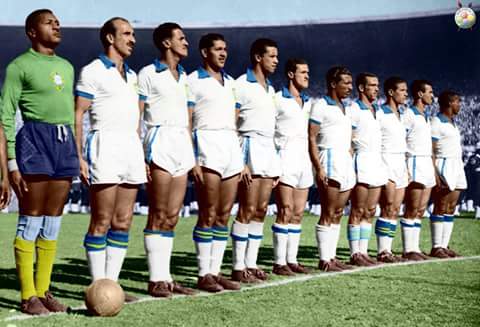
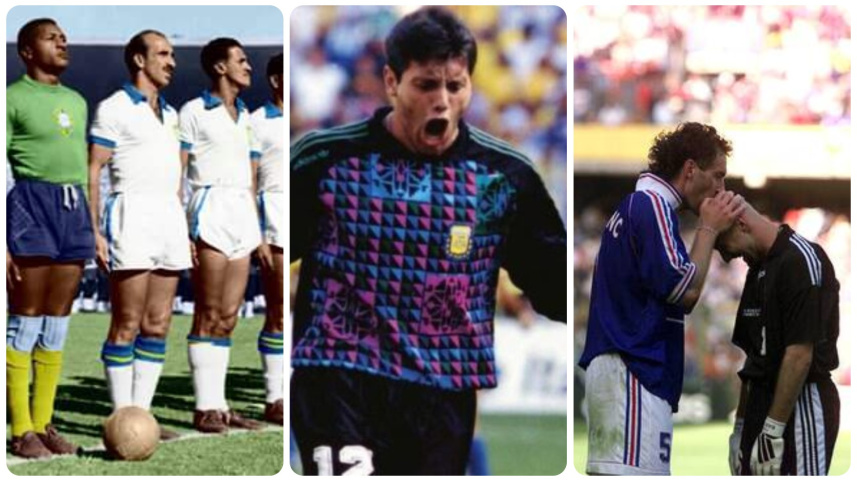
1950: Brazil’s ‘cursed’ white jersey
Although Brazil’s iconic yellow-and-blue strip now feels inseparable from its footballing identity, its origins lie in heartbreak. In the 1950 World Cup, held on home soil, Brazil wore a white kit with a blue collar. Their 2–1 defeat to Uruguay in the decisive match -- an event forever known as the Maracanazo - left a deep scar on the nation. The white jersey was widely blamed, labelled “unpatriotic” for failing to reflect the national flag. In response, a design competition organised by the newspaper Correio da Manhã in 1953 led to the creation of the now-famous yellow kit, incorporating the flag’s colours. Debuted at the 1954 World Cup, it marked the beginning of a new era for Brazilian football.
1974: Johan Cruyff’s insistence on No. 14
The number 14 is forever associated with Johan Cruyff, but its story began by chance. While playing for Ajax in 1970, Cruyff handed his No. 9 shirt to teammate Gerrie Mühren, who could not find his own No. 7. Cruyff picked up a spare No. 14 shirt from the laundry basket and wore it in a match Ajax won convincingly. He adopted the number as his lucky charm.
At the 1974 World Cup, the Netherlands assigned squad numbers alphabetically, meaning Cruyff should have worn No. 1. He refused to play unless he wore No. 14, forcing the Dutch FA to bend the rules.
1978: Kempes shaves for glory
Mario Kempes was Argentina’s hero in their first World Cup triumph in 1978, but his tournament began quietly. Sporting long hair and a distinctive horseshoe moustache, he failed to score in the group stage. Concerned, coach César Luis Menotti suggested he shave it off, recalling his prolific, clean-shaven form in Spain. Kempes obliged — and promptly scored twice against Poland. He added another brace against Peru and netted twice in the final against the Netherlands, sealing Argentina’s historic title. Later, he joked that sacrificing the moustache marked a turning point in his career.
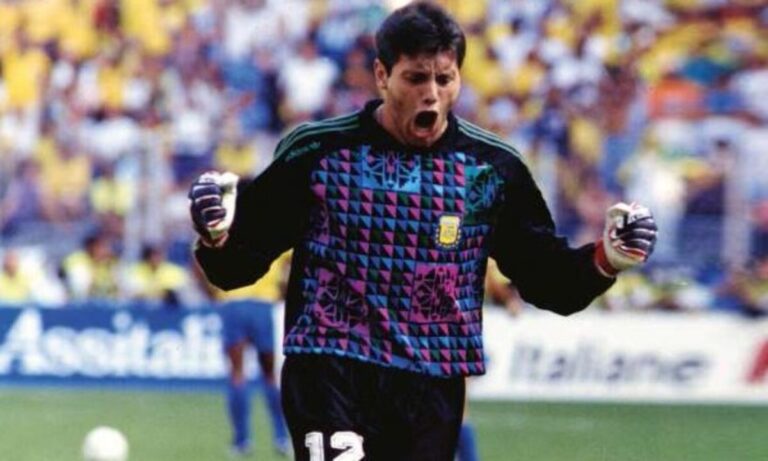
1990: Goycochea’s unusual ‘lucky charm’
Argentina goalkeeper Sergio Goycochea had an extraordinary superstition during the 1990 World Cup. In the quarter-final against Yugoslavia, which went to a penalty shootout, he found himself in urgent discomfort but could not leave the pitch. He relieved himself discreetly on the field -- and Argentina went on to win.
Taking it as a sign, he repeated the act before the semi-final shootout against Italy. Once again, Argentina triumphed and reached the final, though they eventually lost to West Germany. Goycochea later admitted the ritual, describing it as a “lucky charm”.
1998: Blanc’s kiss and France’s ritual routine
Before every match in the 1998 World Cup, defender Laurent Blanc would kiss the shaved head of goalkeeper Fabien Barthez. The ritual became a symbol of unity as France marched to their first World Cup title on home soil.
The French squad followed other routines too -- each player sat in the same seat on the team bus, and Gloria Gaynor’s song I Will Survive played regularly in the dressing room. Many within the team still believe these rituals had a subtle psychological impact on their triumph.
 For all latest news, follow The Daily Star's Google News channel.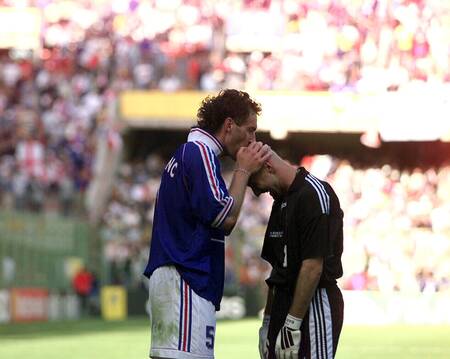
2006: When astrology shaped selection
Perhaps the most controversial example came under France coach Raymond Domenech, who placed unusual faith in astrology. He believed Scorpio players were disruptive and avoided selecting them, a decision that saw Robert Pirès excluded despite strong form.
Domenech also favoured players born under Leo for defensive roles. While his methods drew widespread ridicule, the astrology-influenced squad still reached the final -- only to fall short against Italy after Zinedine Zidane’s infamous headbutt.
Superstitions are unlikely to ever disappear from the World Cup. They may evolve with time, but they will remain woven into the game’s fabric. From players wearing a specific pair of boots first to fans refusing to wash a “lucky” shirt, these rituals underline a simple truth: football is more than a sport. It is a powerful expression of belief and emotion — and whether or not such practices influence results, they create a unique bond between players and supporters.
Comments