


Goal rush in North America
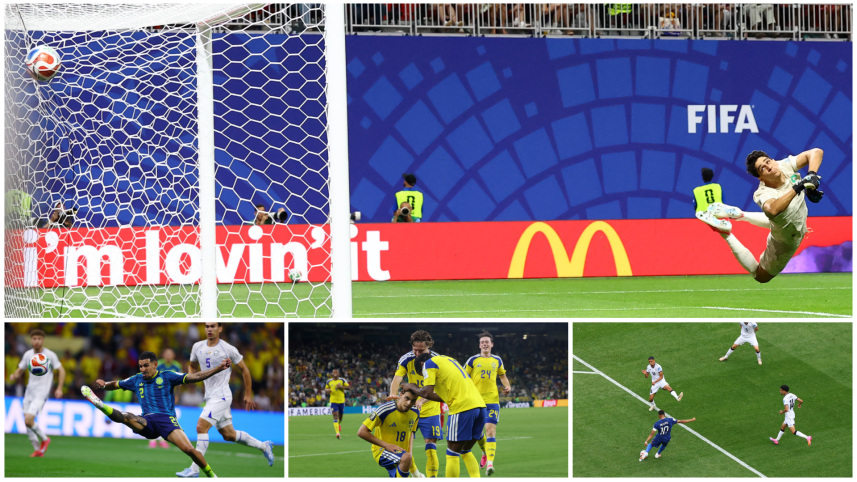
North America has already delivered a tournament full of extremes. From established contenders dismantling underdogs, to emerging sides punching above their weight, the 2026 World Cup has already written its share of shock narratives.
Beyond the upsets and storylines, the defining feature of this edition has been its sheer goal output. Even before the knockout stage, the tournament has produced a staggering 196 goals across 66 matches -- till the filing of this report. This already surpasses the previous record of 172 goals from 64 matches set in Qatar in 2022, marking a new benchmark for attacking football at the highest level.

First half vs second half
** The second half has proven decisively more productive, yielding 107 goals compared to 89 in the first half.
** While fatigue plays a natural role as matches progress, the increased urgency to find a result after the break has also led to more defensive lapses. Tactical reshuffles, higher pressing lines, and risk-heavy approaches in pursuit of points have collectively tilted the balance toward more second-half scoring.
Early stage goal rush
** The most dangerous phase of matches has been the early segment of the second half. Between the 45th and 60th minutes, teams have scored 33 goals, a direct reflection of halftime tactical adjustments and renewed attacking intent.
** However, goal surges have not been limited to a single window. The opening 15 minutes of matches have produced 30 goals, as teams attempt to impose early dominance. Similarly, the closing phase of regulation time (76-90 minutes) has also seen 30 goals, highlighting how matches increasingly open up as fatigue and desperation converge.
Stoppage time drama
** Perhaps the most defining feature of this tournament’s attacking surge has been the stoppage time drama. A remarkable 19 goals have already been scored beyond the 90-minute mark, compared to 23 in 64 matches in the last edition of the World Cup in 2022.
** This reinforces a growing modern trend: matches are no longer considered over at full time. With extended stoppage periods and heightened urgency, teams continue to push forward relentlessly, either in search of equalisers or late winners.
The bigger statistical picture
** The tournament’s overall scoring rate stands at 2.97 goals per match -- the highest in 56 years.
** To put this in historical perspective, the last time a World Cup recorded the same average was in 1970, also at 2.97 goals per match. Before this, it was the 1958 FIFA World Cup that saw an average of over three goals per match (3.60)
** Individual scoring trends also underline this attacking explosion. At the 2022 World Cup, four players reached four or more goals, while seven others scored at least three. In contrast, this edition has already seen five players cross the four-goal mark, with another eight reaching at least three goals – and the tournament is still ongoing.
Reasons behind the numbers
** The dilution and expansion effect: The expanded 48-team format has widened the competitive gap in the opening stages. Elite attacking sides have aggressively exploited structural weaknesses in debutant defences, producing high-margin scorelines -- such as Portugal, Germany, and Spain’s dominant display against Uzbekistan, Curacao, and Saudi Arabia, respectively.
** The 100-minute match reality: With stricter officiating directives to ensure maximum effective playing time, including extended VAR checks and precise stoppage allocation, matches are frequently stretching beyond 100 minutes. The physical toll of this extended duration has led to increased late-game fatigue, resulting in more disorganised defensive phases and late goals.
** Aerodynamic mastery: Technical analysis of the official match ball, Trionda, suggests an unpredictable, high-velocity flight pattern. Goalkeepers have struggled to consistently judge late movement, particularly from distance. This has directly contributed to an increase in long-range goals from elite finishers operating in transition and set-play scenarios.
If current trends continue, the tournament is not just on course to break the 300-goal barrier -- it may redefine the statistical ceiling of World Cup football altogether, setting a benchmark that could stand untouched for generations.
 For all latest news, follow The Daily Star's Google News channel.
Comments