


How Messi prepared for the World Cup: Outsmarting time and metrics


When an athlete reaches the age of 39, romance alone does not assure a World Cup pedigree. As much as football fans love the narrative of a seasoned veteran willing his team to glory purely on heart and nostalgia, the reality of the 2026 tournament in North America is far more clinical.

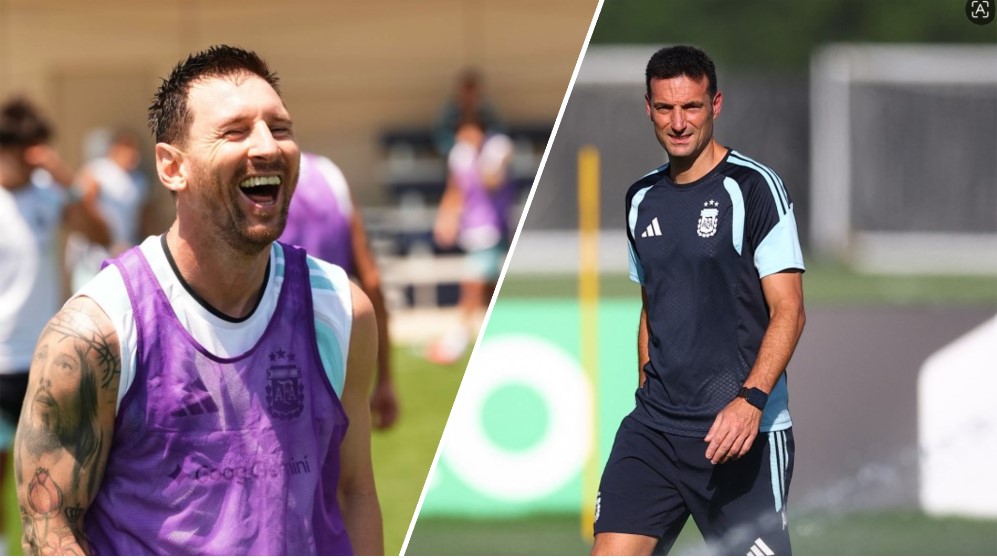
As Argentina prepare to take on Switzerland in the quarterfinals tonight (Sunday, 7:00 am, Bangladesh time), Lionel Messi’s magical run is not born of mere passion; it is a masterpiece of cold, methodical genius and unmatched physical discipline. If Diego Maradona’s late-career World Cup preparations were fuelled by raw emotion, chaotic fitness camps, and sheer defiance, Messi’s 2026 build-up was the exact flip side of the coin. It was the ultimate ‘anti-Maradona’ approach -- yet the effects on the pitch remain terrifyingly similar.
When Messi moved to Inter Miami in 2023, critics wrote the transfer off as a lucrative semi-retirement. However, while European-based contemporary superstars routinely struggle with the suffocating summer humidity of North America, Messi spent three years quietly adapting to his new environment. Enduring grueling MLS travel schedules and heavy tropical heat biologically hardwired him for this tournament.
He weaponised the climate, teaching his body exactly when to walk and when to explode. He turned the punishing North American summer into his personal tactical playground.
Messi’s appearance at this World Cup is no ceremonial victory lap. His metrics in the weeks leading up to the tournament told a remarkably calculated story, dismantling MLS defences with a prolific run of goals and assists before showcasing a sharp 20-minute cameo against Iceland just prior to the World Cup.
Even a flare-up of his left hamstring at Argentina's training camp in Kansas City caused no panic. Instead of forcing his way into full training, Messi and his personal physio chose isolated load management. Rodrigo De Paul stepped in as his private sparring partner in closed-door sessions, providing the curated physical resistance and match-pace intensity Messi needed to test the muscle without risking a tear.
The proof of this blueprint is written all over the tournament. Messi did not just arrive; he arrived lethal, executing a flawless plan of energy conservation.
According to FIFA tracking data analysed by The Telegraph, out of 618 outfield players tracked during the group stage, Messi ranked dead last in distance covered per 90 minutes. He played all 468 minutes of the group stage and still ran less than his peers by a distance that defies modern sports science.
While Kylian Mbappe utilised 49.7 km of relentless running to trigger his 396 high-speed bursts, Messi registered an nearly identical 298 high-speed dribbles on just 35.8 km of total movement. Erling Haaland looks like a fellow minimalist with 39.4 km covered, but the Manchester City striker did that while missing an entire match against France. Messi played the whole group stage and still ran 3,572 metres less than a guy who skipped a whole game.
The most damning contrast, however, lies between the maestro and the tournament's workhorses. Consider France’s Michael Olise, a playmaker operating in a similar creative profile. Olise averaged a high-intensity speed of 7.2 km/h, clocking 788 high-speed runs, 299 lung-busting sprints, and a staggering 64,306 metres of total distance.
Messi’s reality? An almost casual average speed of 4.57 km/h, just 124 sprints, and a mere 35,870 metres covered.
Yet, despite operating at walking pace for large stretches of the match, he matched Olise's creative output where it mattered most. Messi is doing more by doing less. He is the ultimate scanner in the park, conserving every ounce of oxygen until the precise moment to strike presents itself.
With eight goals and an assist already driving his status at the top of the all-time tournament scoring charts, his impact has been defined by pure economic efficiency. It is the story of a magician who recognised that to conquer the world one final time, he first had to outsmart time itself.
 For all latest news, follow The Daily Star's Google News channel.
Comments