Pachapdi Gazi, the 'Jim Corbett of Bengal', and the truth about Sundarbans 'man-eaters'

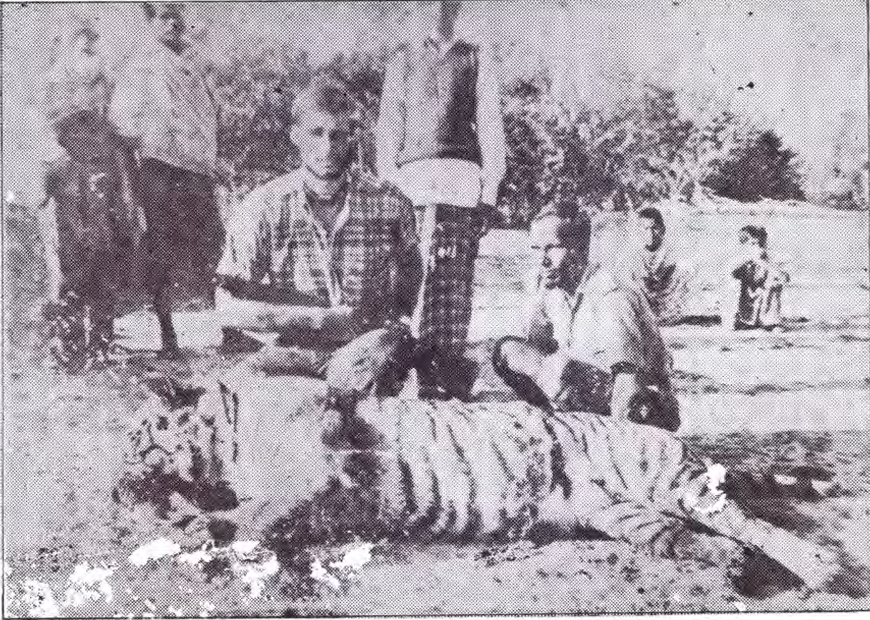
Often referred to as the ‘Jim Corbett of Bengal’ by the popular press and educated folk, Pachapdi Gazi killed 53 tigers in the Sundarbans—20 of which were ‘man-eaters’—before he officially retired as a hunter after the independence of Bangladesh. Gazi killed most of his tigers in the Sundarbans during the East Pakistani era (1947–71), when tigers were not considered iconic conservation species. Recently, I read Pachapdi Gazi's hunting memoir, Man-Eaters of the Sundarban, which was published in 1980 by Seba Prokashoni. The memoir was not directly written by Gazi himself; rather, it was narrated by him to Humayan Khan, then a director of the Public Library, when Gazi visited Dhaka in 1980.
Humayan Khan wrote these tiger-hunting stories and published them under Gazi's name in newspapers such as Robbar, Bangladesh Songbad, Bangladesh Times, and others in 1980. These writings caught the attention of Kazi Anwar Hossain and were published in book form in the same year by Seba Prokashoni.

Some of the tiger hunts that Gazi described in his memoir took place in the Sundarbans within the Satkhira Range, a place and people I have been familiar with since 2009. Moreover, Gabura Union, a large riverine island close to the Sundarbans where Pachapdi Gazi was born in 1927, has been one of my ethnographic research field sites for my MA and ongoing PhD research. When I first visited Gabura in 2009, just a few months after Cyclone Aila hit, I was surprised to learn that the island was the birthplace of Gazi. In the course of my fieldwork, conducted several times among the Sundarbans-dependent people living in the boundary villages, I found that Gazi and his memories were highly respected by fishers, crabbers, and honey collectors. Reading Gazi's memoir on the Sundarbans helped me, as an ethnographer, to historicise Sundarbans governance and understand human–tiger interactions in nuanced ways.
Beyond a preface and an introduction, the book is divided into seven chapters, all of which narrate tiger hunting in great detail at different times and locations in the Sundarbans. In each chapter, the narrative style is in the first person, as with almost all hunting memoirs.
(2)
Hunting memoirs reveal hunters too. The real name of Pachapdi Gazi is Abdul Hamid Gazi. Pachapdi Gazi's father, Meher Gazi, and grandfather, Ismail Gazi, were also famous tiger hunters in the Sundarbans region. Because several of Gazi's siblings died before his birth, his parents used to call him pocha to make their living child unattractive to Azrail (p. 71). Later, Pachapdi Gazi became his permanent name. His father and grandfather died because of tiger attacks while hunting in the forest. Pachapdi also survived a few serious tiger attacks during hunts but never refused when he was called by the Forest Department to hunt down ‘man-eaters’ in the Sundarbans.
In his memoir, Gazi justified his motivation for killing ‘man-eater’ tigers in the Sundarbans with two things: one is the maan ejjot (honour) of his lineage. In his own words, “Son of Meher Gazi, the greatest tiger hunter of the Sundarbans, Pachapdi Gazi, must not fear the tigers. What will people say if I fear the tigers and go back home without killing the man-eater? I am from a hunter family. The pride of saving people from the claws of tigers runs in my blood” (p. 32). The other is the plea and plight of the forest-dependent people who are frequently taken by tigers. Gazi says, “The poor baowali and mowali depend on me. They expect me to save them from the tiger. Man-eaters are very cunning and ferocious, but I must not be defeated” (p. 32). Gazi also believed that, since they are a hunter family, it is their responsibility to hunt ‘man-eater’ tigers to save the people of the Sundarbans. From the start of the memoir, it is clear that Gazi positions himself as a saviour of the Sundarbans people, meaning that hunting is not only for pleasure but also saves innocent lives when tigers become ‘man-eaters’. He believed that Allah had sent him with a job: to save the poor people of the Sundarbans from man-eater tigers. He viewed this hunting as a sacred responsibility.
(3)
But are all tigers ‘man-eaters’? There is a strong argument that tigers as ‘man-eaters’ were popularised during the British colonial era for trophy hunting, making the tiger a killable animal for sport. There is no scientific evidence that tigers become ‘addicted’ to human flesh once they taste it. If a tiger stalks humans, attacks them, and repeatedly eats human flesh, then the tiger is called a ‘man-eater’. But if it does not subsequently prey on humans, such a tiger is not a ‘man-eater’. True ‘man-eaters’ are those tigers in the wild that persistently stalk and hunt human beings after losing their instinctive fear. They pose a serious risk to local people. Gazi's hunting memoir takes us to a time when the state classified such tigers as ‘man-eaters’. When a tiger repeatedly killed people in the forest, it was classified as ‘dangerous’ and had to be eliminated. The Forest Department hired local hunters like Gazi—providing all logistical support, such as boats, nets, guns, and guides—to kill the ‘man-eater’. When the hunter killed the tiger, its skin and teeth had to be submitted to the Department, and the hunter received cash and sometimes a certificate as a reward.
One thing Gazi made clear in his memoir is that the ‘man-eating’ habit of tigers is not natural because humans are not their natural prey. Even if a tiger is severely hungry, it will not attack humans because humans are not a tiger's natural prey. So, what makes a tiger a ‘man-eater’? This question is crucial because many believe that the man-eating habit of the tiger is a natural instinct. From Gazi's hunting memoir, we learn that tigers are usually very intelligent but shy and timid animals when they encounter humans in the forest. In Gazi's words, “When tigers become old, lose their speed, and can't hunt their natural prey, such as deer and wild boar in the Sundarbans, only then do they become man-eaters” (p. 47). Deer and wild boar are swift animals, and when tigers grow old, their speed and hunting ability no longer match those of their prey. That should be one of the reasons tigers hunt humans. From my numerous conversations with fishers, crab catchers, and honey collectors in the Sundarbans, I also heard that the moment tigers encounter humans, they disappear in the blink of an eye.
(4)
Apart from his heroic role as a tiger hunter who shot ‘man-eaters’ in the Sundarbans when summoned by the Forest Department, in one interesting chapter Gazi positions himself not directly as a hunter but as a companion or guide for ‘elites’ from outside engaged in sport hunting. All of them killed, or intended to kill, innocent tigers, not ‘man-eaters’. Nepal's King Mahendra (1920–1972) came to the Sundarbans for a three-day sport hunting expedition in 1967, when Gazi became his guide in the jungle. In that party, the son of President Ayub Khan, Gohar Ayub Khan, was also present. President Ayub Khan came to the Sundarbans in 1966/67 to hunt saltwater crocodiles, and, on the recommendation of Governor Monayem Khan, the Forest Department sent Gazi as his guide for the hunting expedition. Neither the Nepalese King nor the Pakistani President had the opportunity to kill tigers or crocodiles during their expeditions.
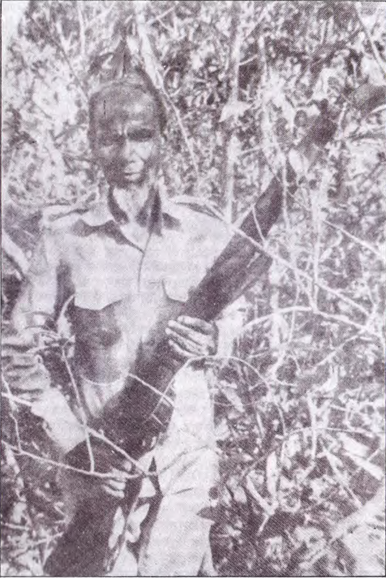
In 1958/59, when Gazi was in his mid-thirties, Pakistani Major General Omrai Khan came to the Sundarbans to hunt tigers and took Gazi as his guide. “Sir, shoot now”—each time, Omrai Khan was instructed by Gazi. Someone needs immense confidence to rely on another person's instruction about the timing and range of a shot to kill a tiger in the jungle. The general killed a tiger and a crocodile during his trip, and when he came to know that Gazi did not own any personal guns and instead used Forest Department guns to kill ‘man-eaters’, the district commissioner, upon Omrai Khan's recommendation, gifted a gun to Gazi (pp. 62–64).
A French-American journalist went into the jungle to kill a tiger with Gazi. With Gazi's shot, the tiger was injured but was later killed by the journalist's bullet. Before he left Bangladesh, he gave Gazi a testimonial, two hundred taka, his blanket, and the goat that had been used as bait to lure the tiger in the jungle.
In colonial hunting memoirs, we see that local and indigenous hunters provided information about the behaviour of prey animals, including their habitat, diet, and local ecosystem. In almost all colonial hunting memoirs, it is evident that the knowledge of Indigenous hunters was used for big-game hunting. White or elite hunters could not kill any game without the help of local and Indigenous hunters. Gazi's immense knowledge of the forest and its tigers was no exception. In each narrative in which he served as a guide, we see that Gazi was honoured and rewarded for his courage and knowledge as a hunter. Let me give you another example.
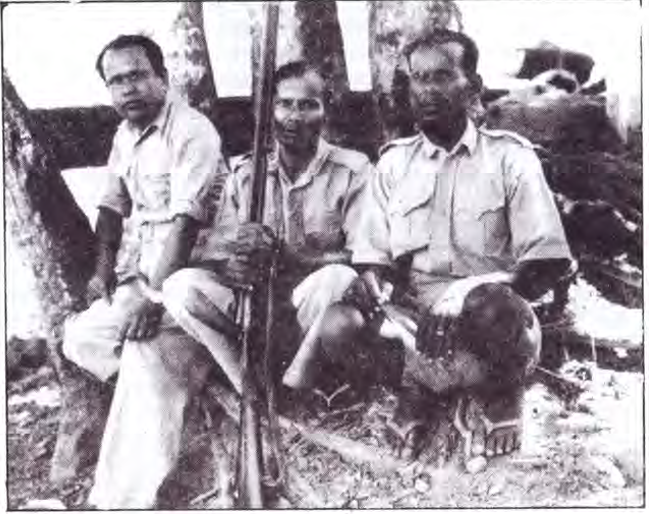
We do not have the opportunity to know how those elite hunters represented Gazi in their hunting experiences, except in one case. Glimpses of Gazi's personality as both a man and a hunter can be found in the Pakistani hunter Tahawar Ali Khan's hunting memoir, Man-Eaters of Sunderbans (1961). From 1956 to 1958, Tahawar visited the Sundarbans several times for tiger hunting and recorded those experiences for readers. Gazi's father, Meher Gazi (Putia), was also a famous hunter in the Sundarbans, and Tahawar devoted an entire chapter, titled ‘Putia and His Gun’, to his hunting experience with Meher Gazi in the Sundarbans. The entire chapter is devoted to biographical notes on Putia, mainly how he made the ‘gun-trap’ famous for killing ‘man-eaters’ in the Sundarbans and how this knowledge was successfully passed down to his son, Pochabdhi Gazi. Besides that, one of the earliest Bangla books on the Sundarbans, Sundarbaner Itihas, by A. F. M. Abdul Jalil, a lawyer by profession but with extensive knowledge of the Sundarbans as a historian and naturalist, mentions meeting Pochabdhi several times and praises his character, personality, and honesty, apart from his hunting skills.
(5)
Gazi's hunting life turned into advocacy for tiger conservation after the Wildlife Preservation Act was enacted in Bangladesh in 1973. Following the enactment of the Act, Gazi had to quit tiger hunting in the Sundarbans, although he made his last kill of a ‘man-eater’ there during the 1980s when summoned by the Forest Department. After the independence of Bangladesh, Gazi was appointed to the Forest Department in the Sundarbans because of his immense knowledge of both tigers and the Sundarbans. Until his death in 1997, Gazi strongly advocated tiger conservation. Although Gazi felt remorse for killing many innocent tigers, and sometimes did so by mistake, after every killing of a ‘man-eater’, he expressed his gratitude to Allah for helping him save the poor people of the Sundarbans.
Apart from the hunting adventures involving ‘man-eaters’, Gazi's memoir can be a source for understanding human–tiger ‘conflicts’, the ethology of tigers and their prey, tiger charmers, forest ecology, and the livelihoods of the mauwali, bauwali, and fishers of the Bangladesh Sundarbans. This memoir takes us to a different era of Sundarbans governance, in which tigers were ‘killable’ both for sport and for being ‘man-eaters’. The tiger was understood not as part of a global conservation ethic but as a ‘dangerous’ being whose killing was embedded in protection, livelihood, and masculinity. Reading Pachapdi Gazi's Man-Eaters of the Sundarban ethnographically allows me to historicise the category of the ‘man-eater’ and trace its transformation into that of a protected species under global conservation regimes.
Fahmid Al Zaid is Associate Professor in the Department of Anthropology, University of Dhaka, and a PhD candidate at Durham University, UK. He can be reached at fahmidshaon@du.ac.bd.
Send your articles for Slow Reads to slowreads@thedailystar.net. Check out our submission guidelines for details.

How Milad-un-Nabi shaped Muslim cultural life in colonial Bengal
What Rashomon teaches us about truth and human behaviour

Why Chittagong never became a maritime city

The many worlds of Ghulam Murshid

Operation Jackpot: How Bangladesh’s naval commandos struck at Pakistan’s lifeline in 1971

The Yellow Butterfly: How Sheba shaped my world growing up

What Bangladesh’s historic Test victory in Australia means for Bangladeshi-Australians

Remembering Sumit Sarkar, a historian who questioned orthodoxy

The unfinished histories of Partition