


Jude takes England's sad song and makes it better

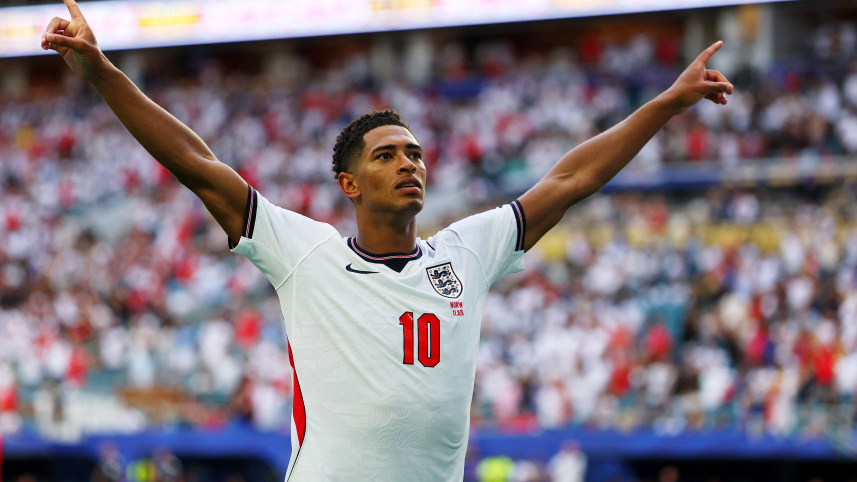
For decades, England supporters have watched major tournaments expecting the worst. One goal conceded, one missed chance, one familiar wave of anxiety, and the ghosts of past failures begin to stir.
Jude Bellingham has changed that feeling.

Now, when England wobble, the expectation no longer collapses. It is that the man wearing No. 10 will somehow make things right.
Sunday's World Cup quarter-final against Norway became the latest chapter in a story that is fast defining England's campaign.
Thomas Tuchel's side had begun brightly before gradually losing their grip on the contest. Andreas Schjelderup's opener knocked the wind out of England, the midfield became increasingly static and the familiar tension that has accompanied generations of England teams at major tournaments returned.
Then Bellingham happened.
Just before half-time, he arrived in the right place to sweep home the equaliser, restoring belief as much as parity. When extra time brought another period of uncertainty, he struck again, reacting quickest after Morgan Rogers' long-range effort had been spilled by goalkeeper Orjan Nyland to send England into the World Cup semi-finals with a 2-1 victory.
As Bellingham walked off to a standing ovation, Tuchel scarcely needed to explain what everyone inside the stadium had witnessed.
"Enough said," the England manager smiled. "He does it every single match. World-class."
His brace did far more than end Norway's resistance. It was the latest decisive intervention in a tournament that is steadily becoming his own.
He had already opened England's account against Croatia with a brilliant solo effort, broken the deadlock when Panama frustrated England in the group stage, inspired victory over Mexico with another match-winning brace, and now delivered again when the stakes were at their highest.
Four Player of the Match awards in six appearances only reinforce the obvious. Six goals have drawn him level with Harry Kane as England's leading scorer at this World Cup, while his latest strike matched James Rodríguez's record for the most goals by a midfielder at a single tournament.
Yet the numbers explain only what Bellingham has done. They do not explain what he has become.
For much of England's modern history, tournament football has been accompanied by a sense of dread. Previous generations often appeared to wear the white shirt burdened by decades of expectation, as though every misplaced pass carried the weight of 1966, penalty shoot-out defeats and near misses.
Bellingham seems untouched by that inheritance.
He does not carry the weight, he releases it.
Where past generations often wore the white shirt like a straitjacket, Bellingham wears it like silk, playing with the swagger of a man who genuinely believes every sad story can be rewritten.
That freedom shapes everything he does. One moment he orchestrates attacks as a No. 10; the next he drops deeper to dictate possession, presses relentlessly or races back to make a goal-saving challenge. Rather than demanding the game revolve around him, he bends himself to whatever England need.
To understand why England increasingly look to him when the pressure mounts, one need only revisit his growing catalogue of defining moments.
There was the unforgettable bicycle kick against Slovakia in the last 16 of Euro 2024, scored deep into stoppage time with England seconds away from elimination. As a teenager at the 2022 World Cup in Qatar, he announced himself with a goal against Iran, signalling the arrival of England's next great midfielder.
 For all latest news, follow The Daily Star's Google News channel.
 This summer, the pattern has become impossible to ignore.
Whenever England have needed a breakthrough, Bellingham has supplied one. Whenever doubt has crept in, he has swept it aside.
Even Norway captain Erling Haaland could only admire the player standing between his country and the semi-finals.
"Real Madrid and England are lucky to have Jude Bellingham," Haaland said.
"He's a midfielder, and yet he still scores, goes forward, dribbles. He's world class… Everyone wants Jude Bellingham on their team."
Away from the spotlight, Bellingham has consistently deflected praise towards his teammates, insisting England's success is built on collective effort rather than individual brilliance. It is a maturity that mirrors the composure he shows on the pitch.
England have spent decades waiting for everything to go wrong. With Jude, they have started expecting someone to make it right.
Comments