


“Lung health today is shaped as much by environment as by medicine”


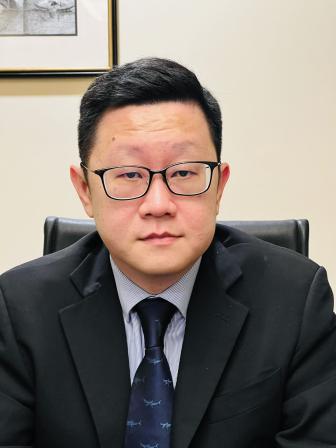
Clin Asst Prof Sewa Duu Wen, Head and Senior Consultant of Respiratory and Critical Care Medicine at Singapore General Hospital (SGH), recently visited Dhaka. In an interview with The Daily Star, he discussed the growing burden of respiratory diseases, the realities of critical care, the impact of air pollution, lessons from COVID-19, and practical steps the public can take to protect their lungs.
The growing burden of respiratory disease
Chronic respiratory illnesses such as asthma and chronic obstructive pulmonary disease (COPD) remain among the most common non-communicable diseases worldwide. According to Prof Sewa, these conditions arise from a complex interaction between genetic vulnerability and environmental exposure.

"Tobacco smoking remains one of the most important and preventable risk factors," he said. "In people who already have asthma or COPD, smoking can trigger severe exacerbations that may be life-threatening."
He also cautioned against assuming that electronic cigarettes are harmless. "While e-cigarettes are sometimes promoted as harm-reduction tools for smokers trying to quit, the chemicals in vaping products can irritate the airways and trigger respiratory symptoms. In non-smokers, vaping can become a gateway to nicotine addiction and lung problems."
Air pollution: a challenge beyond individual control
For countries like Bangladesh, where air pollution is a daily reality, protecting lung health is particularly difficult. Prof Sewa emphasised that this is not an issue individuals can solve alone.
"Air quality is a population-level problem that requires coordinated government action," he said. "Regulating industries, fuel use, and urban planning are essential."
While many people turn to indoor air purifiers, he noted that their benefit is limited unless the indoor environment is well-sealed and equipped with high-efficiency filters. "In most homes, especially where outdoor pollution levels are high, air purifiers can only offer modest relief."
Critical care: balancing survival and quality of life
As an intensive care specialist, Prof Sewa described how critical care medicine has evolved. ICUs are now treating older patients with multiple, complex illnesses, including advanced cancer and chronic organ failure.
"The challenge is no longer just survival," he explained. "We must weigh the potential benefits of intensive care against the patient's long-term quality of life."
He stressed the importance of early conversations with patients and families. "Before a crisis occurs, patients should be given the opportunity to express what quality of life means to them and how aggressive they would want treatment to be."
For low- and middle-income countries, he believes that strengthening basic ICU care can save many lives. "Good infection control, well-trained nurses, adequate staffing, and prevention of complications such as pneumonia or bed sores do not require expensive machines, but they require investment in training and systems."
Lung transplantation: hope with limitations
Lung transplantation is a life-saving option for patients with end-stage lung disease, but it remains complex and resource-intensive. Prof Sewa noted that about 60 per cent of lung transplant recipients survive beyond five years.
"The main challenge is chronic rejection," he said. "Unlike organs such as the kidney or liver, the lungs are constantly exposed to the environment, increasing the risk of infection and immune rejection."
As a result, patients require lifelong immunosuppressive therapy, which carries its own risks.
Why lung cancer is often detected late
Lung cancer is frequently diagnosed at an advanced stage because early disease is usually silent. "The lungs have a large reserve," Prof Sewa explained. "Small tumours often cause no symptoms until they grow large or spread."
However, treatment has advanced dramatically. "Targeted therapies and immunotherapy have transformed outcomes. Some patients with stage-four lung cancer now live for several years with good quality of life, something that was almost unthinkable two decades ago."
Lessons from COVID-19
Reflecting on the pandemic, Prof Sewa said COVID-19 exposed weaknesses in health systems worldwide but also accelerated learning.
"We learned that oxygen supply, ICU infrastructure, staff training, and infection control are critical," he said. "Pandemic preparedness is not just about hospitals—it requires a whole-of-government approach involving supply chains, public policy, and community engagement."
On vaccine safety, he acknowledged public concerns but stressed the evidence. "When we look at hundreds of millions of vaccinated people globally, serious adverse effects are extremely rare. Vaccination remains one of the most effective tools for preventing severe disease."
 For all latest news, follow The Daily Star's Google News channel.
 New technologies in intensive care
Prof Sewa highlighted extracorporeal organ support systems, such as ECMO, as one of the most important advances in critical care. These machines temporarily take over the function of the lungs or heart, allowing time for recovery.
"They are less invasive than traditional heart-lung machines and can be used for weeks if necessary," he explained. "However, they still require intensive monitoring and are not suitable for use outside specialised hospital settings."
Protecting lung health: simple but effective steps
For the general public, Prof Sewa emphasised practical measures:
- Avoid smoking and vaping
- Reduce exposure to polluted environments where possible
- Ensure good ventilation during cooking, especially when using biomass fuels
- Use protective equipment in high-risk workplaces
- Stay up to date with vaccinations, including influenza, pneumococcal, and COVID-19 vaccines, particularly for older adults and those with chronic illnesses
"Lung health is not just about avoiding disease," he concluded. "It is about creating environments—at home, at work, and in our cities—that allow our lungs to function at their best."
Comments