


25 YEARS OF THE HUBBLE SPACE TELESCOPE

In just 405 years, since Galileo first chose to point a telescope up rather than forward, humankind has made incredible strides in space exploration. But none has done more for modern astronomy than the Hubble Space Telescope (HST). The HST built by NASA, with contributions from the European Space Agency, is operated by the Space Telescope Science Institute.
It is one of the most iconic scientific instruments ever created and is used by astronomers across the globe.

One of those who have taken advantage of the telescope's unprecedented capabilities is the University of Leicester's Professor Nial Tanvir, who has used the HST to explore the size of the cosmos and learn more about gamma-ray bursts -- the most powerful electromagnetic events ever discovered.
On Friday, 24 April, the HST will celebrate exactly 25 years since it was launched.
Named after American astronomer Edwin Hubble (1889-1953) – whose work led to the proposal the cosmos is expanding– the telescope of the same name has captured images which have changed our perception of the Universe forever.
One such snapshot is the Ultra Deep Field – an image which shows more than 10,000 galaxies compacted into just a tiny portion of the night sky.
SOURCE: SCIENCEDAILY.COM
***
NEW EBOLA TREATMENT
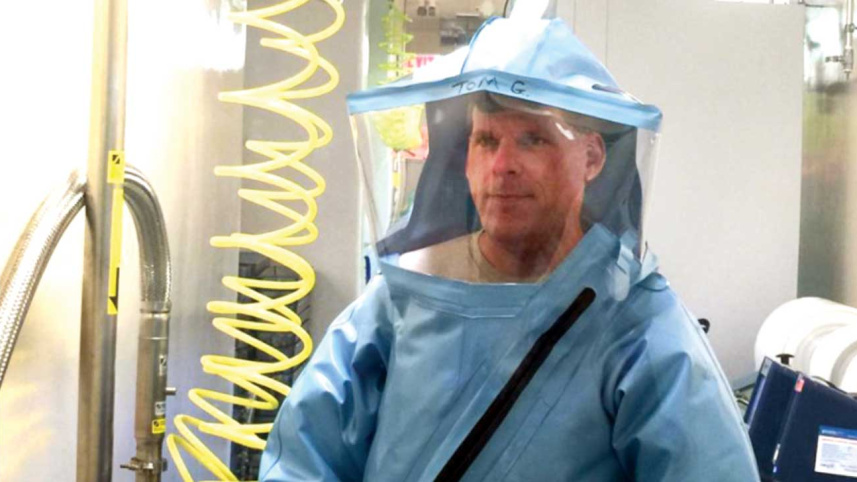
Researchers from The University of Texas Medical Branch at Galveston and Tekmira Pharmaceuticals Corp, have successfully developed a post-exposure treatment that is effective against a specific strain of the Ebola virus that killed thousands of people in West Africa.
The study results, in the April 22 edition of Nature Journal, demonstrated that the treatment is the first to be shown effective against the new Makona outbreak strain of Ebola in animals that were infected with the virus and exhibited symptoms of the disease.
The treatment uses a sequence specific short strand of RNA, known as siRNA, designed to target and interfere with the Ebola virus, rendering it harmless. One of the advantages of this approach is the ability to quickly modify it to different viral strains.
Although all infected animals showed evidence of advanced disease, those receiving treatment had milder symptoms and recovered fully. The untreated controls succumbed to the disease on days eight and nine, which is similar to that reported in the field after patients begin showing symptoms of Ebola.
This treatment also protected against liver and kidney dysfunction and blood disorders that occur during an Ebola infection. These results indicate that the treatment may confer protective benefits that go beyond improving survival rates and effective control of virus levels in the body.
The Tekmira siRNA-based therapeutic is now being evaluated in Ebola-infected patients in Sierra Leone.
SOURCE: SCIENCEDAILY.COM
 For all latest news, follow The Daily Star's Google News channel.
Comments