


Quirky Science
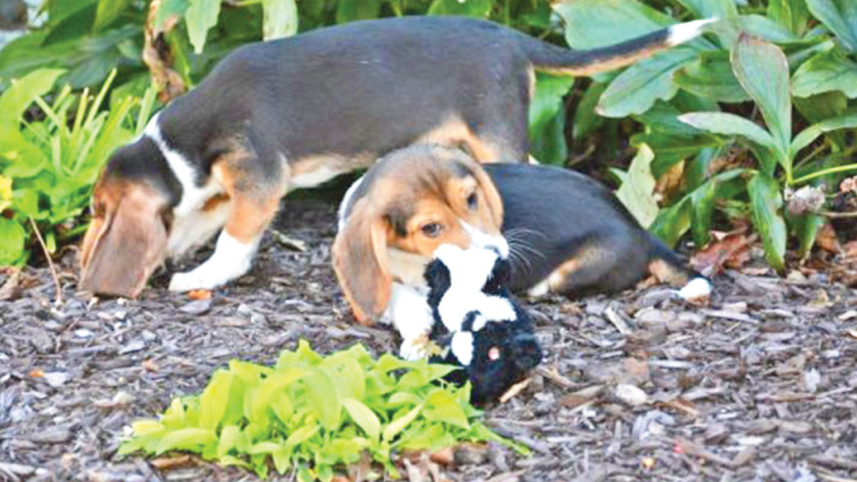
Puppies Born by in Vitro Fertilization
For the first time, a litter of puppies was born by in vitro fertilization, thanks to work by Cornell University researchers. The breakthrough, described in a study to be published online Dec. 9 in the journal Public Library of Science ONE, opens the door for conserving endangered canid species, using gene-editing technologies to eradicate heritable diseases in dogs and for study of genetic diseases. Canines share more than 350 similar heritable disorders and traits with humans, almost twice the number as any other species.
Nineteen embryos were transferred to the host female dog, who gave birth to seven healthy puppies, two from a beagle mother and a cocker spaniel father, and five from two pairings of beagle fathers and mothers.
"Since the mid-1970s, people have been trying to do this in a dog and have been unsuccessful," said Alex Travis, associate professor of reproductive biology in the Baker Institute for Animal Health in Cornell's College of Veterinary Medicine.
Jennifer Nagashima, a graduate student in Travis' lab and the first to enroll in the Joint Graduate Training Program between the Smithsonian Conservation Biology Institute and Cornell's Atkinson Center for a Sustainable Future, is the paper's first author.

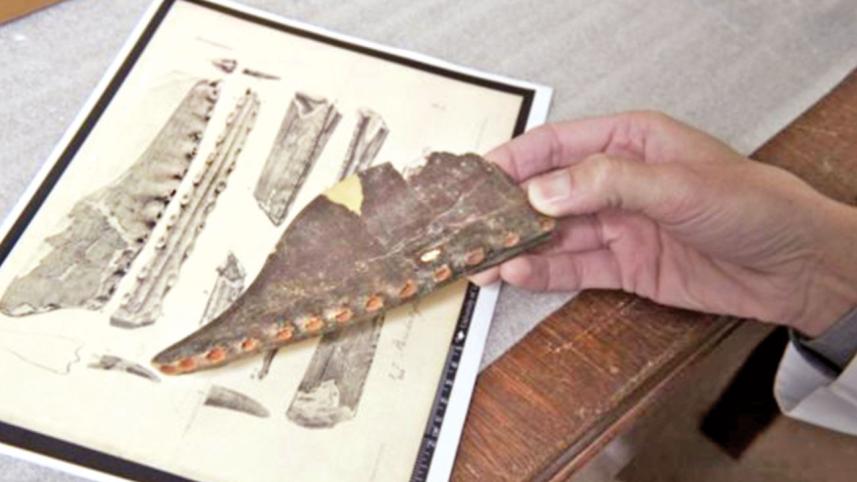
Pterosaur in Texas
The new 94-million-year-old species, named Cimoliopterus dunni, is strikingly similar to England's Cimoliopterus cuvieri. Identification of the new flying reptile links prehistoric Texas to England, says paleontologist Timothy S Myers, Southern Methodist University, Dallas, who identified the fossil as a new species.
Pterosaur relatives from two continents suggest the prehistoric creatures moved between North America and England earlier in the Cretaceous – despite progressive widening of the North Atlantic Ocean during that time.
The Texas and English Cimoliopterus cousins are different species, so some evolutionary divergence occurred, indicating the populations were isolated from one another at 94 million years ago, Myers said.
The similarity between the two species, however, implies minimal divergence time, so gene flow between North American and European populations would have been possible at some point shortly before that date.
Based on fossils discovered so far, it's known that toothed pterosaurs are generally abundant during the Cretaceous in Asia, Europe and South America. But they are rare in North America.
Source: Sciencedaily.com
 For all latest news, follow The Daily Star's Google News channel.
Comments