


Beyond the celebration

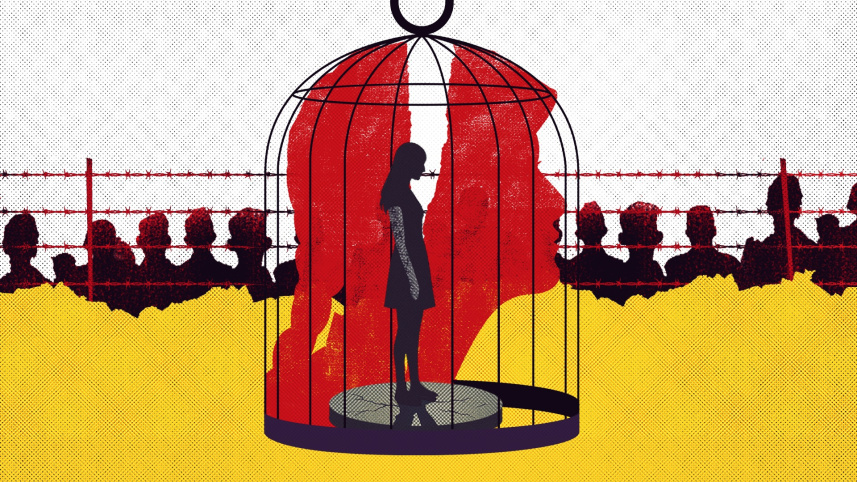
Come every International Women’s Day, the celebrations are everywhere: flowers, platitudes, social media posts praising women’s “resilience”. Yet step outside the ceremonial spotlight, brief as it is, and a different story unfolds, where women still spend their days negotiating for space on the city street, on the bus and metro, and desperately trying to get a foot in the door of the fabled boardroom where decisions are made.
Walk down any Dhaka road during rush hour and the negotiation becomes visible. Women move through crowded footpaths with a practiced, defensive grace – adjusting bags, quickening their steps, and maintaining a constant, almost instinctive awareness of the gaze around them. Public space often demands a silent calculation: which route feels safest, which bus less hostile, which seat might allow the least unwanted contact.

Even clothing and self-presentation are often shaped by this calculation, as women weigh how their choices may be judged or interpreted by others.
Over the decades, the presence of women in these spaces has grown dramatically. They fill universities, work in banks, newsrooms, offices, and factories. Their visibility is no longer unusual. Yet the environment around them often remains stubbornly unprepared.
On public buses, for instance, the promise of equality often dissolves in the rush of bodies. Women frequently stand balancing in crowded aisles – one hand gripping the overhead bar, the other guarding personal space that is constantly encroached upon.
The contradiction is striking because history shows that women in Bangladesh have never been passive observers. From the Language Movement and the 1971 Liberation War, to the anti-quota campaigns and the July uprising of 2024, women have been at the forefront. Figures like Sufia Kamal mobilised resistance, while guerrilla fighters like Krishna Member risked their lives in the fight for independence. During the anti-autocracy protests of the 1990s, women played an active role.
Most recently, the July 2024 uprising once again placed women on the frontlines. In Gazipur, garment workers joined the demonstrations and faced violent crackdowns, with at least 26 women workers losing their lives during the unrest.
Yet a familiar and troubling pattern often follows such moments of collective struggle. Women help lead movements for change, but they are frequently pushed aside when it comes time to shape the institutions that emerge afterward.
The parliamentary election on February 12 offered another stark example. Early discussions had included ambitions for stronger female representation. But by the time nominations were finalised, there were only 84 women contesting. Just seven ultimately secured seats, a result that highlights how difficult it remains for women to enter the country’s most powerful political space.
Inequality also appears in smaller, quieter ways that rarely make headlines. It can surface in the colleague who interrupts a woman repeatedly during meetings, or the supervisor who assumes women should take on softer administrative tasks rather than leadership roles.
Even basic workplace infrastructure sometimes reflects this imbalance. In many offices across Bangladesh, a single washroom is still shared by all employees, even when several women work there. What may seem like a minor logistical issue can become a daily inconvenience, quietly reminding women that workplaces were not always designed with them in mind.
More than a century ago, Virginia Woolf wrote that a woman needs “a room of one’s own” to think and create. Her argument was never just about architecture; it was about autonomy and the freedom to occupy intellectual and social space.
Today, Bangladeshi women continue to build those spaces step by step. The office cubicle, the newsroom desk, the bus seat, and the metro carriage are all part of that ongoing claim.
Progress is undeniable, but it remains incomplete and excruciatingly slow. Equality does not arrive simply because doors are opened. It arrives when the environment inside no longer feels hostile, and when women no longer have to justify the simple act of walking through it.
This International Women’s Day, perhaps the more honest question is not whether women are present in public life. The streets are already full of them.
The real question is whether those streets are ready to accommodate bold women.
 For all latest news, follow The Daily Star's Google News channel.
Comments