


Raising an emotionally intelligent child


In our culture, the “good child” is often the one who is quiet, obedient, and follows instructions without a fuss. We see a child sitting still and think, “What a wonderful job the parents did!” But according to psychological counsellor Sabrina Islam Setu of PHWC, we might be looking at the wrong metrics.
“True emotional health is not about silence or obedience,” says Setu. “It is about emotional awareness, the ability of a child to understand and express what they feel inside.” For many parents, particularly those in high-stress professions like medicine, the challenge isn’t just about teaching good behavior. It’s about building an emotional bridge that remains even when work calls them away.

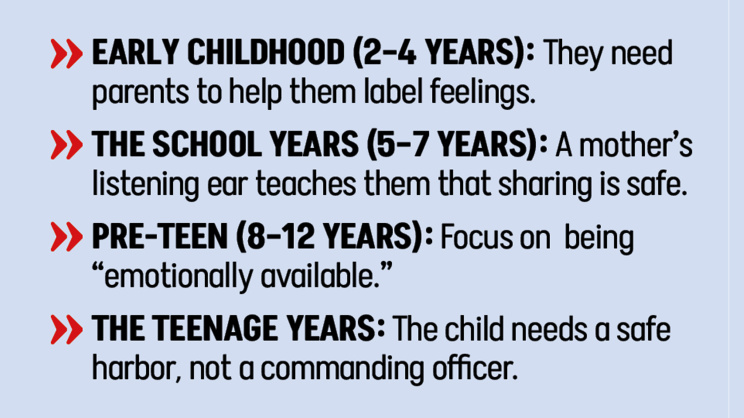
Different Stages of Feeling
Emotional awareness looks different as a child grows. According to Setu, the role of a parent, particularly the mother, must evolve with the child’s development:
De-Frocking
“The main difficulty is not a lack of love,” Setu explains. It’s staying in ‘hospital mode.’ At home, children don’t need correction or evaluation; they need warmth and presence. Setu suggests a process of “de-frocking.” This is a mental “role-switch” that happens before walking through the door. A simple moment of silence and a conscious reminder, “At work I solve problems, but at home I connect.”
Consistency Over Presence
A common guilt among medical professionals is the “emergency call” that pulls them away from dinner or bedtime. Many worry their child will feel “second-best” to a patient. However, Setu reassures parents that emotional connection is built through reliability, not just physical hours spent together. “What protects a child emotionally is repair,” she says. When you return, acknowledge the absence with honesty.
Validation First
Perhaps the most transformative tool in a parent’s arsenal is the “Validation First” rule. Most children don’t misbehave because they are “naughty,” but because they are overwhelmed. “Before correcting behavior, recognise the emotion,” Setu advises. If a child refuses to share a toy, don’t start with a lecture on selfishness. Start by saying, “I can see you’re upset and don’t want to share right now.”
Raising an emotional child in a fast-paced world is a marathon, not a sprint. Whether it is explaining a late night at the hospital or navigating a toddler’s tantrum, the core remains the same: making the child feel understood.
 For all latest news, follow The Daily Star's Google News channel.
Comments