


What a smart home actually looks like beyond wi-fi
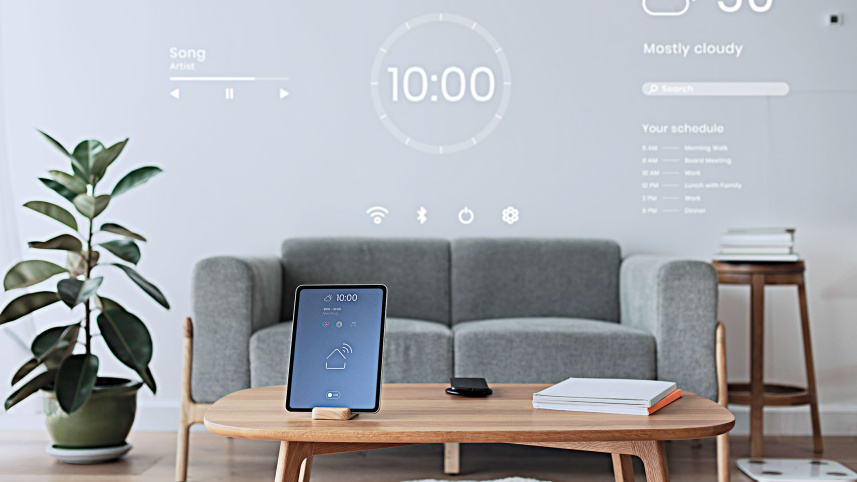
In Bangladesh, “smart home” often stops at connected devices. A smart TV, a few app-controlled lights, maybe a voice assistant. Useful, but limited.
A fully realised smart home works at a systems level. Devices exchange data, adjust behaviour, and optimise how the house runs. The impact shows up in energy use, time saved, and fewer routine decisions.

Where the Efficiency Comes From
Energy management is the most developed part of smart home technology, and it is where the numbers are clearest. Smart thermostats such as Google Nest Thermostat and systems from Ecobee use occupancy sensors and machine learning to adjust heating and cooling automatically. Field data shows these systems can reduce HVAC energy use by around 10 to 20 percent, depending on usage patterns.
At a larger scale, companies like Verdigris Technologies install AI-based sensors that monitor electricity at circuit level. Their systems identify inefficiencies and unnecessary loads in real time, something that was not possible with traditional metering.
This is where smart homes move beyond convenience. They actively reduce waste.
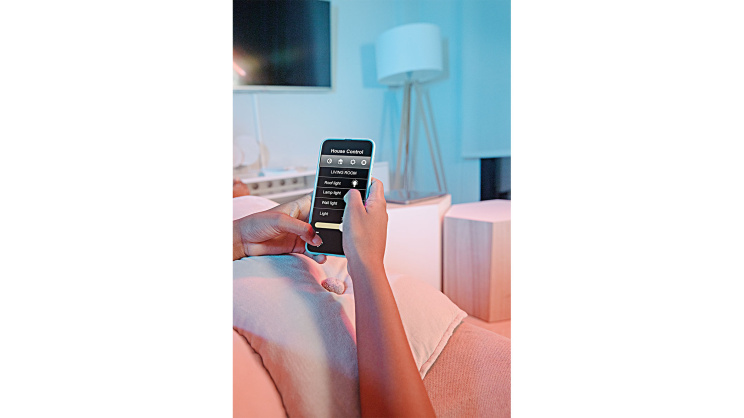
Devices that coordinate, not just respond
The difference between a connected home and a smart one comes down to coordination.
Platforms like Samsung SmartThings bring multiple devices into a single system. Lighting, appliances, and climate control can respond to shared data instead of acting independently.
Recent updates in SmartThings introduced “ambient sensing”, where devices such as TVs and speakers detect motion and activity to trigger automation. A room that senses no movement can reduce cooling and switch off lights without manual input. This type of coordination is where time savings begin to show. Small actions disappear from daily routines.
The kitchen as a data point
Smart appliances are often dismissed as gimmicks until their practical use becomes clear.
Early models like the Samsung T9000 from 2013 introduced inventory tracking and calendar integration. Newer refrigerators from GE Appliances now include internal cameras and barcode scanning. Users can check contents remotely and build shopping lists automatically.
The effect is simple. Fewer duplicate purchases. Less food waste. Less time spent checking what is already at home. These are not dramatic features, but they solve everyday inefficiencies.
Shifting When Power Is Used
Another area with measurable impact is load shifting. Smart washing machines, dishwashers, and water heaters can run during off-peak hours when electricity demand is lower. This reduces strain on the grid and, in some markets, lowers cost.
Research into AI-driven home energy systems shows total household energy savings of up to 20 percent when these optimisations are applied consistently.
In contexts like Bangladesh, where load management and power stability are ongoing concerns, this kind of scheduling has practical value beyond cost.
Homes that learn patterns
Recent progress comes from how data is used, not from new hardware. AIoT systems track behaviour over time, mapping when people are home, when electricity demand peaks, and how different appliances interact. Operations are adjusted automatically based on these patterns.
 For all latest news, follow The Daily Star's Google News channel.
 Cooling systems can ease off when kitchen appliances are drawing power, helping balance overall load. Rooms can be cooled before occupants arrive, then stabilised once conditions are met. These changes run continuously in the background without requiring constant input.
Many homes described as smart still operate in fragments. A connected air conditioner, a few smart plugs, and a streaming device remain isolated without a shared system. Integration is what allows devices to exchange data and act together.
Platforms like Samsung SmartThings and earlier ecosystems such as Qivicon were built around this idea. Linking systems allows coordinated decisions across the home, which is where real efficiency begins.
What this means for Bangladesh
The local market is still early. Most households are experimenting with individual products rather than full ecosystems. That gap is likely to narrow. Rising electricity costs, urban density, and growing access to connected devices are pushing demand toward more efficient systems.
A smart home, in practical terms, reduces energy use, trims daily effort, and handles routine adjustments in the background. This is done not by adding more devices, but by making the ones already there work together properly.
Comments