A fall that is not autumn

March in Bangladesh is an interlude -- mended by rising temperatures, hue changing rains and the low rumble of gathering storms.
The languid grace of spring lingers faintly, but summer presses its claim with an insistence that is almost theatrical. The air grows heavier, the sun acquires a sharper authority, and the wind, once dry and composed, turns capricious -- at times torpid, at times fevered with moisture drawn from the Bay of Bengal.


It is within this atmospheric restlessness that the phenomenon of falling leaves assumes a character entirely its own.
Not the crisp, sepia-toned surrender one associates with autumn elsewhere, rather it is a shedding that coincides not with decline, but with imminent abundance.
A fall that is not autumn
To call it “fall” is to risk a false equivalence. These are not the crisp elegies of October, not the sepia-toned surrender of temperate climes. The leaves of March in Bangladesh do not descend in brittle resignation; they relinquish themselves in a kind of humid, almost urgent pragmatism.
Where autumn elsewhere is a season of retreat, here the shedding is strategic. The heat mounts rapidly -- often breaching the mid-to-high thirties by late month -- and trees, especially the deciduous, divest themselves of ageing foliage to conserve precious moisture.
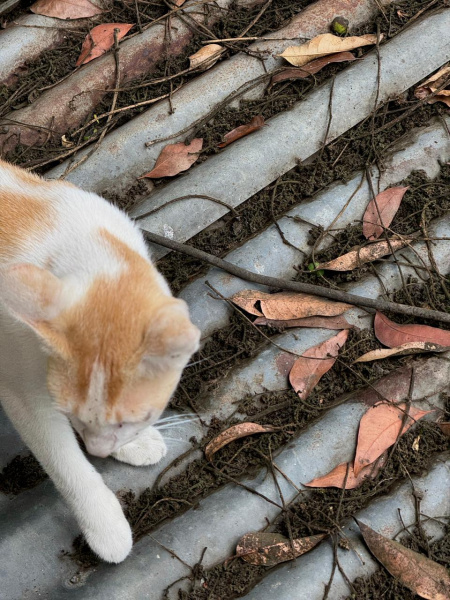
It is not decay that compels this exodus, but survival.
The leaves fall not because life is ebbing, but because it is bracing itself for excess.
And so they drop -- not dry and whispering, but often rain-dappled, sometimes freshly torn by the gusts of a storm, their descent accompanied not by the hush of melancholy but by the percussion of thunder.
Scents become sights
If one were to close one’s eyes in such a moment, it would not be the sight but the scent that defines March.
The fallen leaves, dampened by sudden rain, exhale an earthy fragrance that is at once intimate and expansive.
Petrichor rises -- that ineffable perfume of rain upon parched soil -- mingling with the faintly sweet, faintly intoxicating notes of seasonal bloom.

Spring has not quite relinquished its claim. Beli flowers release their nocturnal sweetness, tuberose lends its phlegmatic, almost narcotic aroma, and the early stirrings of mango and jackfruit infuse the air with a promise of abundance yet to come.
The scent, then, is a layered composition -- leaf, loam, blossom and impending fruit -- a sensory overture to summer’s arrival.
It is a fragrance not of endings, but of transitions so dense they feel almost like beginnings.
 For all latest news, follow The Daily Star's Google News channel.
 Poetics of a humid impermanence
The Kalbaishakhi storms, for all their tempestuous ferocity, are agents of paradoxical grace. They lash, they uproot, they scatter -- yet they also cleanse and consecrate.
In their wake, the land appears briefly reborn, its dust subdued, its colours sharpened.
The fallen leaves, plastered against darkened earth or gathered in rain-fed rivulets, become part of a transient mosaic.
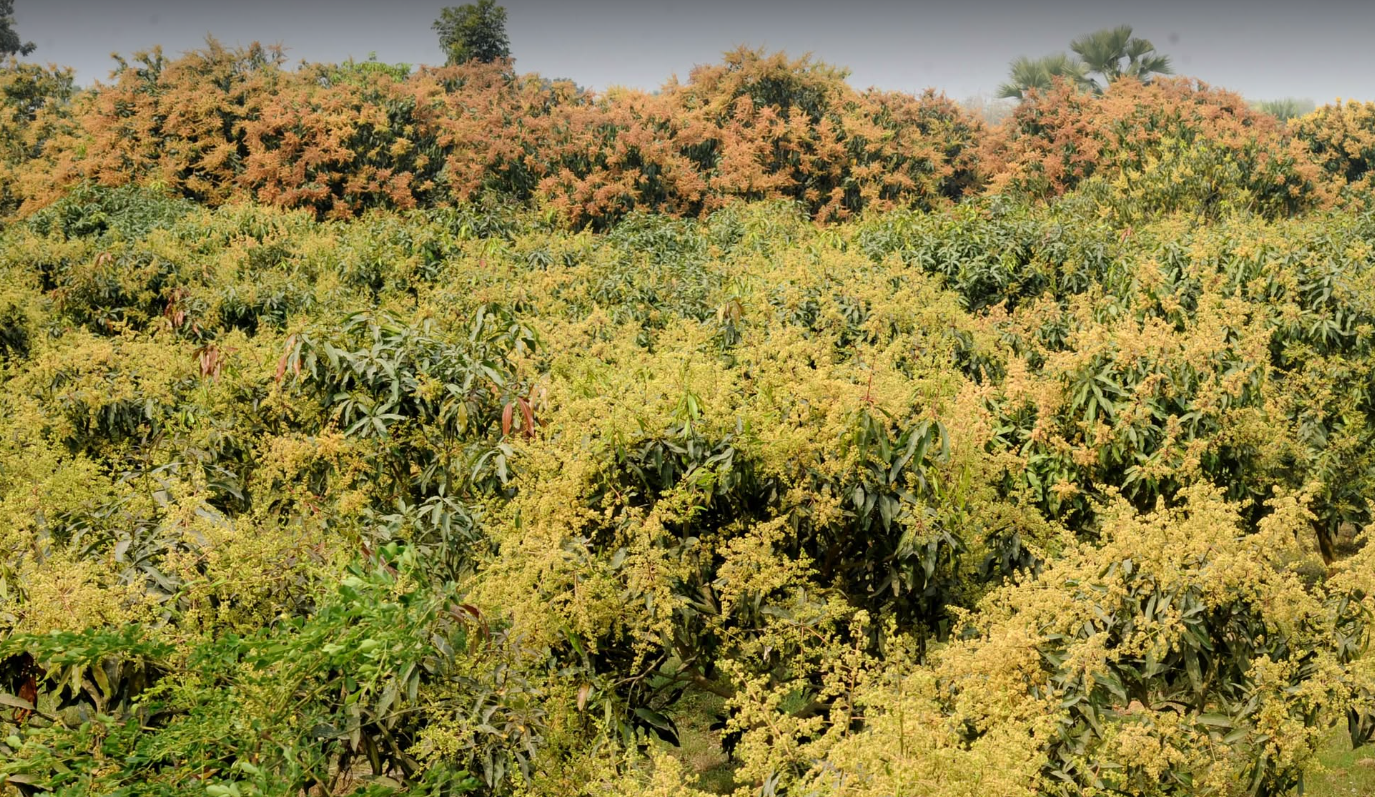
And even as they decompose, even as they surrender their form, the trees above begin their quiet act of replenishment.
Tender green shoots emerge with startling haste, reclaiming branches that only weeks ago seemed skeletal.
This is not a languid regeneration. It is swift, almost impatient, as though the trees themselves are aware of the brevity of this interlude before summer’s full dominion asserts itself.
What renders March singular in Bangladesh is not merely its climate, but its cadence. It is a season that refuses to linger, that compresses within a few weeks what elsewhere might unfold over months.
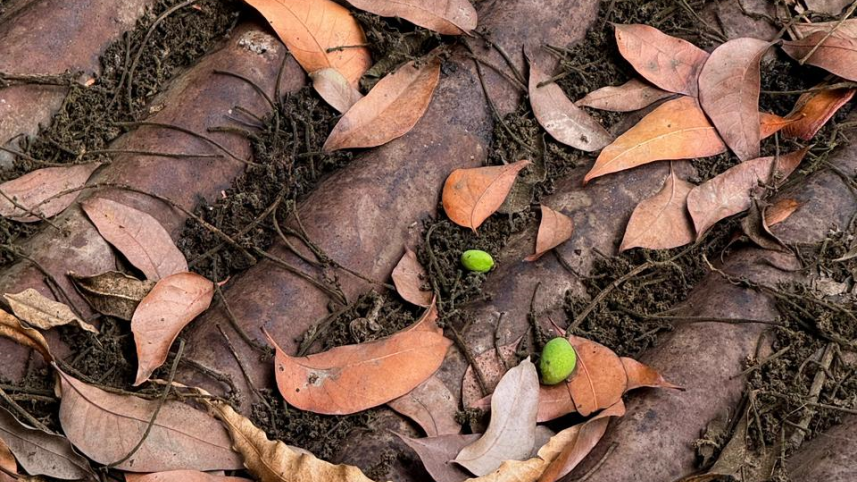
Heat intensifies, storms erupt, leaves fall, flowers bloom, fruit forms -- all in a choreography that feels both chaotic and exquisitely timed.
And within this choreography, the falling leaf becomes an emblem not of decline but of adjustment.
It is a gesture of release that makes way for resilience, a relinquishing that enables renewal.
There is, in its wet descent, a quiet defiance of the melancholic associations we so readily attach to falling foliage.
In the end, March’s fallen leaves are less a coda than a prelude.
They do not mark the close of a season so much as the recalibration of one.
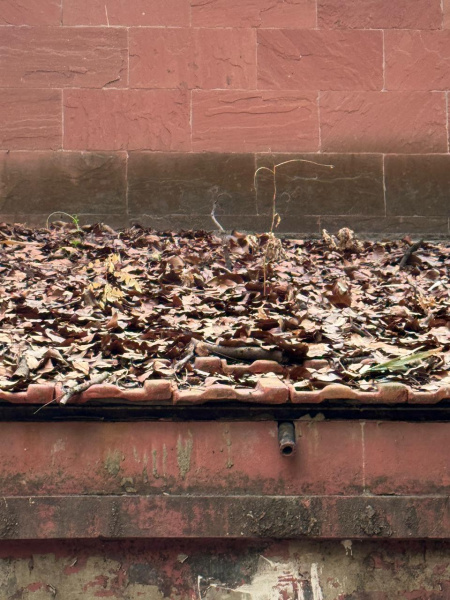
Soaked in rain, steeped in scent, caught between storm and sunlight, they embody a kind of forward motion -- an acceptance that to endure the coming blaze of summer, one must first shed, adapt, and begin again.
So the ground is briefly carpeted, not with the nostalgia of autumn, but with the immediacy of change. Above, the sky gathers itself for another storm. Around, the air thickens with bloom and promise.
And underfoot, the leaves -- damp, fragrant, unceremonious -- complete their quiet, essential work of making way for what comes next.

Mini human brains grown in labs could outperform AI, researchers say

Profile / From grooming to advocacy: The growing mission of Ahona Rahman and Nadia Hossain

This website wants to make Bangladesh’s bribe economy visible

Why we owe street animals a better solution than culling

Perspective / How to make your balcony bird-friendly this summer

Hugging Face may be up for sale, valued at $13 billion: report

Rising from the ashes: Ahmed Tuhin Reza and Tenzila Elma return with renewed purpose

Social Issues / Behind Choko Poko & Family: A home built around rescue

Off Campus / The pitfalls of armchair psychology