


‘Where are you?’ The afterlife of a song that outlived borders

It begins, as many contemporary revivals do, almost accidentally. A clip. A voice, untrained yet earnest. A refrain, fragile but unmistakable.
Someone, somewhere, sings “Kahan ho tum chale aao…” and the internet, that vast and often forgetful archive, pauses -- if only for a moment -- to listen.
 For all latest news, follow The Daily Star's Google News channel.
 These circulating clips, scattered across timelines and feeds, are not merely performances. They are acts of remembrance. They gesture towards something far older than the platforms that now host them -- a civilisational memory that refuses to be partitioned.
In the trembling cadences of amateur singers, one discerns not imitation but inheritance.
At the heart of this resurgence lies a ghazal whose emotional architecture is as enduring as it is exquisite.
A longing, carved in time
Penned by Behzad Lakhnavi, “Kahan ho tum” belongs to that rarefied canon of Urdu poetry where longing is not merely expressed but sanctified. Its central motif is deceptively simple: the lover’s yearning. Yet within that resides an entire cosmology of absence.
“Where are you, come back, love demands it.” The refrain itself is a summons, a quiet insistence that love, even in its most forlorn state, retains a moral authority. This is not yearning as weakness; it is yearning as inevitability.
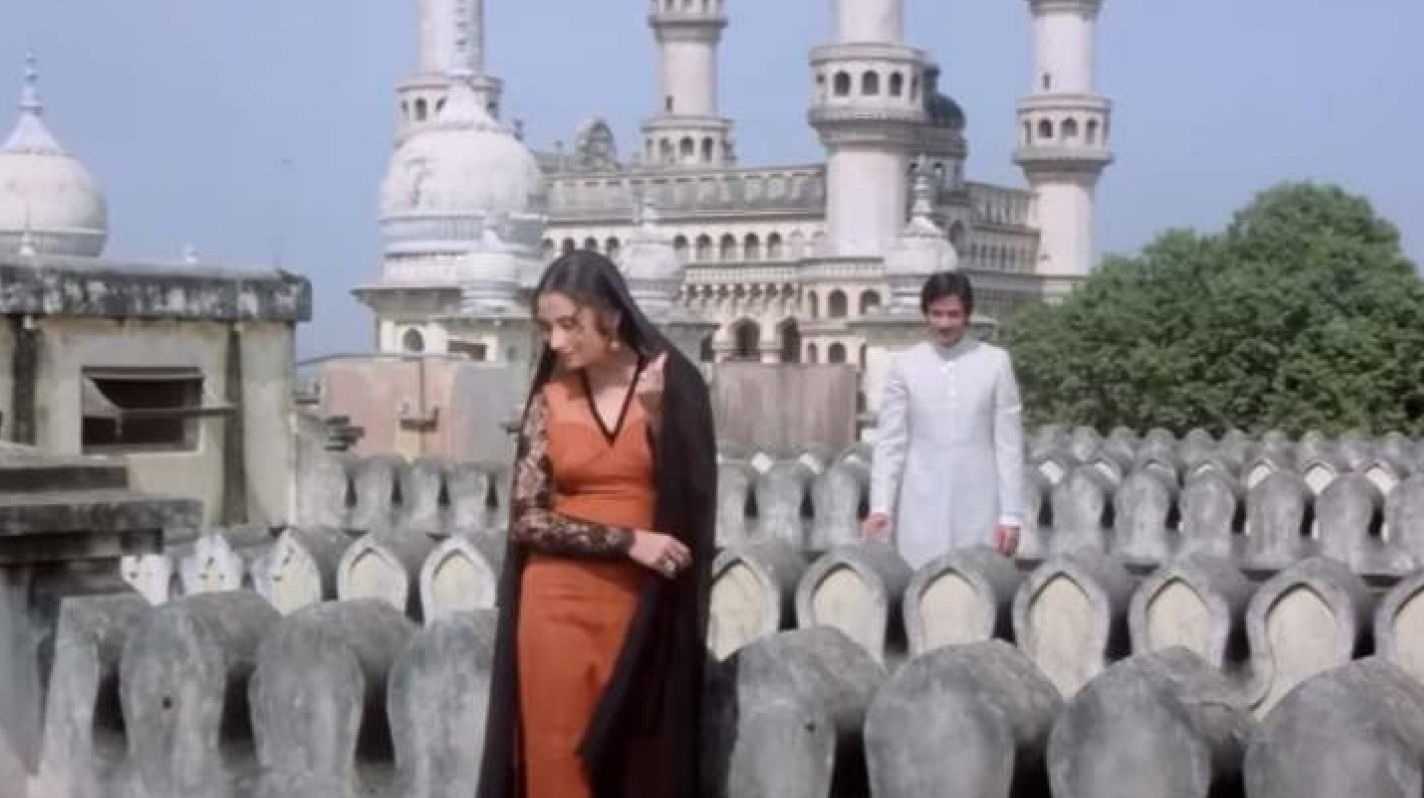
The ghazal dwells in Gham-e-Dunya -- the sorrow of existence itself. The beloved becomes both refuge and remedy, the one figure capable of rescuing the one who sings from the fatigue of living.
What renders the poem transcendent is its alchemy. Private grief is transmuted into a shared aesthetic experience.
One listens not as an outsider, but as an accomplice.
Two voices, one inheritance
The ghazal's immortality owes much to the voices that gave it flesh and breath.
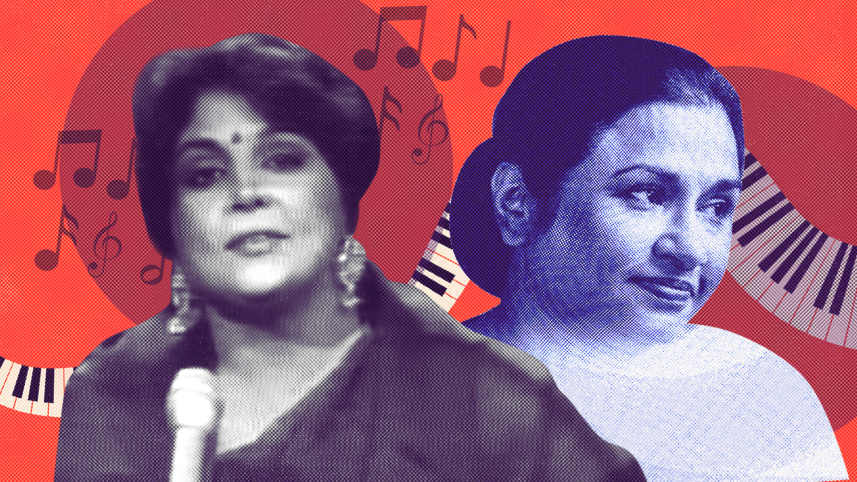
One version is by Nayyara Noor, the celebrated nightingale of Pakistan, whose interpretation elevates the composition into something more orchestral, more expansive.
The other, by Shahnaz Rahmatullah, lends the ghazal a plaintive sincerity, her timbre steeped in a kind of restrained melancholy. There is in her rendition an almost conversational intimacy, as though the plea were uttered not to an audience but into the void itself.
Where Shahnaz aches, Nayyara soars. Her voice carries the weight of longing with a luminous poise, transforming despair into something strangely dignified.
Both singers, separated by geography yet united by repertoire, embody the paradox of the subcontinent’s cultural history: divided nations, indivisible sensibilities.
A cartography of shared feelings
What explains the contemporary revival of this particular ghazal? Why does it find such fertile ground in a generation ostensibly distant from the milieu that produced it?
The answer lies not in novelty, but in continuity.
The subcontinent’s shared heritage is not merely historical; it is emotional. Its music, poetry and idiom were shaped in a civilisational crucible where linguistic, cultural and artistic exchanges were the norm rather than the exception. Partition may have redrawn borders, but it could not amputate memory.
Thus, when a young singer in Dhaka or Lahore or Delhi hums “Kahan ho tum”, they are not borrowing from another culture. They are reclaiming their own.
Democratisation of melancholy
There is also, undeniably, something profoundly democratic about this resurgence. The ghazal, once the preserve of trained vocalists and curated mehfils, now circulates in the unvarnished voices of ordinary people.
And yet, the essence remains intact.
If anything, these imperfect renditions amplify the ghazal’s emotional truth. The cracks in the voice, the slight hesitations, the unpolished delivery -- all of it conspires to produce a rawness that polished performances sometimes obscure. The listener is not dazzled; they are disarmed.
In this sense, social media has not diluted the ghazal. It has returned it to its original constituency -- the human heart in its most unguarded state.
An unfading elegy
Both Shahnaz Rahmatullah, who passed away in 2019, and Nayyara Noor, who departed in 2022, are no longer present to witness this digital afterlife of their art.
Yet their voices persist, untroubled by mortality.
This is the peculiar magic of the ghazal -- it converts transience into permanence. The singers fade, the recordings age, the formats evolve -- but the feeling endures.
In the end, the viral clips are less about performance and more about recognition.
Each voice that takes up the refrain participates in an unspoken dialogue with history, with memory, with a shared cultural inheritance that continues to defy neat categorisation.
“Kahan ho tum” reverberates across timelines and territories, no longer addressed to a singular beloved. It becomes, instead, a call to something larger -- a shared past, a common sensibility, a fractured yet enduring unity.
And perhaps that is why it lingers.
Because in asking “Where are you?”, the ghazal is also asking who we were -- and, in some quiet, persistent way, who we still are.
Comments