


Baishakhi Mela a festival of heritage and joy

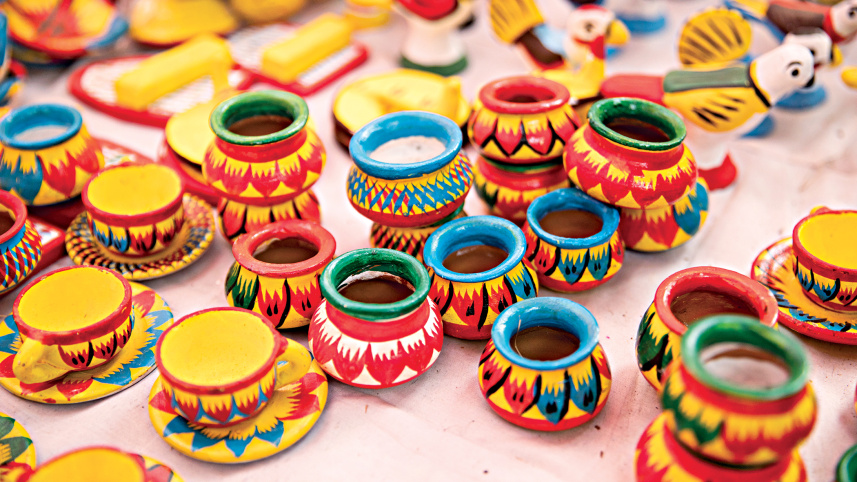
My earliest memory of Baishakhi Mela takes me back to the late 1970s. I was riding a rickshaw with my father to Bangla Academy, clutching green glass bangles and little terracotta toys. The air was thick with the sweetness of pink candy floss, white sugary treats, lollipops, caramels, nut brittles, toffees, and soft roshgollas. Summer fruits like jamrul, kacha aam, and tetul sprinkled with chili salt were sold in newspaper packets.

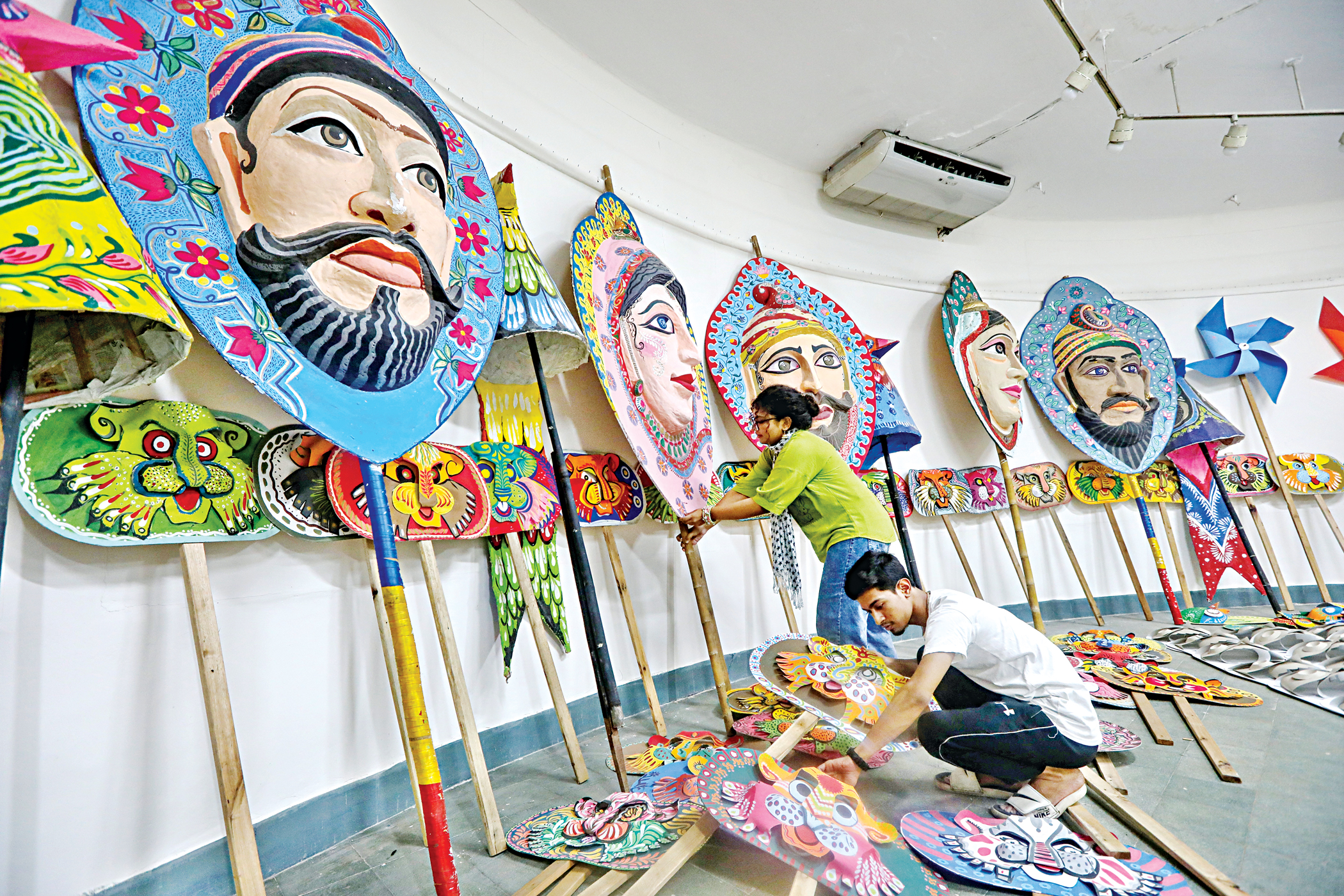
It was magical. That was when my fascination with melas began. I was dazzled by the colours, the festivity all around. From then on, Baishakhi Mela has been close to my heart. Even now, whenever I spot a village mela or roadside fair, I cannot resist stopping by and wandering around, soaking up the vibrant atmosphere and letting it all carry me away.
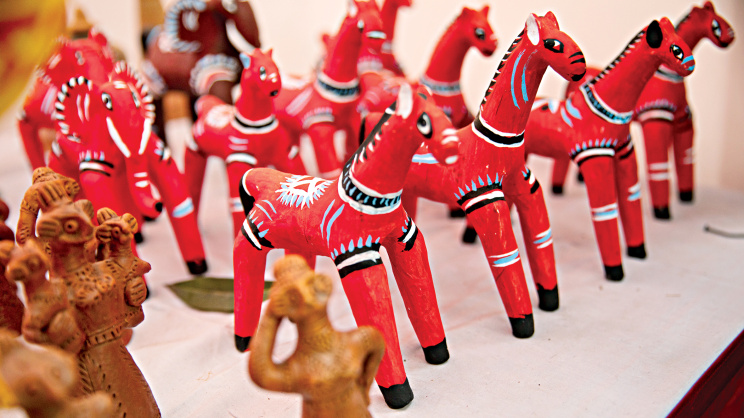
One of my favourite memories was stumbling upon a mela in Tangail after a shoot. It wasn’t a big city fair, just a simple village gathering. The day was hot, everything slow, and under the bright green tamarind canopy and the blazing red shimul tree in bloom, children swinging on the aerial banyan roots, the fair pulsed with life -- like a Gabriel García Márquez scene.
Homemakers sold vegetables, chickens, eggs, sweets, and pickles; men displayed crafts. I grabbed hot jalebis made with sesame and molasses, tried new twists on old snacks. The squeaky nagar dola spun in pink, yellow, blue, and orange gondolas, children shrieking with joy. A barber, mirror nailed to a tree trunk, shaved heads with a khur under the breezy shade. A fruit vendor, mixing chaat, sparred with a village elder in witty sholoks -- lyrical Bangla couplets, part rhyme, part proverb, brimming with rural wisdom. Crowds gathered, laughing, clapping. The whole scene throbbed with raw energy, full of joy. That’s the beauty of melas: they feed your soul.
The Artists Who Shaped It
“Historically, Baishakhi Mela is a centuries‑old Bengali tradition, rooted in Mughal‑era tax collection and marking the new financial year on Pahela Baishakh, celebrated on April 14. Over time, it evolved into a cultural and social festival transcending religion and class, symbolising peace, prosperity, and pride. It is a living emblem of Bengali identity, blending folk art, music, food, and communal joy,” notes Md Rahat Uddin, chief designer at BSCIC.
Legendary artist Potua Quamrul Hassan (also spelled Kamrul Hasan) was among those who shaped the modern Baishakhi Mela through Bangla Academy and BSCIC. Quamrul Hassan also created the national emblems, including the Government monogram, the Bangladesh Bank logo, the Biman Bangladesh Airlines logo (the iconic Balaka), and the final design of the national flag.
His vision, along with the contributions of Imdad Hossain and Qayyum Chowdhury, gave the mela its modern form while keeping its folk roots alive. Their artistry reminds us that fairs are not just gatherings -- they are canvases where national identity is painted in colour, craft, and song.
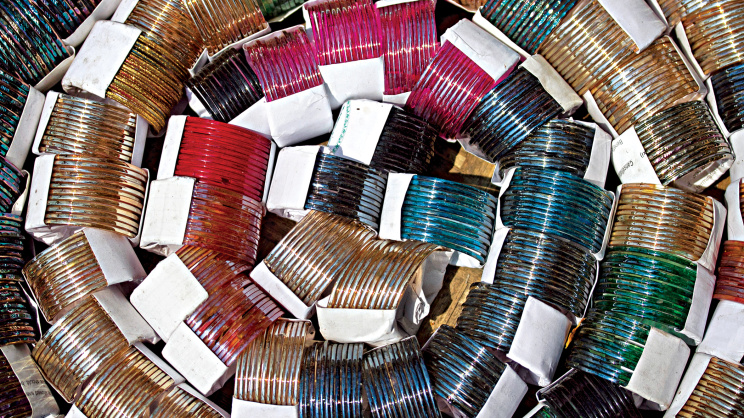
“Since 1960, the BSCIC Design Centre has stood at the heart of traditional crafts. I’ve seen how its training in pottery, weaving, leather, metal, bamboo, jute, and more has empowered thousands to meet market demand and expand globally. It isn’t just about skills – it’s about giving artisans the confidence to carry heritage forward. Over the decades, the Centre has distributed tens of thousands of innovative designs, showcasing works by masters. To me, these achievements prove that craft is not only culture -- it is nation‑building,” Rahat adds.
Baishakhi Mela 2026
“This year’s Baishakhi Mela will be held from 14th to 20th April, organised by BSCIC. It will spotlight the artistry of local craftspeople alongside the rich traditions of the indigenous communities. There will be 150 stalls, with 20 reserved stalls free of charge for enlisted indigenous artisans. The rest will be open to competition, offering a dazzling variety of crafts carefully selected by BSCIC authorities. From handwoven textiles to pottery, embroidery to terracotta, every stall will tell a story of heritage and skill,” says Shefali Khatun, general manager, Marketing Department, BSCIC.
Beyond crafts, the mela will feature a food zone, baby rides, and even a blood donation stall, ensuring that the fair is not only a place of joy but also of community care. Despite challenges – shortened hours due to government regulations, global uncertainties, and local politics – the Baishakhi Mela remains a beacon of celebration. Each evening, the fair will close at 6:00pm, but the hours before will be filled with colour, music, and life.
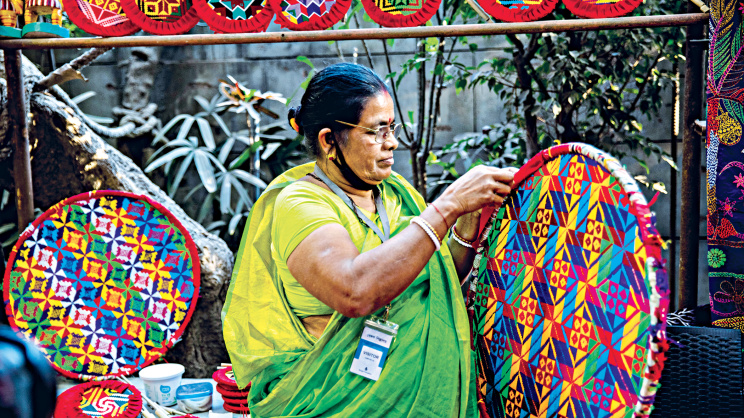
“Highlights this year include shokher hari from Rajshahi, katha stitch embroidery from Narsingdi, nakshi katha from Noakhali, pottery from Cumilla, weaving from Tangail, and shataranji mats from Naranganj. Together, they form a tapestry of culture that is uniquely ours,” she adds.
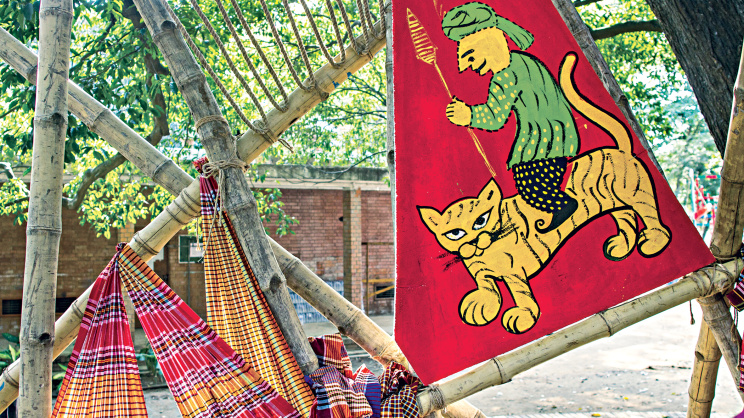
Voices of the Artisans
Baishakhi Mela is more than a fair -- it is a festival of resilience, creativity, and joy. It is a place where artisans thrive, traditions live on, and visitors leave with their hearts full.
As artisan, Subodh Kumar Pal, a master of tepa putul, reflects: “Bangladesh’s culture and heritage must remain alive with joy and passion, so that every fair -- Baishakhi, folk art, Rath, Eid, or Puja -- becomes a festival for all. In these gatherings, Bangalees come together, and the handmade treasures of our artisans reach the younger generation, teaching them the essence of our traditions.”
I remember meeting a nakshi katha artisan in Noakhali who told me how every stitch carried a memory of her grandmother’s hands. For her, selling at the mela was not just business – it was storytelling. Another craftsman from Rajshahi, showing his shokher hari, explained how each pot he painted was a prayer for prosperity. These voices remind us that behind every stall is a human story, a lineage of skill passed down through generations.
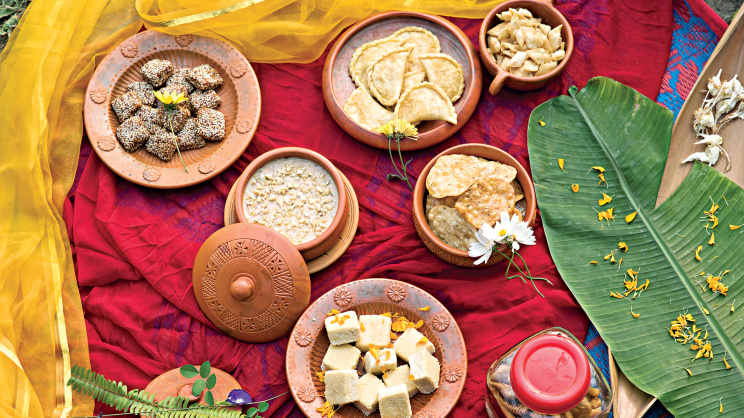
“These creations are to be admired, cherished, and preserved. Just as foreign films frame their heritage in every shot, our cinema, drama, and theatre must carry the living backdrop of our artistry. In the end, the creations of our artisans shall endure, our folk art shall endure, and Bangladesh’s thousand‑year‑old tradition and culture shall shine forever,” Subodh urges.
His words echo a larger truth: fairs are not just entertainment; they are engines of cultural survival. If fairs are organised in Dhaka and across the country at district headquarters, or internationally through government initiatives, the arts will survive -- and with them, economic activity will flourish.
 For all latest news, follow The Daily Star's Google News channel.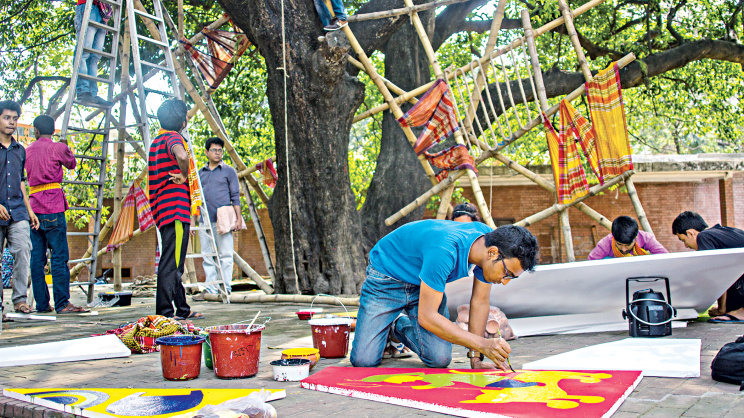
A Living Heritage
Baishakhi Mela 2026 is thus not only a celebration of the Bangla New Year but also a reaffirmation of identity. It is a reminder that heritage is not static -- it lives, breathes, and evolves with each generation. From the laughter of children on the nagar dola to the wisdom of elders trading sholoks, from the artistry of nakshi katha to the taste of tetul with chili salt, the mela embodies the soul of Bengal.
This April, Dhaka will once again prepare for this grand festival. The stalls will rise, the music will play, and the crowds will gather. And in every corner, from the terracotta toys to the embroidered quilts, from the government logos designed decades ago to the new crafts of today, the Baishakhi Mela will remind us: heritage is joy, and joy is our heritage.
Comments