


Rajshahi, a city of wings

Rajshahi does not reveal all its beauty at once. At first glance, it is the city’s orderly avenues, flowering trees and well-planned streets that draw admiration. In spring, blossoms soften the edges of the thoroughfares and decorative lights add colour to the evenings.
But lift your gaze from the pavements to the sky in winter or early spring, and another Rajshahi begins to unfold -- one ruled not by traffic or time, but by wings.

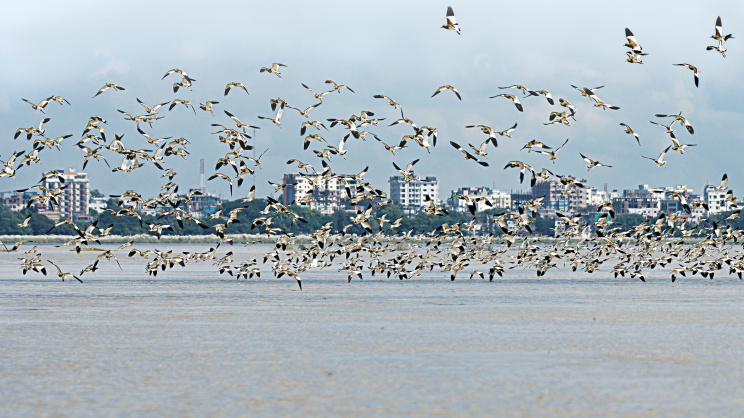
Above the city stretches a vast theatre of motion. Flocks gather and disperse in sweeping formations, crossing the pale blue horizon in rhythms that seem almost choreographed.
It is a sight few other cities in Bangladesh can claim with such consistency.
The enchantment deepens along the banks of the Padma River. Stand there in the late afternoon and watch the sun descend slowly on the western horizon. As molten gold dissolves into the water, a lone boatman may glide across the current in a small wooden craft, while birds drift past in dark silhouettes against the fading light before dissolving into the dusk.
Most of the birds that migrate to Bangladesh in both winter and summer can be found in Rajshahi -- along the Padma and across its vast char lands. Summer visitors arrive to breed. Those fleeing colder climates seek safety and food. According to experts, of the more than 700 bird species recorded in Bangladesh, over 300 can be seen in Rajshahi throughout the year.
Considering its geological and natural setting, experts describe Rajshahi as a true paradise for migratory birds. The region’s ecosystem draws birdwatchers, enthusiasts and photographers almost year-round. According to eBird, the world’s largest project tracking bird sightings worldwide, around 250 species were recorded in Rajshahi and adjacent areas in the first two months of this year alone.
To witness this spectacle, I travelled to Rajshahi on March 1. I checked into a hotel in the Ganakpara area of the city. With winter nearly over, I wondered whether the migratory flocks would still be there. Ramadan had begun a couple of weeks earlier, and as sehri approached, sleep proved elusive.
As planned, Hasnat Rony, a banker by profession, arrived at the hotel at 8:00am. Rony has been photographing birds in the region for over 14 years and has documented more than 300 species in Rajshahi alone. We rode by motorcycle towards the char-10 of the Padma River.
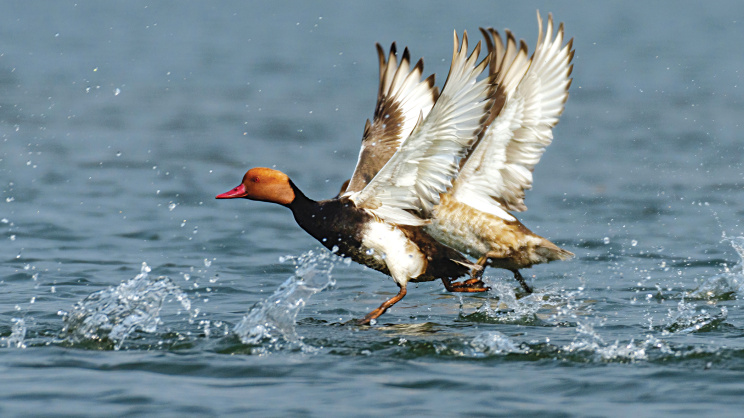
The moment we reached the riverbank, any lingering doubt disappeared. In the shallow waters near the shore, flocks of Ruddy Shelducks and Gadwalls floated together. They moved with remarkable calm near the boats of fishermen and oarsmen -- a rare sight compared to stretches of rivers such as the Brahmaputra or Jamuna.
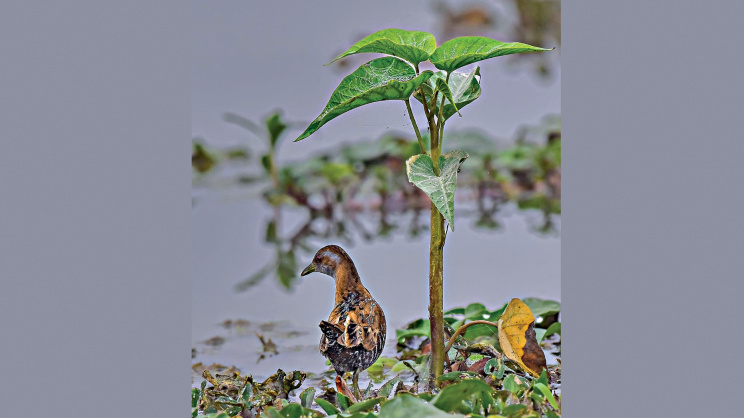
Because of this abundance, Rony affectionately calls Rajshahi “Birdshahi”, a nickname that has gained popularity among birdwatchers. He describes the Ruddy Shelduck as the “Brand Ambassador of Birdshahi” -- among the first migratory ducks to arrive in large flocks during winter and the last to leave the Padma.
Our boatman, Asadul, soon joined us. Within two hours on the river, we encountered nearly 20 species. We photographed Northern Pintails, Gadwalls, Little Cormorants, Common Greenshanks, Black-headed Ibises, Little Ringed Plovers and Grey Herons.
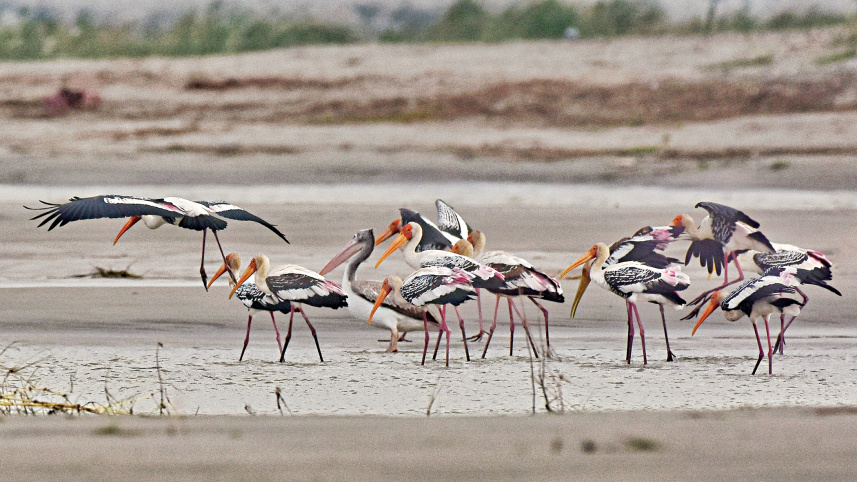
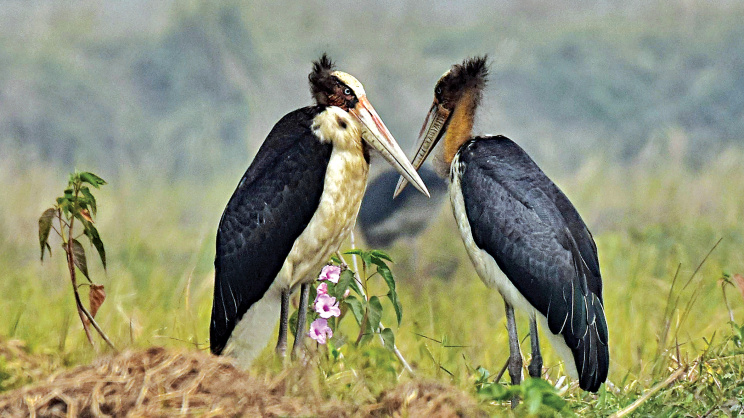
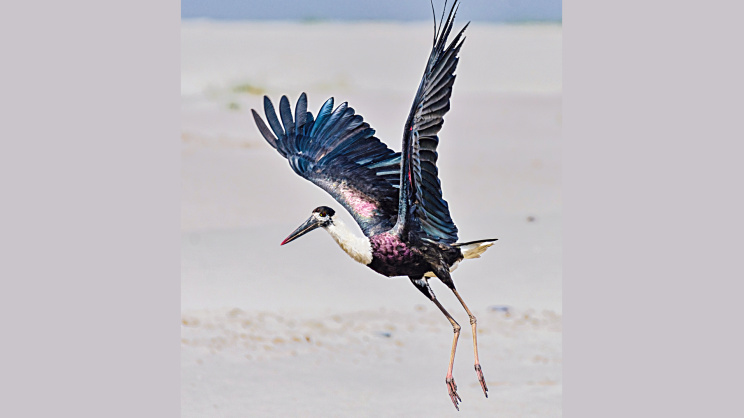
As the camera shutters clicked, Rony shared stories from years spent exploring these chars. On these shifting sandbanks, he has photographed nearly 14 species of migratory ducks and about six types of terns. His records include sightings of the Black-necked Stork, Painted Stork, Black Stork, Woolly-necked Stork, Lesser Adjutant and the elusive Eurasian Spoonbill.
Among migratory storks, the Woolly-necked Stork breeds in Rajshahi, he said.
He also listed notable ducks found here: Common Pochard, Baikal Teal, Tufted Duck, Eurasian Wigeon, Northern Pintail, Common Shelduck, Common Teal, Garganey, Red-crested Pochard, Northern Shoveler and Ferruginous Duck.
His portfolio includes several species recorded for the first time in Bangladesh.
In summer, the char lands become breeding grounds for Little Tern, River Lapwing, Yellow Bittern and Little Ringed Plover. The Padma’s chars are also known for 6-7 species of gulls, he added.
Beyond birds, the region shelters otters, freshwater crocodiles, dolphins, wild boars and the Indian Hare.
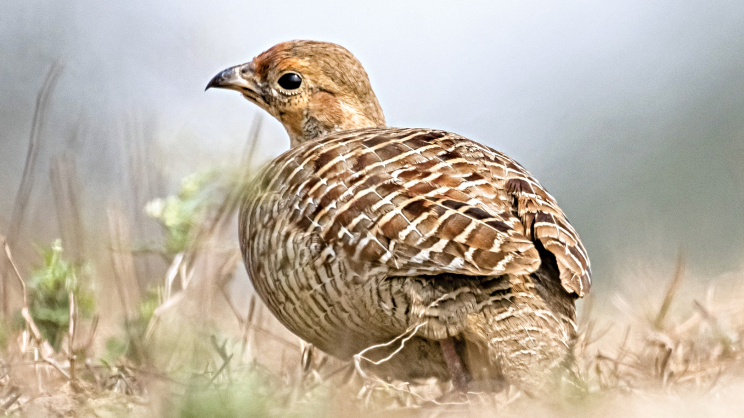
During a visit in early February last year, a local boatman took us to Mazhar Diar char near the Indian border. There, amid thorny bushes, we spotted the rare and shy Grey Francolin. Experts note that in Bangladesh this species is found only in the Padma char areas of Rajshahi and Kushtia.
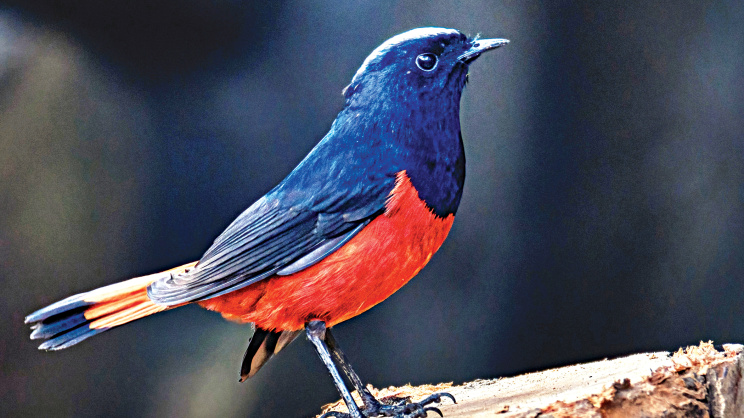
Another rare bird, the Brahminy Starling, resides on the Rajshahi University campus.
 For all latest news, follow The Daily Star's Google News channel.
 Dr Saleh Reza, professor in the Department of Zoology at RU, has conducted extensive research on the region’s avifauna, publishing in multiple journals and books.
“Rajshahi can be called a paradise for birds due to the availability of food, suitable habitats, safety and its unique geological location,” he told The Daily Star.
He noted that over 300 species are found in Rajshahi, with 280 sighted specifically in the Padma River and surrounding chars.
“Among them, more than 100 species are migratory, including 25 to 26 types of ducks and over 27 species of migratory birds of prey.”
“These ducks typically arrive from Mongolia, China, Tibet and the Himalayan regions to escape harsh winters, while many smaller species travel from Siberia and Africa,” he said.
Dr Saleh said bird poaching has declined since 2015-2016, coinciding with the rise of birdwatchers visiting from across the country.
However, urban sprawl has introduced significant light pollution. Upward-facing bulbs installed along streets create excessive illumination. Since most migratory birds travel at night, such lighting disorients them, contributing to a decline in their numbers, he said.
He believes populations could recover if eco-friendly lighting is adopted and excessive decorative illumination reduced. The conversion of large natural wetlands into commercial fish farms is also diminishing suitable habitats.
Renowned wildlife specialist Dr Reza Khan offered further insight into why Rajshahi remains a haven. The region, he said, offers a rare blend of rivers, expansive char lands and adjoining villages.
“Except during the monsoon, water remains static in pockets of the Padma for most of the year, providing a steady food source. This attracts migratory birds to a vast stretch from Rajshahi to Chapainawabganj along the Indian border,” said Reza, principal wildlife specialist at Dubai Safari Park.
He concluded that the stable water levels provide a significant advantage for visiting species, sustaining the seasonal rhythm of migration.
Comments