


China seizes US naval probe
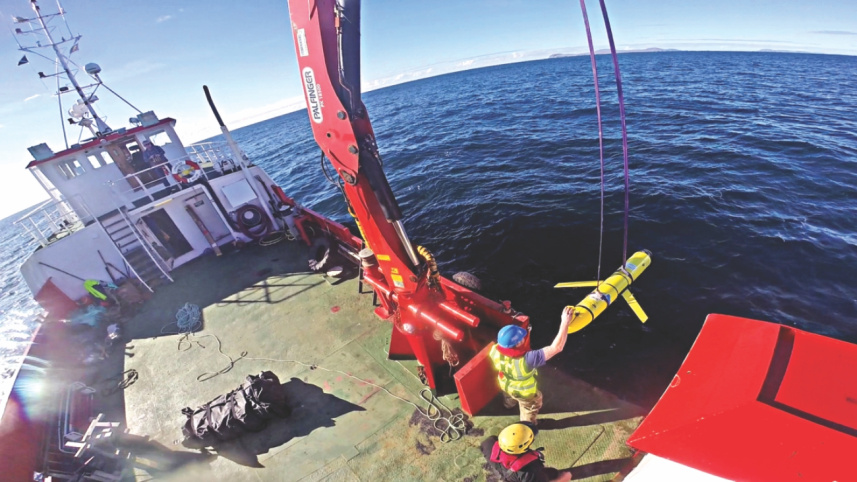
China and the United States are using military channels to "appropriately handle" the seizure by the Chinese navy of a US underwater drone in the South China Sea, China said yesterday, and a Chinese state-run newspaper said it expected a smooth resolution.
The drone was taken on Thursday, the first seizure of its kind in recent memory, about 50 nautical miles northwest of Subic Bay off the Philippines, just as the USNS Bowditch was about to retrieve the unmanned underwater vehicle (UUV), US officials said.

"It is understood that China and the United States are using military channels to appropriately handle this issue," China's Foreign Ministry said in a brief statement sent to Reuters, without elaborating.
"The UUV was lawfully conducting a military survey in the waters of the South China Sea," a US official said, speaking on condition of anonymity. "It's a sovereign immune vessel, clearly marked in English not to be removed from the water - that it was US property," the official said.
The Pentagon confirmed the incident at a news briefing on Friday, and said the drone used commercially available technology and sold for about $150,000.
Still, the Pentagon viewed China's seizure seriously since it had effectively taken US military property.
The seizure will add to concerns about China's increased military presence and aggressive posture in the disputed South China Sea, including its militarization of maritime outposts.
A US research group said this week that new satellite imagery indicated China has installed weapons, including anti-aircraft and anti-missile systems, on all seven artificial islands it has built in the South China Sea.
The drone seizure coincided with sabre-rattling from Chinese state media and some in its military establishment after US President-elect Donald Trump cast doubt on whether Washington would stick to its nearly four-decades-old policy of recognising that Taiwan is part of "one China."
Brunei, Malaysia, the Philippines and Vietnam have competing claims in the South China Sea, which is laced with the world's most heavily traveled international trade routes.
While the United States takes no position on sovereignty claims in the South China Sea, it has repeatedly stressed all maritime claims must comply with international law.
The US military has conducted several "freedom of navigation" operations in which ships and planes have passed close to the sites Beijing claims.
Such missions have provoked angry rebukes from China, which accuses Washington of provocation and increasing the risk of a military mishap.
 For all latest news, follow The Daily Star's Google News channel.
Comments