


Marshalls Islands loses case
and UK for failing to halt the nuclear arms race
The UN's highest court yesterday narrowly threw out landmark cases brought by the tiny Marshall Islands against India, Pakistan and Britain for allegedly failing to halt the nuclear arms race.
In majority decisions, the 16-judge bench at the International Court of Justice (ICJ) ruled there was no evidence that islanders had had a prior dispute with any of the three nuclear giants or sought bilateral negotiations on the issue.

"The court upholds the objection to jurisdiction" raised by each of the countries, presiding judge Ronny Abraham said in separate rulings, and therefore the tribunal "cannot proceed to the merits of the case."
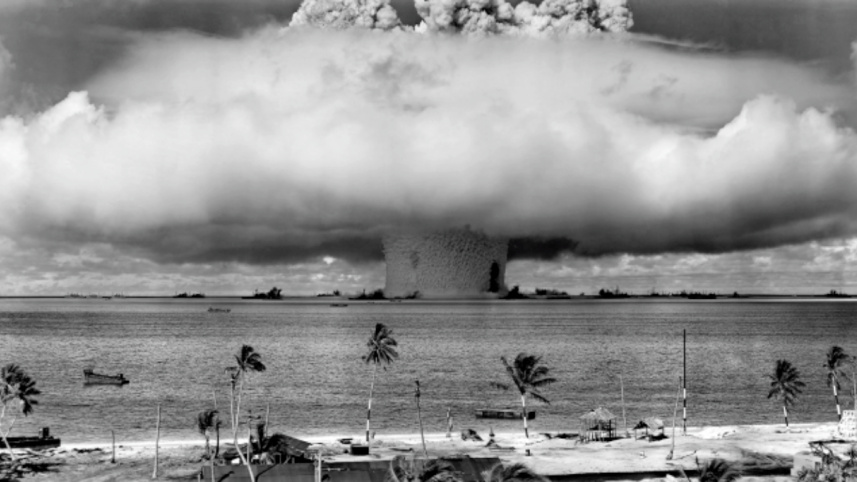
The tiny Pacific island nation was ground zero for a string of devastating nuclear tests on its pristine atolls between 1946-58, carried out by the United States as the Cold War arms race gathered momentum.
Initially in 2014, they had accused nine countries of failing to comply with the 1968 nuclear Non-Proliferation Treaty, which seeks to inhibit the spread of atomic bombs.
But the ICJ already refused to take up cases against the other countries -- China, France, Israel, North Korea, Russia and the United States -- as they have not recognised the court's jurisdiction.
The Marshall Islands had argued that by not stopping the nuclear arms race Britain, India and Pakistan had breached obligations under the treaty.
At a March hearing, Majuro's lawyers painted a vivid picture of the horrors seen after 67 nuclear tests were carried out on Bikini and Enewetak atolls.
"Several islands in my country were vaporised and others are estimated to remain uninhabitable for thousands of years," Tony deBrum, a former Marshall Islands foreign minister, told the court.
Critics have argued however that the ICJ action is a distraction and that the islanders' real fight is with Washington, which carried out the tests in their backyard.
Experts however say the islands hoped the three cases before the ICJ will thrust nuclear disarmament talks, which have stalled over the past two decades, back into the spotlight.
 For all latest news, follow The Daily Star's Google News channel.
Comments