


Myanmar to arm, train non-Muslims in Rakhine: report
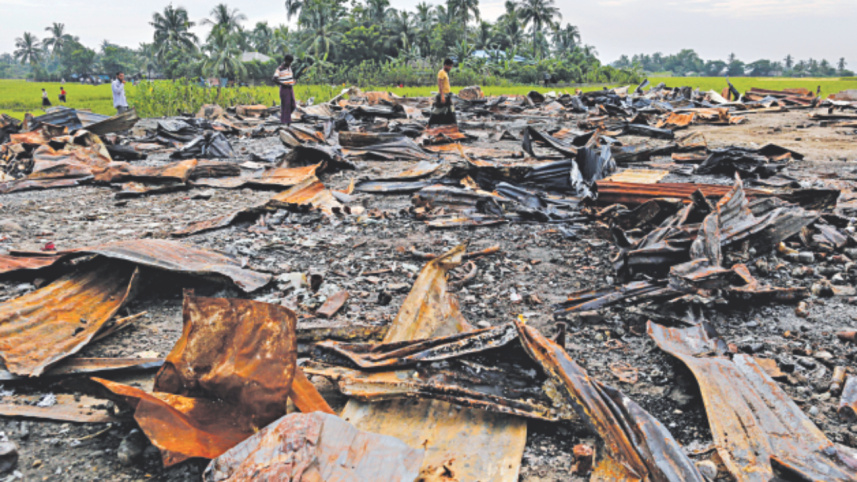
Myanmar's plans to arm and train non-Muslim residents in the troubled north of Rakhine State is likely to "aggravate an already dire human rights situation", the International Commission of Jurists, a human rights watchdog, has said.
Soldiers have flooded the Maungdaw area along Myanmar's frontier with Bangladesh in Rakhine in response to coordinated attacks on three border posts on Oct. 9 in which nine police officers were killed.

The government said a group of some 400 Rohingya Muslim militants attacked the posts. It has said five soldiers and at least 33 suspected insurgents have been killed in the military operation since then.
Security forces have blocked access to aid workers and most journalists to the area. Rohingya Muslims have accused the army of summary executions, rapes and setting fire to homes of civilians. The government and the military deny that.
Rakhine State police chief Colonel Sein Lwin told Reuters this week his force had started recruiting new "regional police" from among the ethnic Rakhine and other non-Muslim ethnic minorities in the area.
"Establishing an armed, untrained, unaccountable force drawn from only one community in the midst of serious ethnic tensions and violence is a recipe for disaster," said Sam Zarifi, ICJ's Asia Director, said in a statement on Friday.
Min Aung, a minister in the Rakhine State parliament and a member of Myanmar leader Aung San Suu Kyi's National League for Democracy, said this week the recruits would help protect residents from the militants behind the Oct 9 attacks.
Deputy commander of Rakhine police, Col Thit San, contacted by Reuters on Saturday, rejected the criticism, saying there will be no problems with the force as it would be under police command.
 For all latest news, follow The Daily Star's Google News channel.
Comments