


CRISIS IN SOUTH ASIA
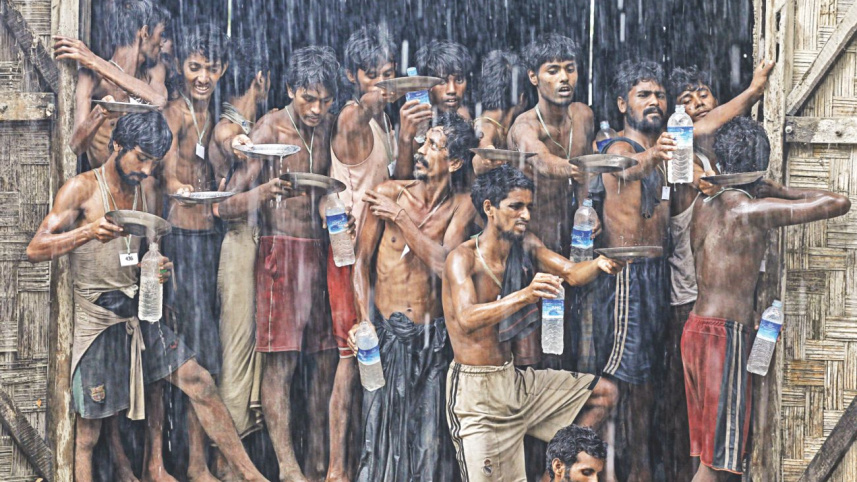
2015 was the year that Southeast Asia faced its own refugee crisis, while the world focused on Europe.
The images seem all too familiar: men, women, and children crammed onto the decks of a boat, pleading to be rescued. For days, they have had no food or water. Many of them are fleeing persecution and violence, while some are merely seeking better opportunities. But these people aren't Syrian, nor are they crossing the Mediterranean -- they're Rohingya and Bangladeshi migrants adrift in the Bay of Bengal and the Andaman Sea.

Earlier this year, thousands of people, mostly of the Rohingya Muslim minority in Myanmar, embarked on boats in hopes of reaching Malaysia. It was a well-worn route, one that smugglers had used to transport Rohingyas and fortune-seekers. But after Thai authorities announced a crackdown on human trafficking in May, smugglers abandoned their ships en masse while still underway. An estimated 5,000 to 8,000 people were left stranded at sea.
And no country would take them in.
The crisis forced leaders in Southeast Asia to take a hard look at longstanding issues within the region, including human trafficking, irregular migration, and the continued persecution of the Rohingya in Myanmar.
Initially, Thailand, Malaysia and Indonesia repeatedly rejected the boats. Thailand and Malaysia publicly stated that the refugees were not welcome.
Countries eventually decided to take in refugees in late May, but only after intense pressure from international organizations and the media.
Even though the worst of the crisis has passed, the future remains bleak for the refugees who were allowed to land. Indonesia and Malaysia have both made clear that refugees will only be allowed to stay until May 2016, after which they must be resettled to a third country.
For now, boat journeys from Myanmar and Bangladesh have slowed -- UNHCR reports that only 1,000 refugees and migrants have departed by sea since September. However, human rights groups, as well as UNHCR, have emphasized that the root causes of the crisis still remain and must be addressed. Despite Myanmar holding a historic election this year, persecution and routine exclusion of the Rohingya in Myanmar continues.
 For all latest news, follow The Daily Star's Google News channel.
Comments