


Europe states reap what it has sown
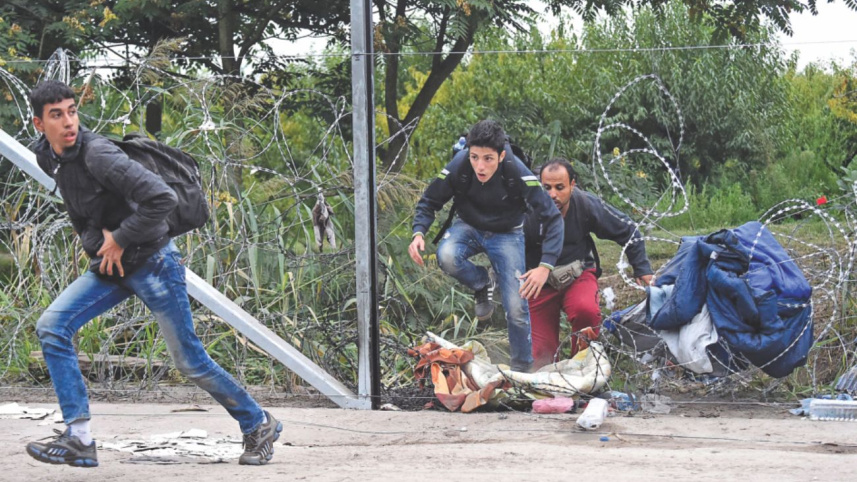
There is something almost Biblical about the mass exodus of desperate people fleeing Syria and other war-torn and impoverished countries. For European governments, struggling to manage the crisis engulfing their borders, the Bible has a succinct lesson they might do well to ponder: "For whatever one sows, that will he also reap."
This fatal flood-tide of human jetsam, surging haphazardly across the Mediterranean, has not suddenly materialized out of nowhere. The crisis has been building for years, reaching back to the US-led invasions of Afghanistan and Iraq, and much further still, to the era of European colonialism in the Middle East and north Africa.

The shocking photos of the limp, lifeless body of Aylan Kurdi, the two-year-old Syrian toddler who drowned off Turkey last week, does not come as a total surprise. At least 2,000 migrants have perished in similar circumstances this year. More than 350,000 have braved the journey across the Mediterranean to Europe in 2015, according to the International Organisation for Migration -- and they are still coming.
What is heartening is the overdue outpouring of public concern triggered by Aylan's needless, shaming death. Perhaps volunteer food bank collectors in Hamburg, emergency convoy drivers in Belfast and local councillors in Normandy are ready to admit what their governments will not: that the West bears primary responsibility for this recurring tragedy -- and that, whatever the causes, common human decency demands Europe do all it can to halt it.
That a large proportion of the refugees comes from Afghanistan is no coincidence. Nearly 15 years after the events of 9/11 prompted the US-led invasion, much of the country remains a fearful, dangerous place plagued by warlords and fanatics.
The picture in Iraq is even more alarming. The window on post-Saddam political reform, painfully opened by US and British troops after 2003, was slammed shut by a sectarian-minded, Iranian-dominated Shia majority government in Baghdad. Western politicians let this happen. Although a new, less divisive regime is now in power, the damage was done.
A third or more of Iraq is now in the hands of the very worst kind of Islamist extremists and foreign jihadis who have wrenched control from the alienated and demoralized Sunni minority. The jihadis murder, torture and rape without conscience or constraint.
Would you and your family stick around? Waiting for Washington or London to remedy the mess they made in Iraq is akin to bailing water on the Titanic with a sieve.
And then there is Syria. Millions displaced, hundreds of thousands dead, the neighborhood destabilized, the war continuing with no end in sight. Is it fair to blame Barack Obama, David Cameron or Angela Merkel for President Bashar al-Assad's genocidal, Russian and Iranian-backed bid to cling to power?
Not really.
But they can all be faulted, along with Arab and Turkish leaders and cold-blooded Vladimir Putin, for doing so very little, in practical terms, to halt the slaughter either through military or diplomatic interventions.
Nor is it any use saying the Arab regimes of the Gulf, key actors in Syria's tragedy, should do more to help. Of course they should. But as so often when a humanitarian crisis blows up, they sit on their hands and their wallets.
Instead of building walls, shutting doors and arguing about numbers, European leaders -- encouraged by Washington -- must recognize their responsibilities, historical and current, moral and practical.
Europe is reaping a whirlwind of its own making. It needs to stand up, or risk being blown away.
 For all latest news, follow The Daily Star's Google News channel.
Comments