


Border-free Europe unravels in migrant crisis
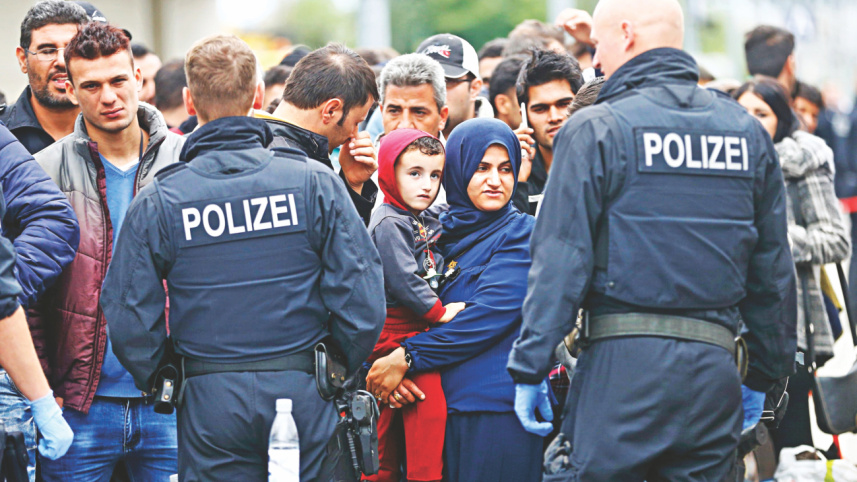
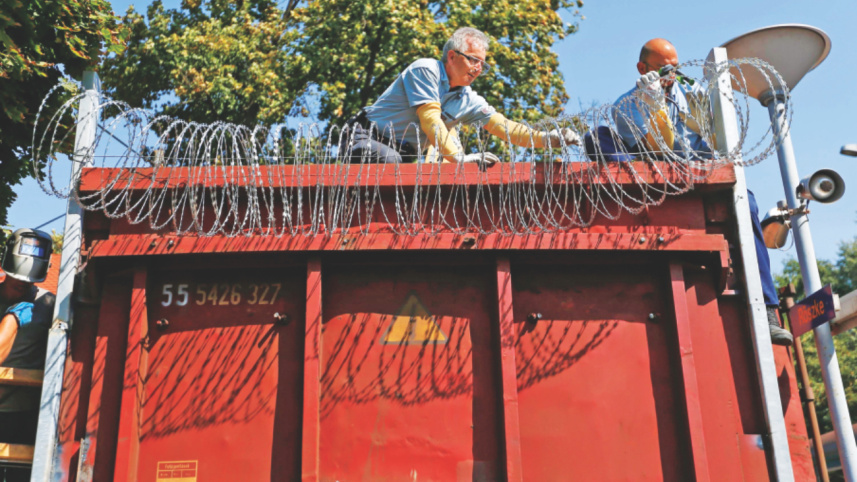
The two-decade-old era of border-free travel in Europe was unraveling yesterday as countries imposed controls on their frontiers in response to an unprecedented influx of migrants.
Germany's surprise decision to restore border controls on Sunday had a swift domino effect, forcing neighbors to shut their own frontiers as thousands of refugees pressed north and west across the continent.

Austria dispatched its military to guard its frontier with Hungary after thousands of migrants crossed the border on foot overnight, filling up temporary accommodation space in tents and railway station car parks, reports Reuters.
"If Germany carries out border controls, Austria must put strengthened border controls in place," Vice Chancellor Reinhold Mitterlehner told a joint news conference with Chancellor Werner Faymann. "We are doing that now."
He and Faymann said the army would be deployed in a supporting role.
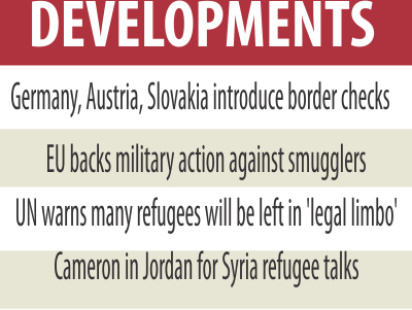
"The focus of the support is on humanitarian help," Faymann said. "But it is also, and I would like to emphasize this, on supporting border controls where it is necessary." Slovakia said it too would shut its own borders with Austria and Hungary.
EU member states yesterday approved plans for military action against people smugglers in the Mediterranean, seizing and if necessary destroying boats to break up the networks operating out of Libya, reports AFP.
British Prime Minister David Cameron arrived in Jordan yesterday for a visit to a Syrian refugee camp and talks with King Abdullah II, the foreign ministry in Amman said.
Poland will impose border controls at the first sign of "any threat" amid Europe's worst migrant crisis since World War II, its prime minister said yesterday on the heels of border clampdowns by EU neighbours.
Meanwhile, many of the refugees flooding into Europe could be left in "legal limbo" as countries adopt different measures to address the migrant crisis facing the continent, the United Nations warned.
The UN refugee agency cautioned that "the combination of different, individual measures might create a situation where large numbers of refugees seeking in Europe the protection they are entitled to receive in line with international law, will find themselves moving around in legal limbo."
Many EU member states were reluctant to step up action against the traffickers for fear of getting embroiled in Libya, where rival factions have been fighting it out for control since the ouster of longtime strongman Moamer Kadhafi in 2011.
 For all latest news, follow The Daily Star's Google News channel.
Comments