


Germany buckles under pressure
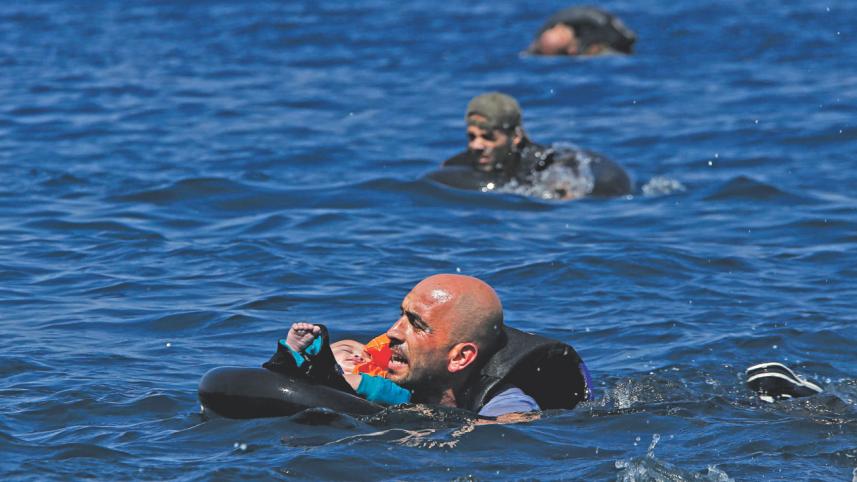
The German government wants to temporarily reintroduce border controls in response to the refugee exodus, German newspaper Bild said yesterday as authorities in Berlin warned they were stretched to capacity to welcome refugees.
Meanwhile, German Interior Minister Thomas de Maiziere said refugees streaming into Europe should not be able to choose where to settle, as authorities said thousands more were on the move across the continent.

In an interview with German newspaper Der Tagesspiegel, de Maiziere said refugees given protection in Europe should accept that they will be distributed across the bloc.
Build said the border control measure would breach the European Union's open-borders Schengen agreement. It said this would affect Germany's border with Austria first.
The German government was not immediately available to comment on the report.
Some 13,015 refugees arrived in Munich on Saturday alone, and at least 1,400 are expected yesterday to reach the southern German city -- the end of their exhausting and often perilous journey through Hungary and Austria.
Germany has become the destination of choice for many refugees, particularly for Syrians after Chancellor Angela Merkel decided to relax asylum rules for citizens of the war-torn country.
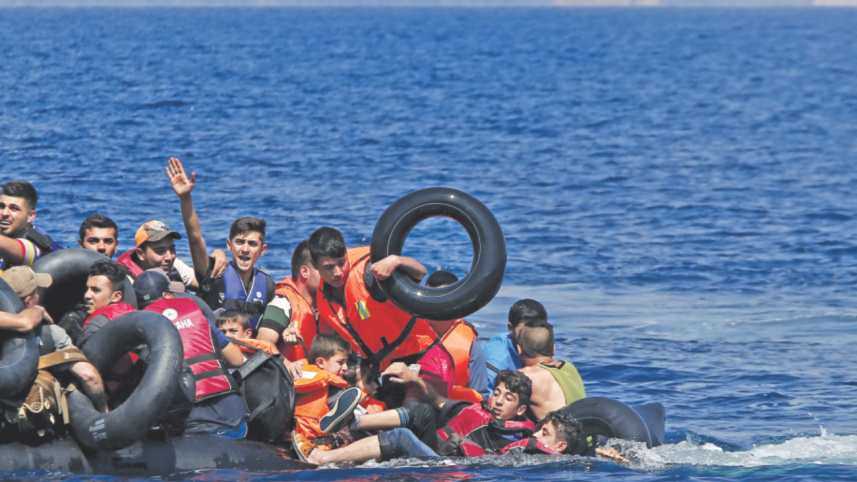
However, with some 450,000 people arriving in Europe's biggest economy so far this year, local authorities are buckling under the sudden surge.
"Given the numbers from yesterday, it is very clear that we have reached the upper limit of our capacity," said a Munich police spokesman.
Federal transport minister Alexander Dobrindt also weighed in, saying "effective measures are necessary now to stop the influx".
Merkel herself had called Saturday on Athens, while facing its own deep economic crisis, to make more effort to protect the EU's external borders.
European Union home affairs ministers will hold emergency talks today as "the situation of migration phenomena outside and inside the European Union has recently taken unprecedented proportions", said the Luxembourg presidency.
The Organisation of Islamic Cooperation is also due to hold an emergency meeting on the crisis yesterday.
While Jordan, Lebanon and Turkey are housing millions of refugees from Syria, many wealthy Gulf states are facing increasing scrutiny over their apparent reluctance to take in people fleeing the conflict.
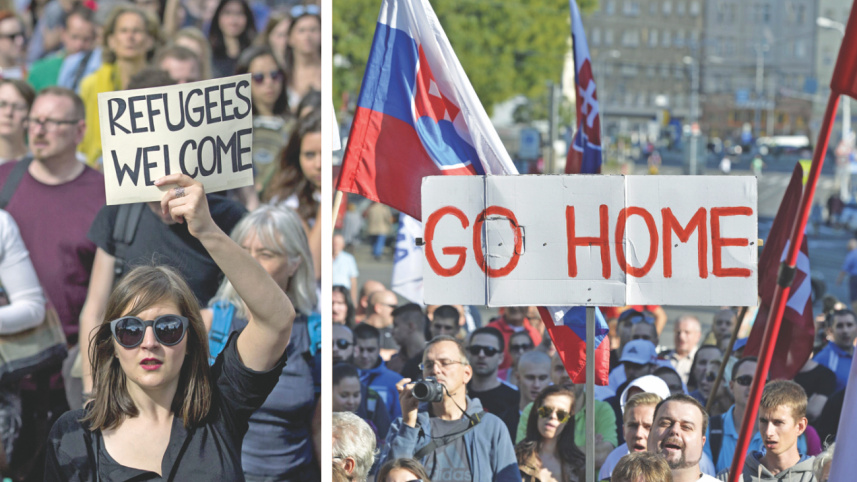
As the continent scrambles to respond to the biggest movement of people since World War II, sharp divisions have emerged among the European Union's 28 member states -- both among governments and on the ground.
While Germany and France back proposals to help "frontline" states Italy, Greece and Hungary buckling under the strain, European Commission proposals for sharing 160,000 new arrivals in a quota scheme are facing resistance from eastern members.
Hungary, which reported a new record in migrant arrivals -- 4,330 on Saturday -- was working around the clock to finish a controversial anti-migrant fence along its border with Serbia.
Budapest has recorded some 180,000 people entering illegally this year and has passed a raft of tough new laws that will take effect tomorrow, meaning anyone crossing the border illegally can be deported or even jailed.
 For all latest news, follow The Daily Star's Google News channel.
 Divisions were also seen on the ground, with tens of thousands marching through London on Saturday waving placards saying "Refugee lives matter", while in eastern European capitals, protesters called for refugees to "go home".
The International Organization for Migration said Friday that more than 430,000 people have crossed the Mediterranean to Europe this year, with 2,748 dying en route or going missing.
Comments