


Not safe in most safe places
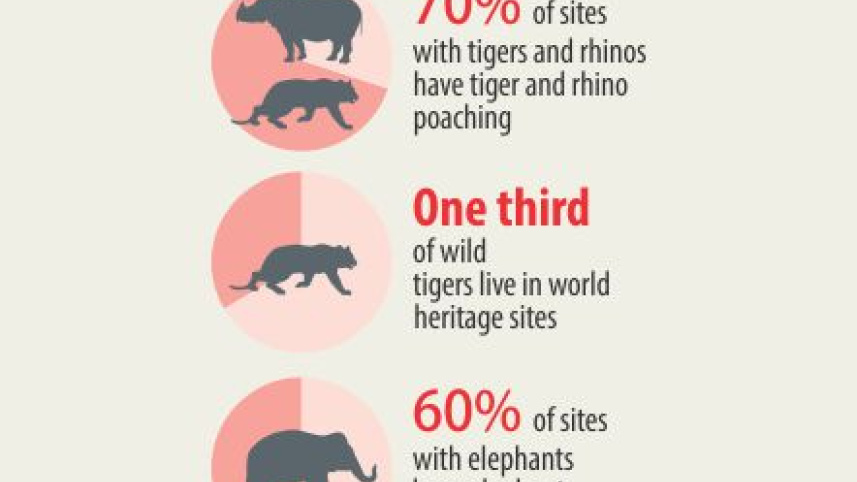
Illegal poaching, logging and fishing of sometimes critically endangered species is taking place in nearly half of the world's most protected natural sites, environmental campaigners WWF warned yesterday.
Natural world heritage sites such as Australia's Great Barrier Reef, Virunga National Park in the Democratic Republic of Congo and the Galapagos Islands support large populations of rare plant and animal species.

But in a report WWF said species listed by the Convention on International Trade in Endangered Species (CITES) faced the threat of illegal harvesting and trafficking in 45 percent of the more than 200 natural world heritage sites on the planet.
Almost a third of the world's remaining 3,890 wild tigers and 40 percent of all African elephants are found in UNESCO-listed sites, which are often a last refuge for critically endangered species such as the Javan rhino in Indonesia, the report said.
Illegal poaching, logging and fishing inside such sites is therefore "driving endangered species to the brink of extinction", WWF warned.
According to Tuesday's report, poaching of vulnerable and endangered animal species such as elephants, rhinos and tigers occurs in 42 of the UNESCO-listed natural sites, while illegal logging of rosewood, ebony and other valuable plant species happens in 26 of them.
Illegal fishing, including of sharks and rays occurs in 18 of 39 listed marine coastal world heritage sites, it said.
Such illegal activities inside what should be the best-protected sites on the planet are "a double outrage," said Colman O'Criodain, WWF's wildlife policy manager.
"We're talking about very iconic species, and we are also talking about iconic sites," he said, demanding more efforts at the national and international level to beat the trend.
But it is difficult to fight the illegal wildlife trade, which rakes in between $15-20 billion (14.1- 18.8 billion euros) annually, making it the fourth largest illegal global trade, after drugs, counterfeiting and human trafficking, according to UN numbers.
At the same time, the illegal timber trade, which is responsible for up to 90 percent of all deforestation in major tropical countries, is valued at between $30-100 billion annually.
There are large economic interests in bringing an end to such illegal activities, especially inside world heritage sites, WWF said.
 For all latest news, follow The Daily Star's Google News channel.
Comments