


A rare apology from a colonial power
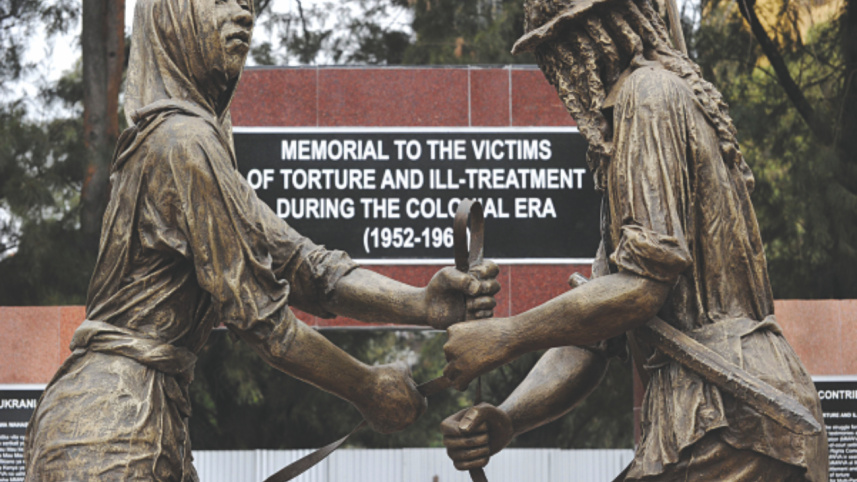
A British-funded memorial to the thousands killed, tortured and jailed in the Mau Mau rebellion was unveiled in Kenya yesterday, in a rare example of former rulers commemorating a colonial uprising.
At least 10,000 people died in one of the British Empire's bloodiest insurgencies -- some historians say over double that -- and the security operation to tackle the 1952-1960 struggle was marked by horrific abuses.

The guerrillas, mainly from the Kikuyu people, terrorised colonial communities with attacks from bases in remote forests, challenging white settlers for valuable land.
But while attention at the time focused on 32 murdered settlers, the number of Kenyans killed was far higher.
Thousands of Mau Mau veterans crowded into the memorial site, dancing and singing, as the ribbon was cut and it opened to the public.
"It is a special day," said Gitu wa Kahengeri, Mau Mau Veterans Association secretary general, adding they "truly believe in reconciliation for a better future."
Britain's High Commissioner to Kenya, Christian Turner, said he was "humbled" to be at the ceremony.
"I hope that this memorial will allow us to acknowledge and discuss together the issues arising from a difficult period in the history of both Britain and Kenya, and that it offers us the opportunity to draw a line and move forward," Turner said.
"This is the right thing to do for those of you who suffered, for Britain and Kenya, and our joint relationship," he said. "To deal with the present and move forward into the future, we have to recognise and learn from the past."
British and Kenyan flags fluttered over Nairobi's Uhuru, or "Freedom", park, with a crowd of several thousand Mau Mau veterans surrounding the memorial, many still with their trademark but greying dreadlocks.
Thousands suffered horrific torture including sexual mutilation, and tens of thousands more were detained in shockingly harsh detention camps.
Kenya Human Rights Commission (KHRC) chief Makua Mutua said that "colonialism was a crime against humanity," but said that the British apology was accepted.
"The arc of history is long, but it bends towards justice," Mutua said, celebrating that now "perpetrator and victim, colonised and colonisers, can be together."
 For all latest news, follow The Daily Star's Google News channel.
Comments