


Trump-Merkel row escalates
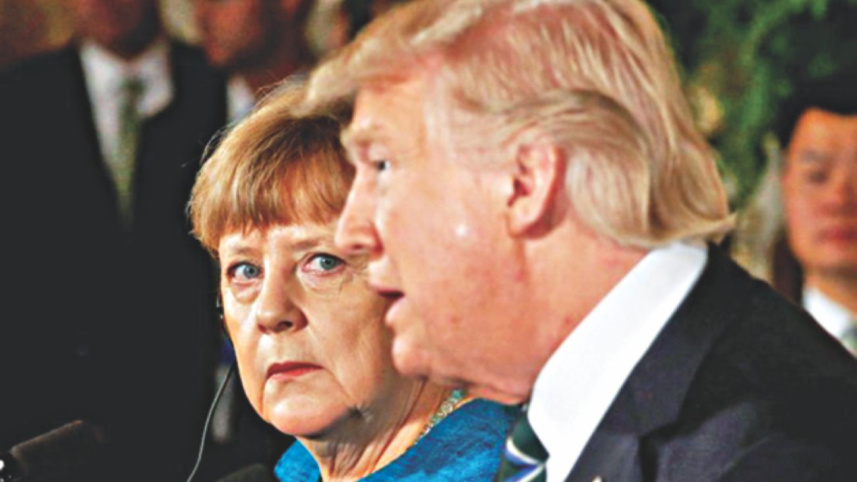
► The US president lashes out at Germany over trade, promises 'change’
► German chancellor again urges Europe to step up as global player
Relations between the United States and Germany veered further toward crisis on Tuesday as President Donald Trump complained about the US trade deficit with Germany and said it must pay more for the Nato military alliance.
His censure follows a volley of criticism from Germany after the president concluded his first official tour abroad on Sunday, returning from Saudi Arabia, Israel, Brussels and then Italy for a G7 summit.

"We have a MASSIVE trade deficit with Germany, plus they pay FAR LESS than they should on Nato & military," Trump wrote on Twitter. "Very bad for US This will change."
German Chancellor Angela Merkel had made waves in Berlin on Sunday, warning that the United States and Britain may no longer be completely reliable partners.
"Transatlantic ties are of paramount importance to us... but the current situation gives more reasons for... us to take our destiny in our own hands," she said, stressing that "Europe must become a player active in international affairs."
Merkel yesterday repeated her call for Europe to take control of its own destiny, but also dismissed any talk that Germany is shifting away from its old ally and pivoting East.
German Foreign Minister Sigmar Gabriel was blunter on Monday, slamming the US president's "short-sighted" policies that have "weakened the West" and hurt European interests.
During his trip, Trump rejected pressure from G7 allies to commit to abiding by the 2015 Paris climate accord and berated 23 of Nato's 28 members -- including Germany -- for "still not paying what they should be paying" toward the funding of the alliance.
Gabriel said Monday that "anyone who accelerates climate change by weakening environmental protection, who sells more weapons in conflict zones and who does not want to politically resolve religious conflicts is putting peace in Europe at risk."
"The short-sighted policies of the American government stand against the interests of the European Union," he added, judging that "the West has become smaller, at least it has become weaker."
Germany's harsh words for Washington, traditionally a close ally, were highly unusual and came as relations have grown increasingly tenuous.
 For all latest news, follow The Daily Star's Google News channel.
Comments