


Malaria on Myanmar-India border is 'huge threat'
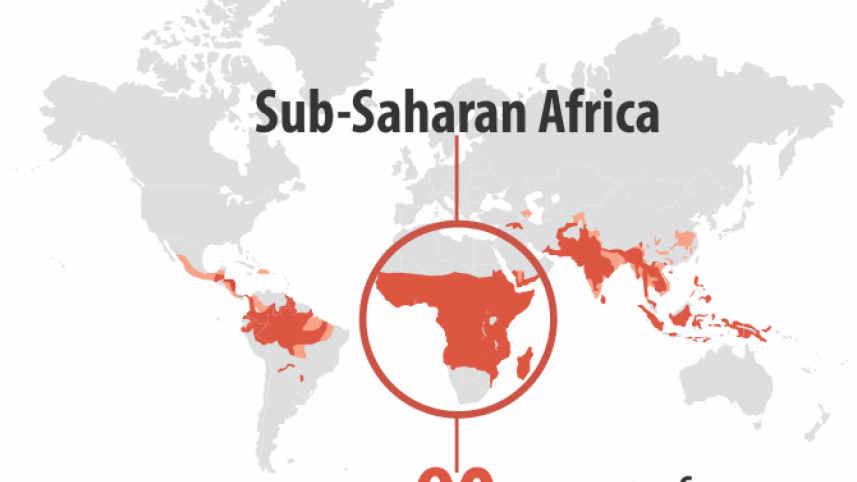
Resistance to the drug that has saved millions of lives from malaria has been detected over a wider area than previously thought, scientists warn.
The ability of the malaria parasite to shrug off the effects of artemisinin has been spreading since it emerged in South East Asia. Tests, published in Lancet Infectious Diseases, now show this resistance on the verge of entering India.

Experts said the development was "alarming" and an "enormous threat".
Deaths from malaria have nearly halved since 2000, and the infection now kills about 584,000 people each year.
But resistance to artemisinin threatens to undo all that hard work, and it has been detected in Cambodia, Laos, Thailand, Vietnam and Myanmar, also known as Burma.
Blood samples from 940 people with malaria from 55 sites across Myanmar showed this resistance was widespread across the country.
One site, in the Sagaing region, showed that resistant parasites were just 25km (15 miles) from the Indian border.
One of the researchers, Dr Charles Woodrow, from the Mahidol-Oxford Tropical Medicine Research Unit, in Thailand, told the BBC News website: "We can see artemisinin resistance is clearly present quite close to the Indian border, that's clearly a threat and in the future is likely to lead to extension of the problem to neighbouring areas."
Initially the other drug will pick up the slack to keep the combination effective, but Dr Woodrow says this resistance will "inevitably" lead to it failing.
Chloroquine probably saved hundreds of millions of lives, but resistance was discovered in 1957 around the border between Cambodia and Thailand.
Resistance spread around the world and reached Africa 17 years later.
Prof Mike Turner, the head of infection and immunobiology at the Wellcome Trust medical charity, said: "The new research shows that history is repeating itself, with parasites resistant to artemisinin drugs, the mainstay of modern malaria treatment, now widespread in Myanmar.
 For all latest news, follow The Daily Star's Google News channel.
Comments