


ISIS did what West couldn't
Just when Washington and Nato feared they were going to be bombing ISIS on their own, the self-styled "Islamic State" has single-handedly created a new Arab military alliance to bomb the West's enemies.
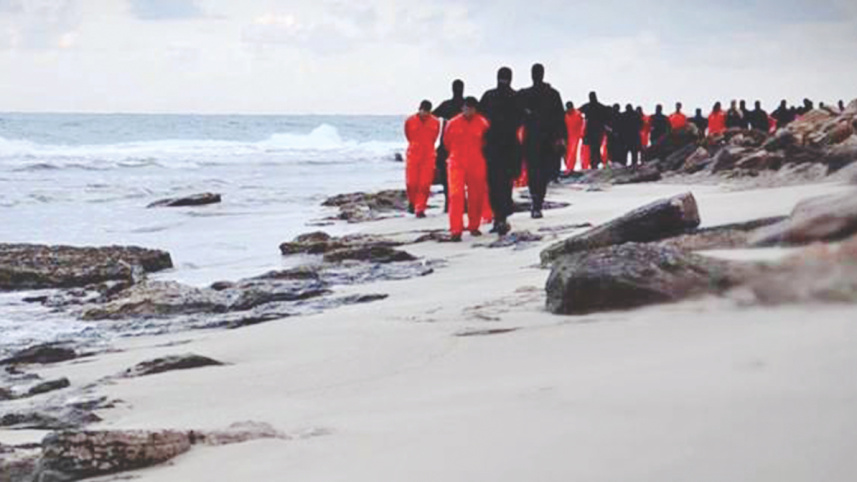
By its seaside slaughter of 21 Egyptian Christians, ISIS has brought ex-Field Marshal President Abdel Fattah al-Sisi into the war against it. And by burning Jordan's captured pilot alive, it provoked 56 more air strikes from Jordan, a return to action by the UAE and a flight of Bahraini jets to Amman to help in the struggle. In what is almost a sideshow, Libya's air force – supporting one of its country's two rival governments – continues to bomb ISIS fighters, but now in co-operation with Egypt.

So President Obama and the Pentagon can, it seems, take satisfaction in seeing their "moderate" friends in the Middle East flying alongside them in their latest version of the "war on terror". So far, so good. No "boots on the ground", as the now-hackneyed expression goes. No Western lives in danger – save for the pitiful handful of hostages still held in Raqaa. Of course, any Iraqi who opposes the "Islamic State", any Iraqi Shia, and any Christian – Libyan or otherwise – who falls foul of ISIS's sectarian hatred, will suffer accordingly. But that will be Arab killing Arab. Americans are safe. So are the Israelis.
Egypt didn't launch its war with Isis in yesterday's air raids – the two sides had been killing each other for more than a year.
Days before ISIS released its gory video depicting the Egyptians' beheadings, Libya's former Prime Minister warned that the group would soon reach the Mediterranean and even Europe if order was not restored in the country.
And the murders realised long-held fears of militants reaching the Mediterranean coast.
ISIS's ideology has spread much further, with pledges of allegiance from terrorist groups in Egypt, Gaza, Jordan, Lebanon, Saudi Arabia, Tunisia and Yemen.
For Arabs, there is a clear message in all these alliances. Washington has an American-trained general in charge of the Libyan air force, an American-trained former field marshal and president in charge of Egypt, an American-educated and British-trained king in Jordan and two wealthy emirates with huge US investments – one of them headquarters to the US fleet in the Gulf – in the battle. Only that well-known dictator who has been fighting ISIS for longer than any of them – Bashar al-Assad of Syria – is left out. For now.
 For all latest news, follow The Daily Star's Google News channel.



Comments