


BJP’s war against ‘love jihad’
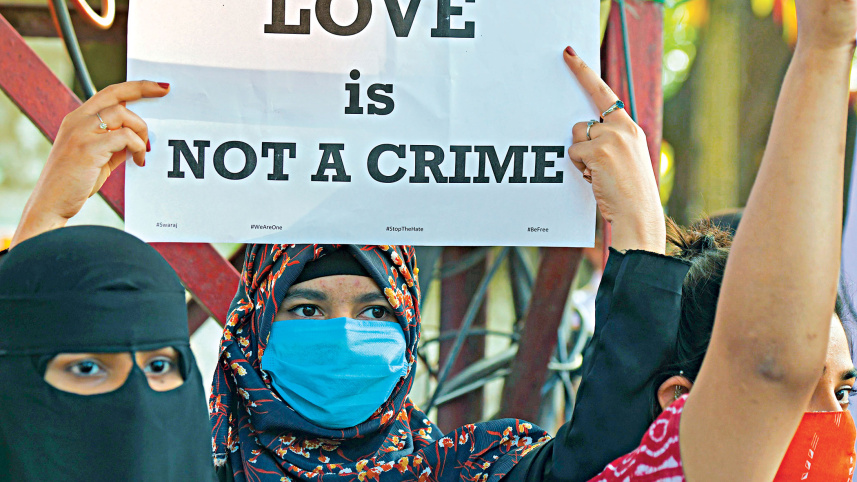
In India's most populous state, the Hindu nationalist BJP government is on a mission against "love jihad", the conspiracy theory that Muslims are luring Hindu brides with the aim of conversion and eventually national domination.
While interfaith marriage remains rare in the Hindu-majority nation, this zealous drive in Uttar Pradesh has taken the form of a new law that can land the couples in serious trouble.

A few weeks ago, when 22-year-old Muskan (who went by Pinky when she was a Hindu) and her Muslim husband Rashid went to register their marriage in the town of Moradabad, he ended up in jail and the young woman in a state-run shelter home.
The couple's "crime" was the alleged violation of an "unlawful conversion" ordinance promulgated last month in Uttar Pradesh by the local Bharatiya Janata Party government. It carries a punishment of up to 10 years in jail.
It sent a further chill through India's 200-million-strong Muslim minority and defenders of the country's secular traditions, who have raised alarm about the BJP's policies since it returned to power in 2014.
While there is no credible evidence of an organised mass attempt to convert Hindu women to Islam and bring about Muslim domination, the conspiracy theory is rife in Hindutva circles.
Falling foul of the vaguely worded legislation is not hard. Dozens of Muslim men have been arrested -- for which police need no warrant -- in just a few weeks. Any relative of the bride can complain to the police, the men can be arrested on the slightest suspicion, and women are pressured into making incriminating statements, activists say.
Other states governed by the BJP want to enact legislation similar to that in Uttar Pradesh.
The BJP's new mission against "love jihad" is also a blow against the right of women to choose whom they marry and an attempt to ensure they remain in "traditional" roles, activists say.
"It's the unholy trinity of patriarchy, caste and dominant religion that has always wanted to control women's sexuality and freedom," Vrinda Grover, a lawyer and rights activist, told AFP.
 For all latest news, follow The Daily Star's Google News channel.
Comments