How Milad-un-Nabi shaped Muslim cultural life in colonial Bengal
The year was 1913. Two years had passed since the annulment of the Partition of Bengal. A young boy was then studying in Class Three at Moulvibazar Government High School. He was born into a Muslim family. The school was being decorated with leaves, vines and colourful paper of various kinds. The drill and drawing masters were supervising the preparations. The Hindu students were beside themselves with excitement and joy over the puja. Saraswati Puja was being celebrated with great festivity and fanfare. Meanwhile, the boy sat dejectedly in his classroom, staring through the window at the commotion among his classmates as tears glistened and rolled down his cheeks.
Syed Murtaza Ali, the elder brother of Syed Mujtaba Ali and a distinguished essayist and researcher, recounted this episode in his autobiography. The account points to a cultural void within Bengali Muslim society at the time. Hindu students were able to participate in cultural activities surrounding Saraswati Puja, while Muslim students had no comparable opportunity. This was not simply a reflection of life at one school, but of the broader cultural landscape of Muslim society at the time.
The cultural void Syed Murtaza Ali had experienced at Moulvibazar Government High School was eventually filled at Sylhet Government High School through the celebration of Milad-un-Nabi. He wrote: “When we studied at Sylhet Government High School, the Milad festival was celebrated at the school with great ceremony. On this occasion, we decorated the school building beautifully. We organised meetings where we discussed the Prophet’s ideas and life in Bengali and English.”
Similar accounts of Milad-un-Nabi celebrations can be found in the memoirs of many other writers who grew up during that period. Kamruddin Ahmad, one of the most important chroniclers of the social, cultural and political history of the middle class in East Bengal, wrote: “Saraswati Puja was celebrated at our school with great fanfare. The drawing teacher and drill master took responsibility for the decorations, arrangements and maintenance of discipline. Our school held a Milad on Fateha-e-Yazdaham—but the number of Muslim students was so small that even after the Maulvi Sahib invited all his talib-e-ilm (students), they could not fill a room. To conduct the Milad, we would invite Khwaja Shahabuddin, the younger brother of Khwaja Nazimuddin. He was not involved in politics at the time. He was a Maulvi Sahib. ... His voice was melodious. The talib-e-ilm would carry the books and umbrella. If any Maulvi Sahib conducted the Milad at our school, he would be given five taka, but when Khwaja Sahib came, Mr Collins would ask that he be given ten taka.”
Poet Abul Hossain’s recollections offer further insight into this practice: “At Collegiate School in Krishnanagar, I never saw students or teachers organise any religious event. The school had two main events: the annual prize-giving ceremony in December and the annual sports competition in the middle of the year. I first encountered religious events at Kushtia High School. It was not directly a school event, but Saraswati Puja was organised by Hindu students in their hostel. A few months later, Muslim students celebrated the birth of Hazrat Muhammad at the school on the occasion of Fateha-e-Yazdaham. The Muslim students had no hostel, so their programme was arranged in one of the school’s large reading rooms. Although we did not participate in Saraswati Puja, a few of us attended various events associated with it. But I did not see any Hindu students at the Fateha-e-Yazdaham programme. The headmaster, however, attended along with several other Hindu teachers. Prominent citizens of the town were also invited. The chief guest was Annada Shankar Ray. He was then the subdivisional magistrate of Kushtia. But the Fateha-e-Yazdaham celebration that really created a stir in Kushtia took place the following year.” (Hossain: 2003, 44)
The accounts above suggest that, in the years following the annulment of the Partition of Bengal, the annual celebration of Milad-un-Nabi in schools and colleges gradually provided Muslim students with a distinct cultural space of their own. At the time, access to formal education remained largely concentrated among the middle classes, while relatively few children from lower-income families attended school. The practices associated with Milad-un-Nabi in educational institutions travelled beyond the school grounds, as students carried them into their families and communities, helping them take root within the emerging Muslim middle class.
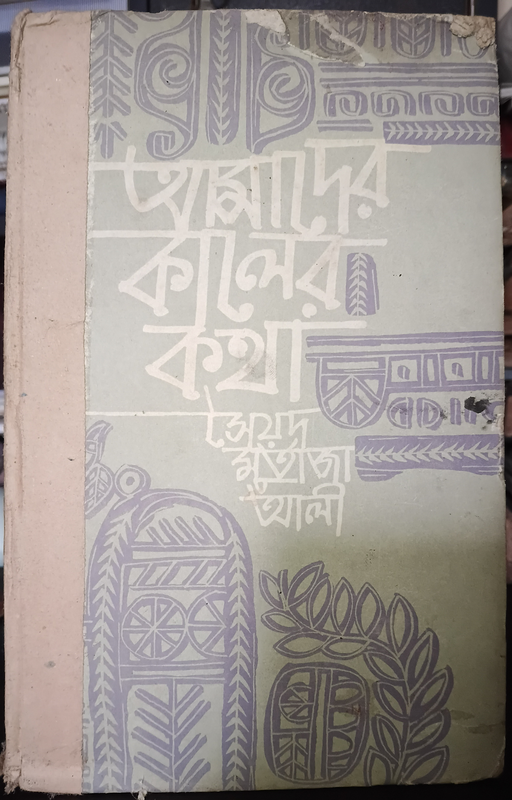
The growing cultural significance of Milad-un-Nabi was also reflected in the literature of the period. Prominent writers, from poet Kazi Nazrul Islam to prose writer S Wajed Ali, wrote about the occasion, helping to bring its cultural significance into the wider public sphere. The middle class has historically played a central role in shaping national culture, and in this case, schools and colleges provided an important institutional setting through which Milad-un-Nabi became embedded in the cultural life of the Muslim middle class. This process, in turn, helped lay the groundwork for its emergence as part of a broader national culture.
One aspect of Milad-un-Nabi celebrations in educational institutions was competitions in which students wrote prose and poetry about the life of the Prophet (PBUH). For many students, these competitions marked their first steps as writers. The recollections of three celebrated writers can be cited as evidence.
The renowned writer and literary figure Sanaul Haq wrote: “My first public recognition as a prose writer came through an essay I wrote about Hazrat Muhammad. I read the essay at an event organised on the madrasa premises on the occasion of Fateha-e-Yazdaham.”
Sardar Fazlul Karim recalled: “Milad was held at the school. On that occasion, there would be an essay competition on the life of the Prophet. Once, my essay entitled ‘Muhammad the Man’ won first prize.”
Poet and writer Mohammad Mahfuzullah wrote: “At that time, our Talshahar High School held an annual Milad Mahfil, and on that occasion an essay competition was organised on the life and ideals of the Holy Prophet (PBUH). On the occasion of the annual Milad and Prophet’s Day, invited guests from outside would attend alongside local Maulvis and Maulanas.”
Milad-un-Nabi celebrations thus provided Muslim students with a space not only for cultural participation but also for developing and expressing their individual creativity.
As Milad-un-Nabi celebrations in schools and colleges helped foster a distinct cultural identity among Bengali Muslims, the occasion also found increasing expression in literature. Kazi Nazrul Islam, widely regarded as a cultural pioneer of Bengali Muslim society, contributed to this literary tradition in 1920 with his poem “Fateha-e-Yazdaham [Advent]”, published in Moslem Bharat on the occasion of Eid-e-Milad-un-Nabi.
Poet Golam Mostafa, a contemporary of Kazi Nazrul Islam and a representative poet of Bengali Muslim society at the time, also wrote several poems on the occasion of Milad-un-Nabi, including “Fateha-e-Yazdaham,” “Hazrat Muhammad” and “Bishwanabi”. Farrukh Ahmad, known as a poet of the Muslim Renaissance, wrote “Sirajam Munira”.
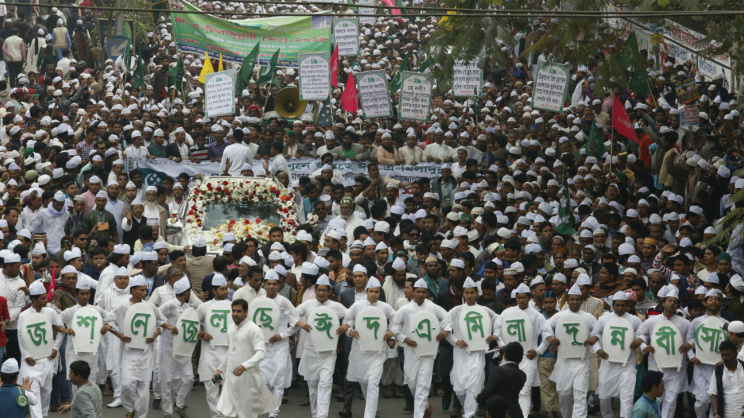
Writers of the period also produced prose works on the occasion of Milad-un-Nabi. In 1924, Kazi Abdul Odud wrote the prose piece “Fateha-e-Yazdaham”; Mohammad Barkatullah wrote “Rabi al-Awwal”, which was published in the Ashar 1342 issue of Sabuj Bangla; and S Wajed Ali’s essay “Nabi Dibas” was published in the Shraban 1351 issue of Gulistan. The attention given to Eid-e-Milad-un-Nabi by leading Bengali Muslim poets, writers and intellectuals shows how significant the occasion had become in the cultural life of the community. Literature provided an important space for articulating and reinforcing this emerging cultural identity. As Bengali Muslims increasingly embraced Eid-e-Milad-un-Nabi as a cultural celebration, writers contributed to the process by giving the occasion a prominent place in their literary works.
The celebration of Eid-e-Milad-un-Nabi was also used to promote and expand organisational activities. Maulvi Tamizuddin Khan, a prominent politician from East Bengal and later Speaker of Pakistan’s Constituent Assembly, joined the Faridpur branch of the Anjuman-i-Islamia in 1915. Soon after joining, he organised a grand celebration of Eid-e-Milad-un-Nabi in Faridpur district on behalf of the organisation. It should be noted that Nawab Salimullah Khan was the head of the Anjuman-i-Islamia.
The celebration of Milad-un-Nabi was also significant in creating the context for the Pakistan Movement. Advocate Sa’d Ahmad recalled: “Sometime in 1942, the president and secretary of the Kushtia subdivision Muslim Students League came to Bheramara High School and established a branch of the Muslim Students League, entrusting me with the responsibility of serving as its local president. ... The number of Muslim students at the high school had increased considerably compared with earlier years. As the Muslim population of Bheramara Bazar gradually increased, along with the number of Muslim government employees, the ranks of the Muslim Students League began to grow with their children. With the help of our elders, we brought poets, writers and singers from Calcutta and began celebrating Prophet’s Day with great ceremony on the grounds of the only high school.”
The political dimension of Eid-e-Milad-un-Nabi can also be seen in an episode from Santhia in Pabna, where a dispute between a Hindu zamindar and the local Muslim community eventually reached the courts. Sher-e-Bangla A K Fazlul Huq represented the Muslim side and helped secure a victory in the case through his advocacy and legal skills. For the local Muslim community, defeating the powerful zamindar was an extraordinary achievement, and they chose Eid-e-Milad-un-Nabi as the occasion to celebrate it.
The celebration was held at Talimnagar Madrasa, which served as an important religious, social and cultural centre for Muslims in the area. An elaborate Milad-un-Nabi programme was organised there to mark the legal victory.
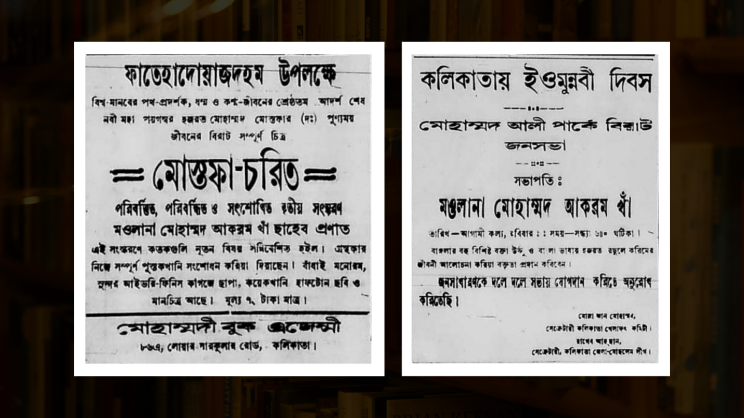
Taken together, these examples reveal a broader cultural transformation within Bengali Muslim society. What began partly as an attempt to provide Muslim students with cultural occasions of their own in schools and colleges gradually developed into something much wider. Milad-un-Nabi celebrations helped the educated Muslim middle class cultivate a distinct cultural identity; competitions associated with the occasion encouraged students to develop their literary and creative abilities; poets and writers gave the celebration a place in Bengali Muslim literature; and political and social organisations used it to mobilise communities and expand their activities. Its use in celebrating a victory over a zamindar further demonstrates how the occasion acquired a political dimension. Milad-un-Nabi thus moved beyond being solely a religious observance to become a significant communal and cultural occasion for Bengali Muslims.
This transformation can be better understood in light of an observation made in 1929 by the distinguished writer Sa’dat Ali Akhand. Lamenting the cultural condition of Bengali Muslim society, he wrote: “When one looks into the condition of Bengali Muslim society, the first thing that becomes apparent is a profound lack of joy within the community. At present, this absence of festivity and joy in our social life has manifested itself so starkly that young Muslims have grown weary of their monotonous lives. An awakened society never lacks joyous festivals.”
The cultural emptiness and lack of festivity that Akhand lamented began to change during the 1930s and 1940s, as Milad-un-Nabi emerged as an increasingly prominent occasion in the cultural life of Bengali Muslims. Its celebration helped strengthen a sense of collective cultural identity while also providing a space for growing social organisation and political mobilisation.
Today, Milad-un-Nabi occupies a prominent place in Bangladesh’s cultural and religious life. Its present significance, however, is rooted in a longer historical process. Between 1911 and 1947, the occasion moved beyond the sphere of religious observance to become a platform for cultural expression, literary creativity, social organisation and, at times, political mobilisation among Bengali Muslims. Tracing this transformation helps explain not only how Milad-un-Nabi acquired its present importance, but also the role it played in shaping a distinct Bengali Muslim cultural identity.
Mohammad Abu Sayed is Executive Director of Maqam: Center for Sufi Heritage. He can be reached at masayed925@gmail.com.
Translated by the Slow Reads team.
Send your articles for Slow Reads to slowreads@thedailystar.net. Check out our submission guidelines for details.
What Rashomon teaches us about truth and human behaviour
Why Chittagong never became a maritime city
The many worlds of Ghulam Murshid
Operation Jackpot: How Bangladesh’s naval commandos struck at Pakistan’s lifeline in 1971
The Yellow Butterfly: How Sheba shaped my world growing up
What Bangladesh’s historic Test victory in Australia means for Bangladeshi-Australians
Remembering Sumit Sarkar, a historian who questioned orthodoxy
The unfinished histories of Partition
In conversation with William Dalrymple / ‘Britain didn't conquer India’