


EU in ‘mission impossible’
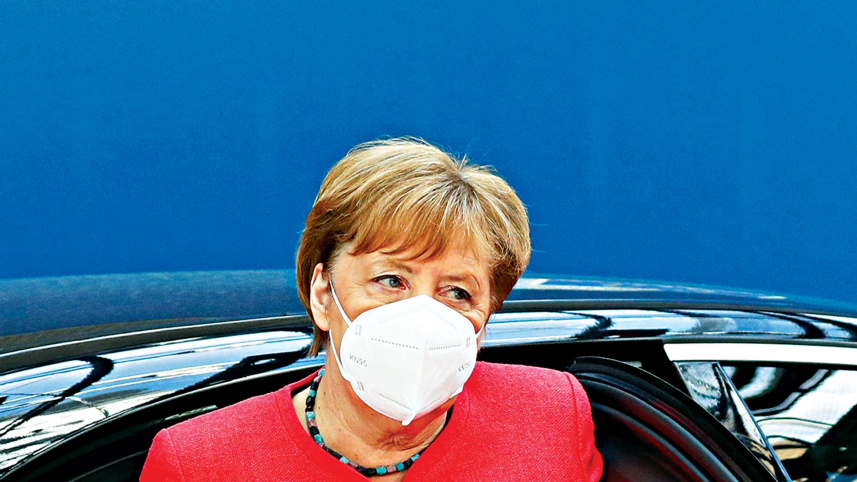
European Union (EU) heavyweight Germany yesterday said that national leaders split over a massive coronavirus stimulus plan had sketched a framework agreement that could bring a successful end to a fraught summit dragging into its fourth day.
Slow to coordinate their initial response to the outbreak and already weakened by Britain's departure, the EU's 27 nations could redeem themselves with an economic aid plan that would show Europeans they can step up to a crisis and are united.

But old grievances between fiscally-frugal northern nations less affected by the pandemic and more indebted southern European nations like Italy and Greece, whose economies are in freefall, have made progress painfully slow.
Ahead of the 1400 GMT restart, German Chancellor Angela Merkel said leaders now had a new basis for a deal on a 750 billion euro ($858 billion) recovery fund and the bloc's next 2021-2027 common budget, worth around 1.1 trillion euros.
"We worked out a framework for a possible agreement last night after long negotiations," she told reporters, arriving for the fourth day of talks in Brussels in what could be the bloc's longest ever summit.
"This is progress and gives hope that an agreement can be reached today."
European Commission President Ursula von der Leyen was also upbeat about the chances of a deal.
With talks going past midnight for two consecutive nights, French President Emmanuel Macron lost patience in the early hours of yesterday and banged his fist on the table in frustration at "sterile blockages" by the Netherlands, Sweden, Denmark and Austria, two diplomats said.
But by daylight, he shared Merkel's optimism, telling reporters as he arrived back: "I'm starting today with a lot of determination to make progress."
Summit chair Charles Michel urged leaders on Sunday to achieve "mission impossible", reminding them that more than 600,000 people had now died from COVID-19 around the world.
"It looks a bit more hopeful than at the times where I thought last night that it was over," Dutch Prime Minister Mark Rutte told reporters in the early hours.
Within the 750 billion euro recovery fund, 390 billion euros could be considered as non-repayable grants, diplomats said, a compromise between the 350 billion level of the five "frugals" - who also include Finland - and the 400 billion euros demanded by France and Germany.
 For all latest news, follow The Daily Star's Google News channel.
Comments