


Hopes lie crushed
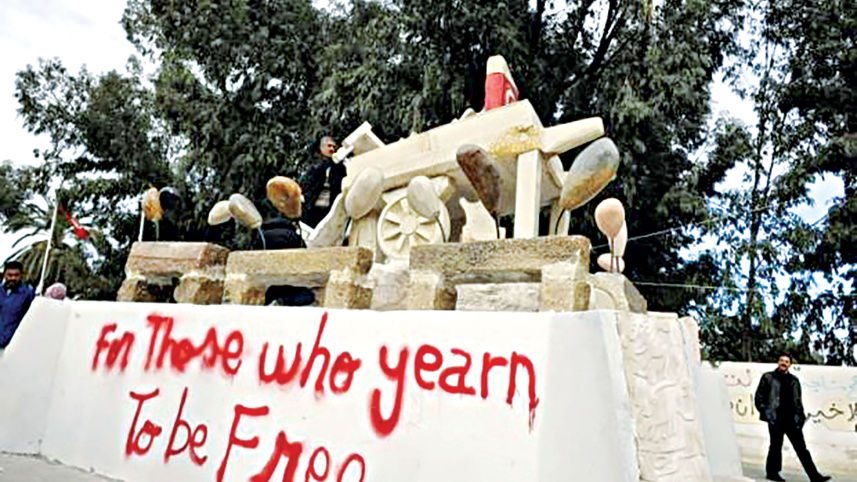
Ten years since the intoxicating early days of Tunisia's revolution, dreams for a better future lie crushed, and in the rural town where it began, the mood yesterday was one of anger rather than hope.
It was in Sidi Bouzid that Mohamed Bouazizi, a fruit and vegetable salesman angered by police harassment, set himself alight on December 17, 2010.

His act sparked an unprecedented uprising that left some 300 dead but toppled long-time dictator Zine El Abidine Ben Ali, whose flight to exile in Saudi Arabia the next month sparked uprisings across the Arab world.
The North African country has been praised for its democratic progress. And it has been less affected of other Arab Spring countries like Libya, Syria and Egypt. But many Tunisians remain angry at a political class seen as corrupt and unable -- or unwilling -- to tackle the country's deep social problems and create much-needed jobs.
And rather than festivities marking the end of the dictatorship, the anniversary of Bouazizi's self-immolation sees annual protests against the post-Ben Ali regime.
Security was tight in central Tunis on Thursday, with armed police checking bags at the entrance to the iconic central boulevard of Bourguiba Avenue and drones monitoring from above.
And in central Sidi Bouzid, hundreds of people demonstrated around a sculpture of Bouazizi's handcart, shouting "work is a right, you bunch of thieves!"
"Every year we see the same angry scenes repeat themselves," said lawyer Farouk Jaziri.
"People are worse and worse off after 10 years of nothing."
Away from the main square, most Sidi Bouzid residents expressed little interest in the protest.
Analyst Hamza Meddeb said that despite Tunisia's hard-won political freedoms, "10 years on from the revolution, there's a real sense of failure."
The political class, more fragmented than ever since parliamentary elections last year, is paralysed by bitter infighting. That has prevented it from tackling urgent social and economic problems, exacerbated by the coronavirus pandemic.
Tunisia suffers unemployment above 15 percent nationally, disproportionately hitting young people in the long-marginalised interior.
Salaries have been devalued by inflation, while political instability has crushed hopes for fundamental reforms.
The economic situation has pushed many others to make death-defying bids to reach Europe, and Tunisians have been one of the largest contingents of jihadists fighting in Syria's civil war.
Strikes, road blockages and protests have mushroomed in recent weeks, demanding more jobs and investment, better work conditions and improvements to crumbling public services.
"We've stopped expecting anything from the political class," said Sidi Bouzid resident Jamel Bouzidi. "We're tired of waiting."
 For all latest news, follow The Daily Star's Google News channel.
Comments