


India to test ‘cold spots’
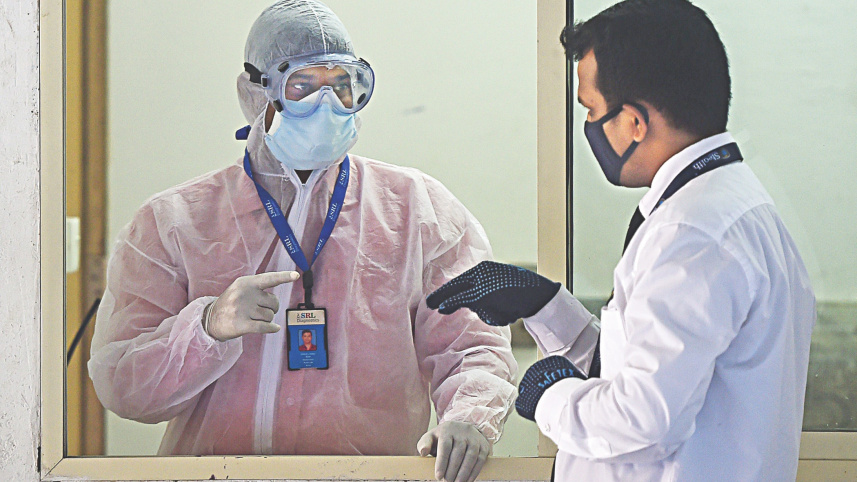
In a bid to widen testing and ensure that no significant number of Covid-19 cases are being left out, the government plans to expand testing in clusters chosen in 'cold spots' or areas where there are no cases reported as of now. This will be a significant decision that takes the focus beyond hotspot areas in around 133 districts where there is a high incidence of the disease.
The districts that will be taken up for sampling are being identified and a combination of pool and rapid testing will be adopted to check for the presence of Covid-19. The move, besides providing additional clinical data of the disease, is also intended to respond to criticism that India is not testing enough and positive cases might be under-reported.

The sampling will be on the basis of surveillance and tests will be conducted on ILI (influenza like illness) patients to track the presence of coronavirus.
As of now, at least half of India's 720 districts are yet to report Covid-19 and the cases so far are concentrated in certain districts and cities in a pattern that can vary from state to state and even within states, reports TOI.
While pool testing is a RT-PCR process, seen as a reliable means of detecting the disease, the rapid test option is intended to test for antibodies.
The arrival of rapid test kits from China has been delayed but the first lot of kits is expected to reach soon.
The government has also decided to use colour code on the country's map to Covid-19 and virus-free zones, and therefore people's movement.
After a meeting with at least 13 Chief Ministers on Saturday, Prime Minister Narendra Modi had indicated that the lockdown will be extended - but there will be relaxations in certain areas and cases to ensure the survival of the economy as well.
This is where the colour coding comes in, some of the participating Chief Ministers, including the Chief Minster of Puduchery, told the media after the meeting, reports NDTV.
Green zones will be districts where there is no Covid-19 case. Sources said there are 400 districts, where there have been no Covid-19 cases.
Orange zones will be places which saw less than 15 cases and there have been no increase in the number of positive cases. Here, minimum activities like opening of limited public transport, harvesting of farm products will be allowed.
 For all latest news, follow The Daily Star's Google News channel.
Comments