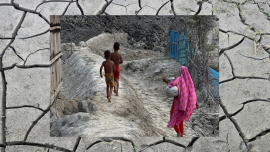
Where have Bangladesh’s hilsa gone?

For Siddiq Majhi, a hilsa fisherman from Nilganj in Kalapara, Patuakhali, the decline is not a statistic. It is something he has watched unfold from the deck of a fishing boat.
“I have been fishing for hilsa for more than three decades, but over the past seven or eight years, the catch has steadily declined,” he told The Daily Star. He remembers when hilsa arrived in abundance during the season, filling the estuaries where local fishermen had cast their nets for generations. Large hilsa, once commonly found in these shallow waters, are now particularly difficult to find.
Yet Siddiq does not believe the hilsa has disappeared.
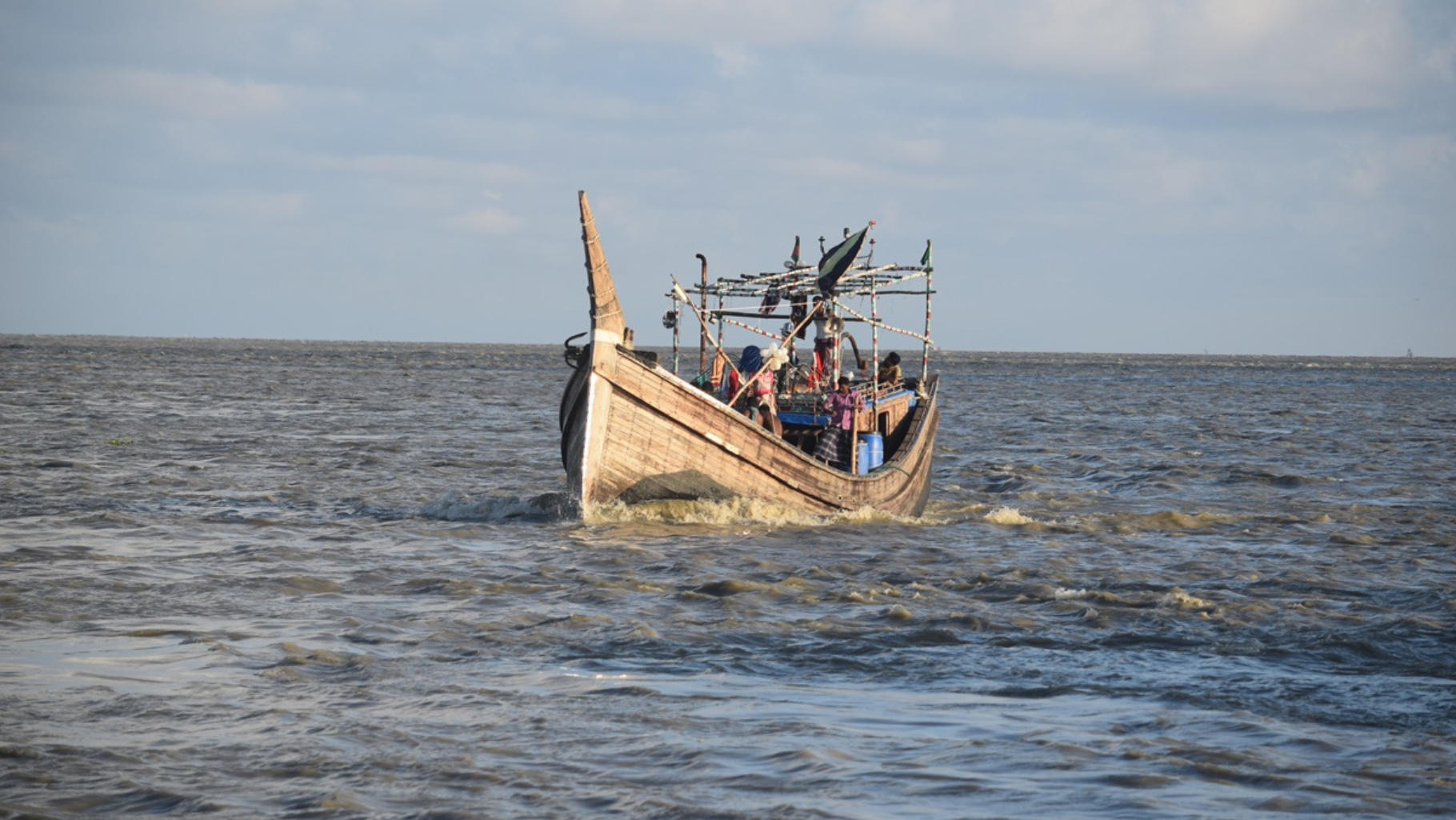
“There is plenty of hilsa in the deep sea, but they won't come up,” he said. “The real question is why the fish won't stay in the 20–40ft-deep water layers anymore.”
His observation captures the central puzzle surrounding Bangladesh’s national fish. Hilsa may still be present in the Bay of Bengal, but where fishermen can find and catch them is changing. Evidence from rivers and spawning grounds suggests that something deeper is happening to the fishery as well.
National hilsa production reached a record of roughly 5.71 lakh tonnes in 2022–23. But production then fell by about 12.5 percent over two years, with the national haul dropping to roughly 500,000 tonnes in 2023–24, its lowest level in seven years. In July and August 2025, the catch reportedly fell by around 45 percent compared with the same period a year earlier.
Hilsa migrate from the sea into freshwater to spawn, making the condition of Bangladesh’s rivers critical to their life cycle. Both researchers point to declining river flow and siltation as major concerns. Alam says reduced flow associated with the Farakka Barrage and the formation of chars have affected the Padma. Hossain emphasises the severe siltation within Bangladesh’s rivers, arguing that major rivers urgently need dredging. The physical space available for migration has also narrowed.
A fish on the move
Siddiq remembers when hilsa could be caught near river mouths. Now fishermen must venture farther offshore.
“Within 20, 30 or 40 kilometres of the river mouth where hilsa used to arrive in abundance, we are no longer finding those fish,” he said. “We used to get large ones, but we don't find them anymore.”
Farther offshore, particularly in waters deeper than 40 metres, Siddiq says hilsa remain plentiful. But many artisanal fishermen cannot effectively reach them, and their nets and boats are designed for shallower waters.
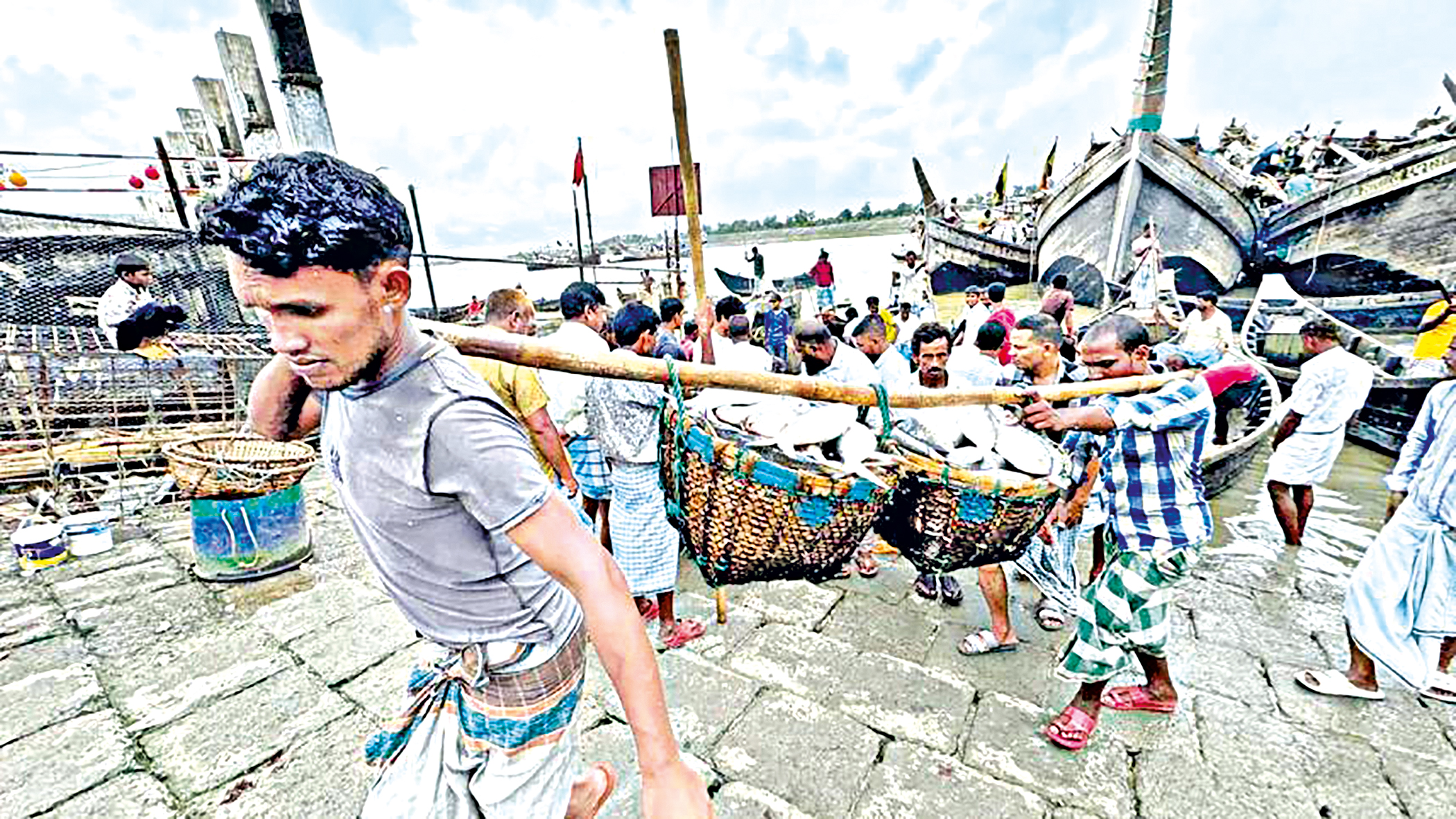
That shift carries a heavy economic cost. Abul Hossain, another fisherman interviewed in Patuakhali, spent 14 days at sea during what should have been the peak hilsa season and returned with just Tk 3,000. The previous year, he had earned around Tk 100,000 during the season.
For fishermen working on a share basis, a failed trip can be devastating. Boat owners provide fishing gear, ice and food, deducting those expenses from the proceeds before dividing what remains with the crew. A poor catch can therefore mean not merely lower earnings but debt.
The changing hilsa catch is not just an ecological problem. It is becoming a livelihood crisis.

What is happening upstream?
Research from the Padma suggests that the changes fishermen are witnessing at sea have parallels upstream.
Dr Yeamin Hossain, a professor in the Department of Fisheries at Rajshahi University and a leading expert in fisheries science, has studied hilsa in the Padma since 2017. During the 22-day mother-hilsa conservation period, his team examined fish recovered during enforcement operations.
Until 2022, most hilsa they encountered during October and November weighed less than 300 grams. In samples of 600 or 700 fish, they would rarely find more than eight or ten weighing above 300 grams.
“Upstream migration of large hilsa has decreased significantly,” he said.
There are also signs of hilsa maturing at smaller sizes. Traditionally, spawning-size hilsa were around 23 centimetres long. Research in the Padma has found mature fish measuring only 17 to 18 centimetres and weighing between 140 and 150 grams.
“This is an alarming condition,” Hossain said.
But declining catches do not necessarily mean the hilsa population itself is collapsing.
Dr Samsul Alam of the Department of Fisheries Biology and Genetics at Bangladesh Agricultural University, who worked on sequencing the hilsa genome, says researchers have found no evidence of a recent genetic collapse. Genetic data indicate that the population experienced a bottleneck sometime in the past, but more recent evidence points towards expansion.
“We haven't found any negative genetic impact on the hilsa,” he said.
Hilsa are highly adaptable, or euryhaline, fish capable of living in marine, estuarine and freshwater environments. Alam believes their increasing presence farther offshore could reflect behavioural adaptation.
“This is called behavioural plasticity—an adaptation in behaviour,” he said. “It suggests the fish are gradually moving farther out.”
Recovery will require more than restricting fishing for several weeks each year. It means restoring river flow and migration routes, protecting coastal nursery grounds, reducing destructive fishing, applying regulations consistently and ensuring compensation reaches working fishermen. It also requires substantially more research.
A migration route under pressure
Hilsa migrate from the sea into freshwater to spawn, making the condition of Bangladesh’s rivers critical to their life cycle.
Both researchers point to declining river flow and siltation as major concerns. Alam says reduced flow associated with the Farakka Barrage and the formation of chars have affected the Padma. Hossain emphasises the severe siltation within Bangladesh’s rivers, arguing that major rivers urgently need dredging.
The physical space available for migration has also narrowed. A Department of Fisheries survey identified 17 points where hilsa migration is obstructed across the Meghna-Tetulia estuary and adjoining rivers, 14 of them in the Meghna itself. Hilsa reportedly need around 30 feet of water for free movement, while some estuarine areas can fall to only eight or nine feet at low tide.
Climate change adds another layer of uncertainty. Hilsa breeding and migration are closely connected to rainfall, freshwater flow, temperature, salinity and water currents. Changes in monsoon rainfall and rising temperatures in the Bay can therefore alter when and where the fish move.
Coastal habitats are under pressure too. Hossain points to destructive fishing, pesticides and poison as threats to nursery and spawning grounds, particularly around mangrove ecosystems.
“When a wild stock's breeding is disturbed, they migrate elsewhere to survive,” he said.
Yet major scientific gaps remain. Alam says researchers still do not know the precise combinations of salinity, turbidity, temperature and current that hilsa require at different stages of their life cycle.
Conservation—and its limits
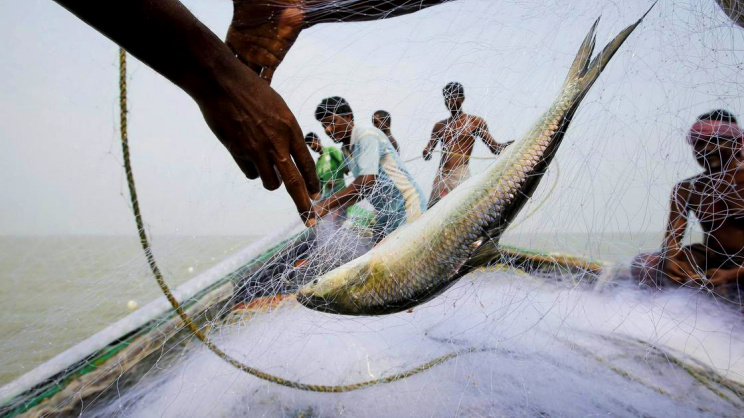
Bangladesh has long relied on seasonal fishing restrictions to protect hilsa, including bans on catching jatka, a mother-hilsa ban during the spawning season and a marine fishing closure.
The measures can work. Research has shown that the mother-hilsa ban allows large numbers of brood fish to spawn successfully. But fishermen say enforcement is inconsistent.
Siddiq says fishermen around Kuakata, Patuakhali and Barguna generally observe the marine closure, while boats elsewhere continue fishing.
“If you allow fishing in Bhola, let us fish too; or else stop it there as well,” he recalled telling officials.
Compensation is another problem. Fishermen receive rice during fishing bans, but those interviewed said support is inadequate and does not always reach genuine fishermen. For families that lose weeks of income, conservation becomes difficult to sustain without credible livelihood protection.
Can hilsa recover?
There is reason for cautious optimism. Bangladesh’s earlier Hilsa Fishery Management Action Plan demonstrated that targeted conservation can increase production, fish size and fishermen’s incomes.
Hossain believes hilsa abundance could begin increasing again by 2028–29 if juvenile jatka are protected and mature mother hilsa are allowed to spawn.
But recovery will require more than restricting fishing for several weeks each year. It means restoring river flow and migration routes, protecting coastal nursery grounds, reducing destructive fishing, applying regulations consistently and ensuring compensation reaches working fishermen. It also requires substantially more research.
“Given that hilsa is our national fish and so important, there is actually very little research on it,” Alam said.
Ystiaque Ahmed is a journalist at The Daily Star.
Send your articles for Slow Reads to slowreads@thedailystar.net. Check out our submission guidelines for details.

Lead poisoning in Bangladesh: A crisis ignored for too long
Who recycles Bangladesh’s garment waste?
Bangladesh running out of options on Rohingya crisis: Is there a way out?
Construction of the Sugandha-Kalatoli beach road / A grave threat to Cox’s Bazar’s sand dunes
Why have Nihar Koli and Samrat been sent back to their alleged abusers?
The reality of vocational training for Bangladeshi women
Can we save young Bangladeshis from deadly Mediterranean crossings?

Breastfeeding in Bangladesh: What is holding mothers back?

Fidel Castro at 100 / Why Fidel Castro’s legacy still haunts Washington