


Reduce dependence on Beijing
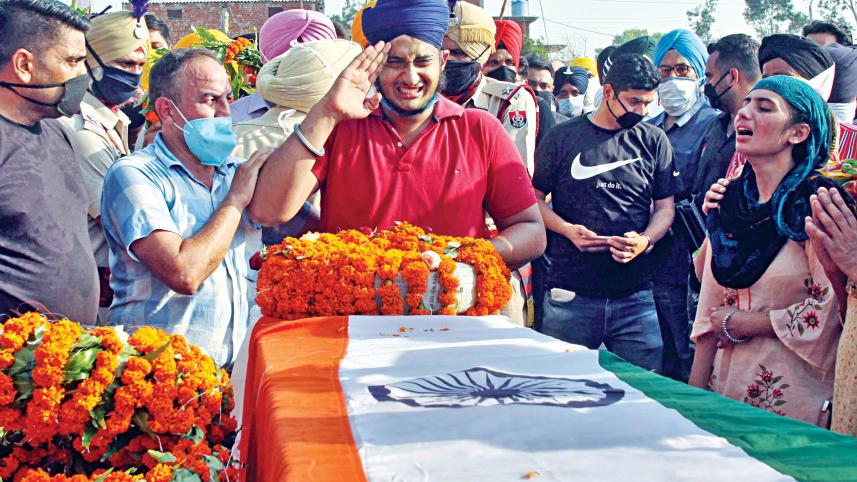
US Secretary of State Mike Pompeo has called on India to tamp down its dependence on Chinese goods, amid growing tensions between Washington and Beijing, which has its own issues with New Delhi.
In remarks to a US-India virtual business summit, Pompeo said New Delhi was a natural partner to Washington as "one of a few trusted, like-minded countries".

"India has a chance to attract global supply chains away from China and reduce its reliance on Chinese companies in areas like telecommunications, medical supplies, and others," he told the meeting organised by the US-India Business Council.
"India is in this position because it has earned the trust of many nations around the world, including the United States."
US-China relations -- already strained over the coronavirus pandemic, the situation in Hong Kong and trade -- took a turn for the worse Wednesday when Washington ordered that Beijing shut its consulate in Houston.
President Donald Trump said in answer to a question at a news briefing it was "always possible" other Chinese missions could be closed too.
Chinese Foreign Ministry spokesman Wang Wenbin said the consulate was operating normally.
The ministry said Washington had abruptly issued the demand to close the consulate on Tuesday and called it an "unprecedented escalation."
Nuclear-armed neighbours China and India, the world's two most populous nations, also have long had a prickly relationship.
But ties deteriorated significantly following a border clash on June 15 that left 20 Indian soldiers dead as well as an unknown number of Chinese casualties.
An ANI report yesterday said despite promises after rounds of talks, the People's Liberation Army (PLA) of China has continued the deployment of around 40,000 troops in its front and depth areas of the Eastern Ladakh sector indicating unwillingness to de-escalate the situation.
Pompeo said the clashes were "initiated by" China's armed forces and were another example of "unacceptable behaviour" from China's ruling Communist Party.
He praised India for banning 59 Chinese mobile apps, including TikTok, saying the video-sharing app "presents serious security risks for the Indian people".
However, despite the push by US, India is unlikely to join any alliance in the near future.
External Affairs Minister S Jaishankar recently said India will never be a part of an alliance system.
Speaking about the consequences of global shifts, including the United States and the assertiveness of China, he said they were opening spaces for middle powers like India, Japan, the European Union and others.
"The consequence of repositioning of the United States, that the big umbrella is now smaller than it used to be, has allowed many other countries to play more autonomous roles. It doesn't affect us as much because we were never part of an alliance system and we will never be. But countries who depended more on the US are finding they have to take a call themselves on many issues," he noted.
India must now take more "risks", as the world expected it to take a more proactive stance on the "big issues" of the day, including connectivity, maritime security, terrorism, climate change and terrorism, he stated.
 For all latest news, follow The Daily Star's Google News channel.
Comments