


Rich nations ‘lagging badly’
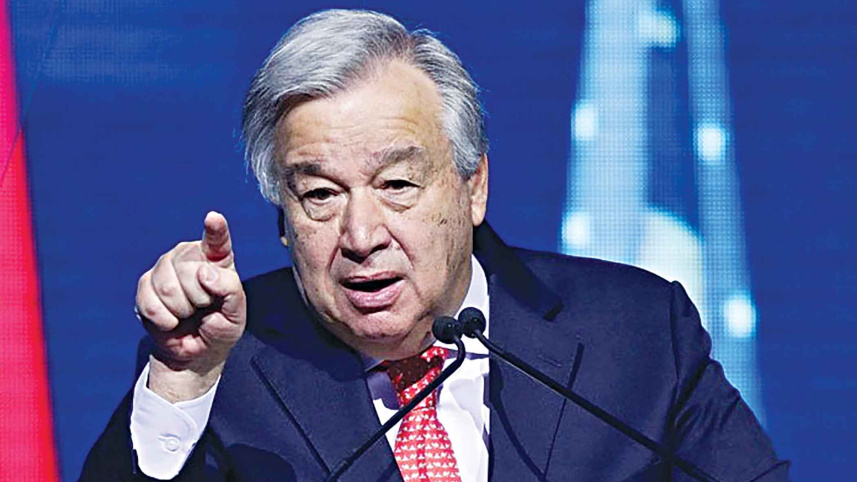
Rich nations are "lagging badly" on a longstanding pledge to channel $100 billion a year in funding, from 2020 onwards, to help poorer countries develop cleanly and adapt to the worsening impacts of climate change, the UN chief said on Saturday.
Antonio Guterres told journalists, on the sidelines of a virtual "Climate Ambition Summit" to mark the fifth anniversary of the Paris Agreement, that a new report by climate finance experts estimated the promise would not be met this year.

Nor had donors responded adequately to the Covid-19 financial crisis to provide cash-strapped developing countries with liquidity and debt relief, he noted.
"There is a clear need to increase both forms of finance - and they should be inter-linked," he said, calling for the pandemic recovery to be climate-friendly.
In 2009, wealthy governments agreed to increase climate finance for vulnerable countries to $100 billion annually by 2020, and under the Paris Agreement they said they would negotiate a yet-higher amount that would kick in from 2025.
Many developing-nation leaders, including from the Maldives and Kenya, told Saturday's event they would need more financial support to achieve new, stronger climate plans to cut emissions and protect their people from wilder weather and rising seas.
Guterres also noted that just 20% of the $79 billion in climate finance raised by wealthy governments in 2018 was earmarked for efforts to adapt to climate change, and said more was needed for that purpose especially.
"Adaptation must not be the forgotten component of climate action," he added. Adaptation includes measures such as systems to warn people of weather threats, climate-smart infrastructure, water-harvesting for farmers in dry areas and restoring protective coastal mangroves.
The summit also saw the launch of a UN-backed "Race to Resilience" initiative that aims to help 4 billion people from groups and communities vulnerable to climate risks become better able to withstand the impacts of climate change by 2030.
It aims to build a coalition of business and civil society groups to transform urban slums into healthy, clean and safe cities, equip smallholder farmers to adapt and thrive, and protect coastal homes and businesses against climate shocks.
 For all latest news, follow The Daily Star's Google News channel.
Comments