


Virus exposed ‘fragility of our world’
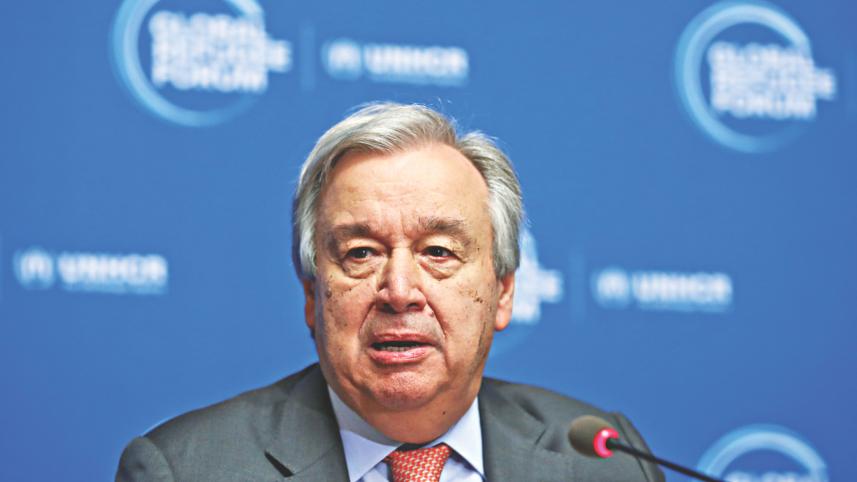
Coronavirus has revealed the "fragile skeleton" of societies and could push 100 million people into extreme poverty, United Nations Secretary General Antonio Guterres said yesterday.
Speaking on the 102nd birthday anniversary of the late Nelson Mandela -- South Africa's first black president -- Guterres said coronavirus was "shining a spotlight" on global injustice.

"We have been brought to our knees –- by a microscopic virus. The pandemic has demonstrated the fragility of our world."
"Entire regions that were making progress on eradicating poverty and narrowing inequality have been set back years, in a matter of months," he warned at a virtual memorial lecture organised by the Johannesburg-based Nelson Mandela Foundation.
The economic fallout of the pandemic, which has infected more than 14 million and killed close to 600,000 people worldwide, is being disproportionately felt among informal workers, small businesses and women, Guterres said.
"We face the deepest global recession since World War II," he said. "One hundred million more people could be pushed into extreme poverty. We could see famines of historic proportions."
Coronavirus is an "x-ray" that has revealed "fractures in the fragile skeleton of the societies we have built", he added, citing unequal healthcare provision, unpaid care work, income disparity and climate change as some of the concerns.
"It is exposing fallacies and falsehoods everywhere... The delusion that we live in a post-racist world. The myth that we are all in the same boat."
Guterres pushed for a so-called New Global Deal to ensure power, wealth and opportunity are shared more broadly and fairly at the international level.
"The nations that came out on top more than seven decades ago have refused to contemplate the reforms needed to change power relations in international institutions," Guterres said. "The composition and voting rights in the United Nations Security Council and the boards of the Bretton Woods system are a case in point."
"Inequality starts at the top: in global institutions. Addressing inequality must start by reforming them," he added.
Guterres said people were running out of patience at the glaring disparities and discrimination across societies. He singled out the global anti-racism movement stoked by the death of George Floyd as simply "one more sign that people have had enough".
Coronavirus, he said, had also created an opportunity for world leaders to build a "more equal and sustainable world".
"We are at breaking point. But we know which side of history we are on."
 For all latest news, follow The Daily Star's Google News channel.
Comments