


Indians go to the polls in test for Modi's cash ban
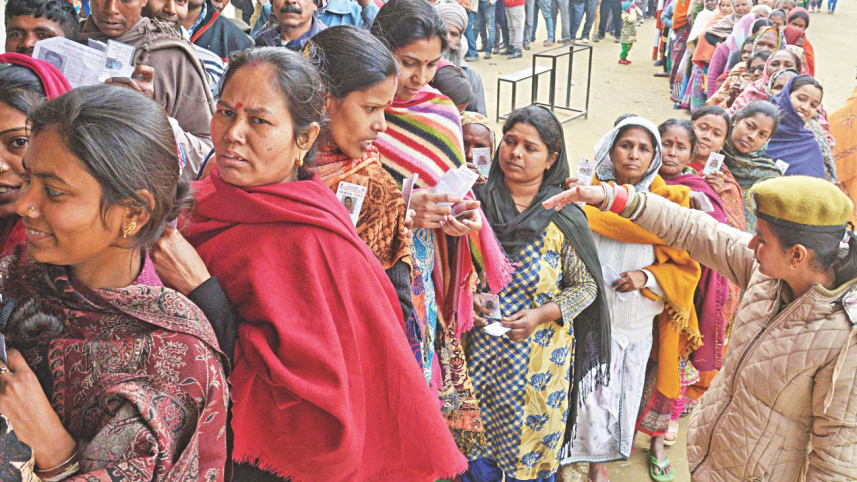
Millions of Indians began voting yesterday in regional elections seen as the first major test of Prime Minister Narendra Modi's party after his controversial move to ban all high-value notes last year.
Five Indian states will elect new governments over the next five weeks in a multi-phased election, with voting kicking off in northern Punjab and coastal Goa in the west.

Modi's bold move to ban the notes that made up 86 percent of the currency was aimed at curbing widespread tax evasion, but has also dented growth and caused widespread pain to the millions of Indians who lack access to formal banking.
His personal popularity has remained high well into his first term, but the elections are being seen as a test of its endurance.
Residents were seen queueing outside polling booths across both states, where more than 40 million voters are eligible to cast their ballots to elect a total of 157 legislators.
Modi's party is likely to lose out in Punjab, where it has been in power alongside its regional alliance partner since 2007, but also where a turnaround for the centre-left opposition Congress Party is possible.
Rahul Gandhi, the 44-year-old Nehru-Gandhi family scion who is seen as the party's next head, has pulled out all the stops to revive its fortunes, facing criticism after a series of state election defeats.
"It is the most important election for the Congress party which needs a victory on its own," said Nistula Hebbar, political editor with The Hindu newspaper.
But the biggest test for Modi will be in India's most populous state Uttar Pradesh (UP), where the ruling Bharatiya Janata Party (BJP) won big in the 2014 general election.
The state is important because it sends the highest number of MPs to the upper house of the national parliament, where the BJP currently lacks a majority.
The northern state of Uttarakhand and Manipur in the northeast will also elect new governments, with results for all five states due on March 11.
 For all latest news, follow The Daily Star's Google News channel.
Comments