


Mental health worries mount for traumatised Nepalis
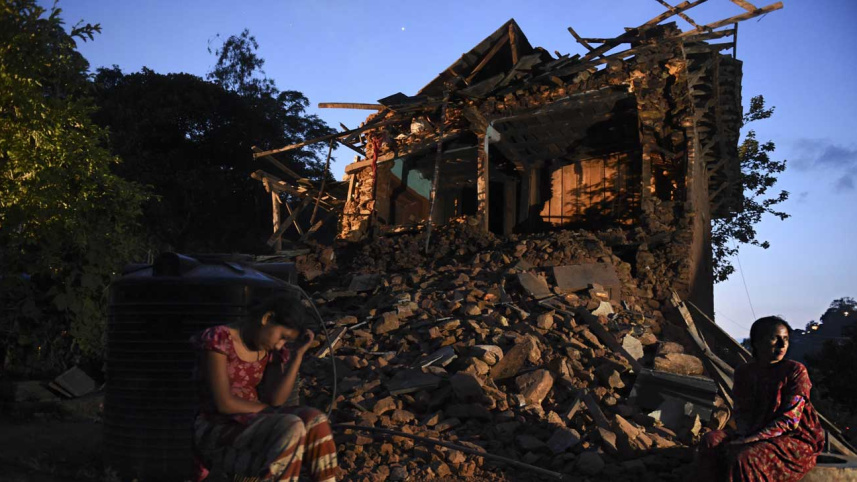
The powerful 7.3 magnitude tremor that struck Nepal this week left an already traumatised population gripped by even deeper fear, underlining concerns that the country is ill-prepared to cope with the mental side effects.
Tuesday's quake caused a fraction of the fatalities inflicted by the huge 7.8 earthquake that killed some 8,000 people less than three weeks earlier, but left millions more frightened than ever.

Binda Dhungel, 31, and her injured son and daughter sat inside a health clinic in the mountain town of Charikot on Wednesday after they walked two hours from their village, which was devastated in the second quake.
"There's not really anyone back in the village. There's no one else there. I don't know how we're going to survive," Dhungel said.
Tuesday's quake killed more than 100 people, and destroyed many houses.
Krishna Prasad, 30, a doctor at the centre, says patients are frightened and worried they are not strong enough to go back. The children, he says, are medically fine but "psychologically they look terrified".
In towns and villages across the country the scene was the same: dazed families sitting by cracked or flattened homes, jumpy about seemingly endless aftershocks and landslides from loose hillsides, and uncertain of their future.
Ranveig Tveitnes, deputy team leader of the Norwegian Red Cross in Chautara, said the latest earthquake and subsequent aftershocks had pushed people back from a fragile recovery.
"When they first came, you could see people were dead in their eyes. In the last few days, people started to laugh again. But today people were completely traumatised. Patients grab you and hold you and they don't let go," he said.
As natural disasters often do in poor nations, Nepal's earthquake has exposed the gross inadequacies of its mental health services just at the moment when they are most needed.
Even before the quakes, Nepal had one of the world's weakest mental healthcare systems, with just 100 psychiatrists and about a dozen clinical psychologists to serve a nation of 28 million people, according to government data.
Meanwhile, Nepal's prime minister said his government had been unprepared for the strong earthquake that hit two days ago, as he visited one of the areas worst hit by the disaster yesterday.
Tuesday's 7.3-magnitude quake triggered landslides and brought down houses, bringing fresh misery to a country still reeling from an earlier massive tremor that destroyed half a million homes.
"Together we can tackle this calamity," Prime Minister Sushil Koirala told journalists in the northeastern town of Charikot near the Tibetan border, according to the Kantipur news website.
Tuesday's quake compounded the already major challenge of getting desperately-needed relief supplies to the far-flung mountain communities worst hit by the 7.8-magnitude quake that struck on April 25.
 For all latest news, follow The Daily Star's Google News channel.
Comments