


UN wants 'hybrid court'
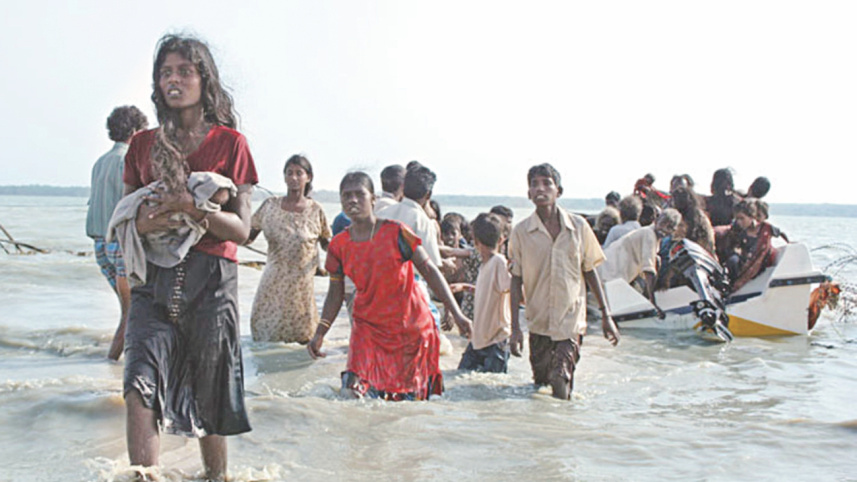
The United Nations yesterday detailed horrific abuses committed in Sri Lanka's civil war, including the disappearance of tens of thousands of people, and said the country needed international help to probe war crimes and enable reconciliation.
"A purely domestic court procedure will simply not succeed in overcoming the widespread and justifiable suspicions fuelled by decades of violations, malpractice and broken promises," UN rights chief Zeid Ra'ad Al Hussein told reporters in Geneva.

The country, he said, needed international assistance to address the "horrific level of violations and abuses" during and following Sri Lanka's 26-year civil war, revealed in a long-awaited report.
Sri Lanka's new unity government has promised dramatic reforms to achieve accountability for alleged atrocities during the war with the Tamil Tiger guerrillas, which ended in 2009 and killed at least 100,000 people.
The government, which is planning various measures to ensure reconciliation including the creation of a truth commission, had been hoping to win UN backing for a domestic probe.
But yesterday's report concluded that "Sri Lanka's criminal justice system is not yet ready or equipped" to conduct an independent and credible investigation.
Instead, it urged the country to establish a "hybrid special court", including international judges, prosecutors, lawyers and investigators, to probe war-related abuses.
The report identified patterns of grave violations "strongly indicating that war crimes and crimes against humanity" had been committed by both sides.
Among other abuses, it found that tens of thousands of Sri Lankans remained missing after decades of conflict, suggesting enforced disappearances had been part of a systematic policy.
The seven investigators behind the report were not allowed into Sri Lanka but based their findings on interviews with victims and witnesses, video footage, photos, satellite images and other sources.
The report, which looked specifically at the period between 2002 and 2011, described widespread illegal killings by both sides and a deliberate policy by Lankan security forces to use rape and sexual violence as torture against both women and men. It found that children were often abducted by the separatists and sent to the front lines as soldiers, while a group linked to the government had also recruited children.
 For all latest news, follow The Daily Star's Google News channel.
Comments