


The freedom gap between male and female students in halls

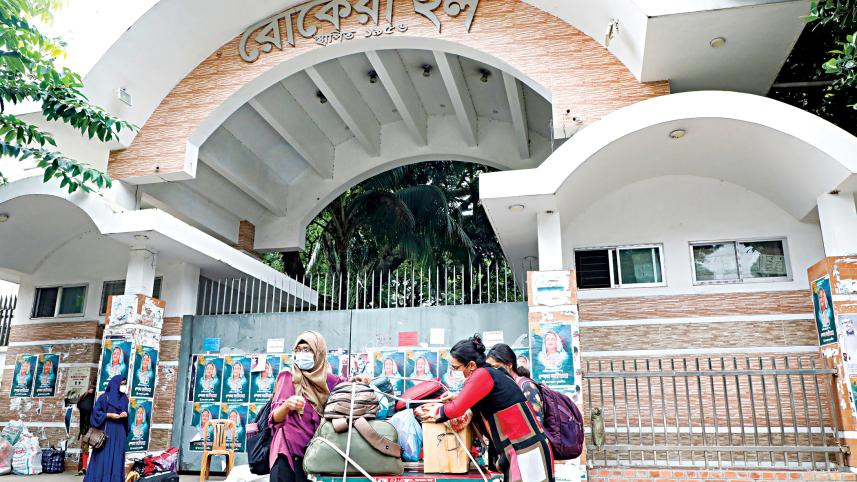
A recent article in The Daily Star, “Public universities: Curfew for women, freedom for men?”, reminded me of what I experienced for four years as a hall resident. When I first moved in as an undergraduate student, I started tutoring to support my personal expenses. Like many middle-class female students, earning even a small income mattered. But tutoring often ended late, and returning to the hall before curfew became a constant struggle. Eventually, I had to give up one of my students because I could not guarantee that I would make it back on time.
Later, when I started a job, my office hours sometimes ended at 7 or 8 PM. Traffic delays were unavoidable, yet hall authorities rarely considered that reality. Arriving late meant interrogation, warnings, calls to my family, written explanations, and sometimes even the threat of being denied entry. Eventually, I had to request changes to my office schedule simply to comply with hall rules.

My male classmates never faced these obstacles. They could tutor, work, study late, visit friends, and return whenever they wanted. A male student from Shaheed Habibur Rahman Hall at Rajshahi University described a very different reality. His tutoring job in Talaimari usually ends around 9:30 PM, but he never worries about hall gates closing.
“After tuition, I often meet friends at Tukitaki Chattar or go to Station Bazar for tea, sometimes returning at 1 or 2 AM,” he says. “When I come back near dawn, I just nod at the guard and go to my room. No one asks where I was or why I was late.”
This freedom allowed him to earn through tutoring, maintain friendships, and experience university life beyond classes and exams.
However, Farzana Sultana Amrin, a student at Eden Mohila College, does not enjoy the same liberties. In their residential halls, female students must return by 10 PM. Students who arrive late face questioning and criticism. Sometimes lifts are shut down after 10 PM, forcing students living on upper floors to climb multiple flights of stairs. According to her, even students who become sick at night often face difficulties accessing medical care because of restrictive hall policies.
The problem extends beyond public universities. Mumu Jahan, a resident of a hall at Daffodil International University, said female students are expected to return by 7 PM. Entering later often requires contacting parents and answering numerous questions. Yet male students living in boys' halls reportedly enjoy far greater flexibility, returning at 11 PM or even midnight without facing similar scrutiny.
This raises an uncomfortable question: if these rules exist for safety, why do they apply only to women? University authorities often argue that restrictions are necessary because women are vulnerable at night. But that logic places the burden of insecurity on female students instead of addressing the conditions that create insecurity in the first place.
The contradiction becomes even clearer when we reverse the argument. If being outside at night is genuinely unsafe, then why are male students allowed unrestricted movement? If restrictions are necessary, they should apply equally to everyone. The reality is that most often curfews do not create safety; they create unequal opportunities.
These hall rules do not exist in isolation; they reflect the beliefs many girls grow up hearing at home. As a child, I often heard that good girls do not stay outside late at night. A girl who returns home late is often judged, while a boy doing the same is rarely questioned. My brother could spend time with friends at night without criticism, but I was expected to explain every delay. This double standard follows women from their families to their universities. Instead of asking why public spaces remain unsafe, society continues to place the burden of safety on women by restricting their freedom.
Universities should be places where young people learn to make their own decisions and become independent adults. They should not be places that tell women where they can go, who they can meet, or what time they must return. Women are not safer simply because their movements are restricted. They are safer when universities take responsibility for providing proper security and a safe environment.
But universities, instead of addressing the safety problems, often choose the easier option—to restrict women’s mobility. This narrative is not unique to Bangladesh. In 2015, a similar crisis in India sparked the Pinjra Tod (Break the Cage) student movement against discriminatory campus curfews.
India's University Grants Commission (UGC) introduced the Saksham regulations, discouraging universities from restricting women's mobility under the guise of protection. The 2020 guideline by the UGC entails improving campus lighting, launching late-night transport facilities, and hiring a sufficient number of female security guards from credible security firms, amongst other measures.
Bangladeshi universities should adopt a similar approach. They should prioritise environmental safety by improving lighting, providing late-night campus transport, and replacing arbitrary gatekeeping with technology-based access systems that allow adult students to enter independently while maintaining records during emergencies.
Administrations must also establish clear codes of conduct for hall authorities to end moral policing and create independent grievance mechanisms. True security is achieved by illuminating campuses, deploying technology, and punishing harassers – not by treating adult female students as liabilities.
Until universities address the real causes of insecurity and give female students the same freedom enjoyed by male students, these curfews will continue to be seen not as a safety measure but as a form of discrimination.
 For all latest news, follow The Daily Star's Google News channel.
Comments